



































How To Trick Your Brain Into Falling Asleep
If you’re struggling to get to sleep, or to nod off after waking up in the night, neuroscientist Andrew Huberman shared a useful tool at HX26 that could change the way you get your 40 winks.

Written by: Ed Cooper
Written on: 7 July 2026
Struggling to drift off? You’re not alone. In the UK, the average adult only gets three nights of good-quality sleep a week, and it’s not just our energy levels that end up footing the bill — our mental health takes a dive, too. Four in ten people say poor sleep negatively affects their mental health at least once a week, while one in three admit that feelings of worry and stress can reduce overall sleep quality.
If you're someone who struggles to reach REM, or perhaps just someone who needs to work on a more consistent sleep schedule, neuroscientist and podcaster Andrew Huberman recently shared one of his methods to help you drift off faster while onstage at HX26 — and it starts by overriding your natural sense of proprioception, the body's unconscious ability to recognise its own movement, position, and location.
Here's what that entails.
What is Andrew Huberman's trick for falling asleep?
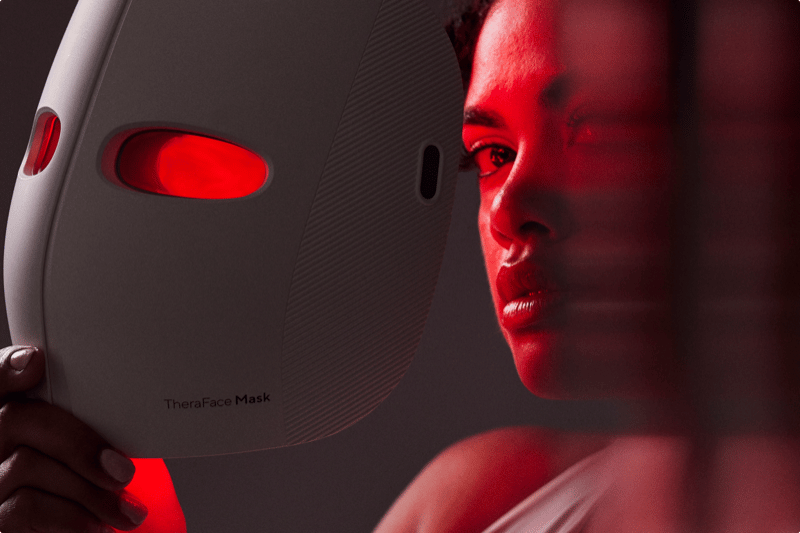
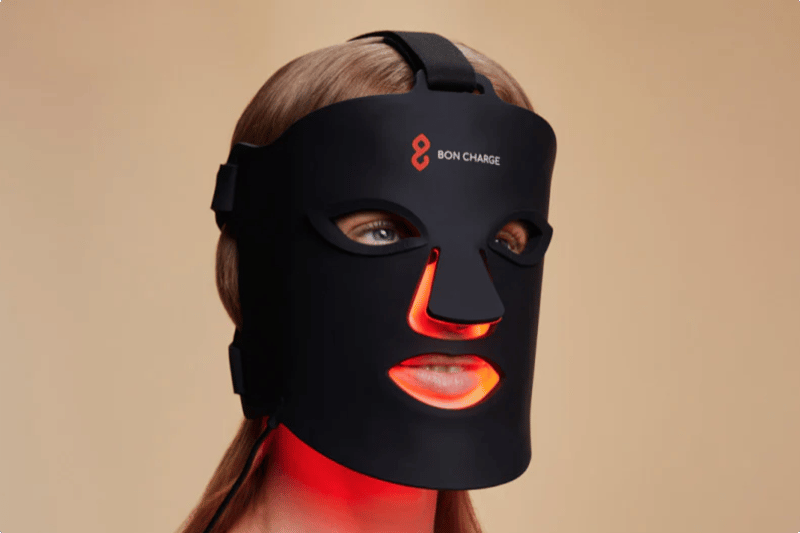
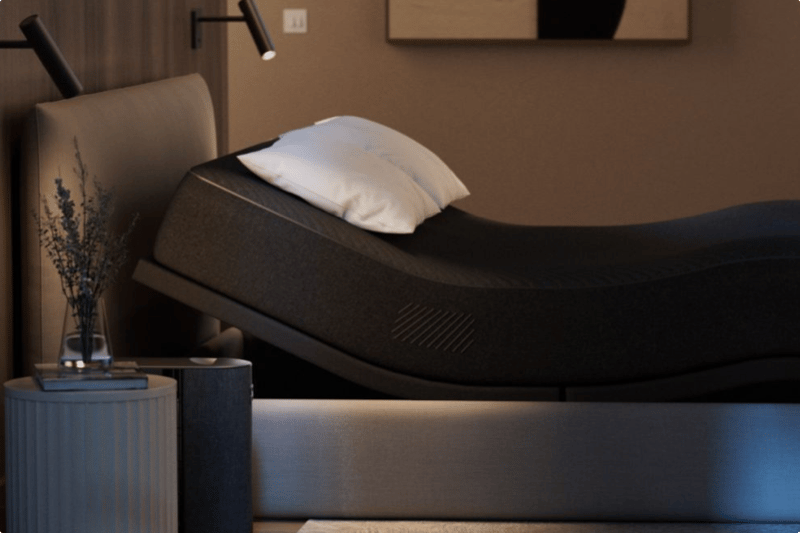
Speaking on the Main Stage at HX26, Healf’s immersive wellbeing event, Huberman explained that to fall asleep, you need to forget about your bodily position, and to get to this state, your proprioception has to turn off. In his talk, which opened the event in London, Huberman pointed out that while certain technologies — including rocking beds that improve sleep and eye masks that stimulate the vestibular system — can help us nod off faster, there’s a surprisingly simple trick that’s not only cheaper and more accessible, but it can be done almost anywhere.
The first step is to “close your eyes,” said Huberman. “Then, move your eyes slowly to one side or the other, to the left or to the right, then move to the opposite side; then move them counterclockwise, trying to make a circle with your eyes.”
After that, “move your eyes [clockwise], with your eyes still closed, then cross your eyes towards your nose and exhale.” If you do that pattern when you wake up in the middle of the night, and are trying to nod back off ASAP, “you will be amazed how much more quickly you’ll fall asleep," he said.
Why does it work?
This trick, isn’t “mysticism”, Huberman said, but rather relies on simple biological principles. “It's those eye movement patterns that confuse the vestibular system, your balance and proprioceptive system.” To contextualise, falling asleep requires your brain to stop tracking where your limbs are in space, making your brain forget about your body’s weight and the physical space it occupies. As theories like Huberman’s go, deliberate eye movement demands enough of your attentional resources that would otherwise be spent monitoring posture (and a certain lack of ability to switch off), without being so demanding that it keeps you alert. It's a blend of displacement and relaxation.
There's also a more straightforward explanation: distraction. Huberman’s technique works by giving your mind a simple, boring, physical task to focus on. Instead of letting your thoughts spiral into anxiety about the clock, you can hijack your own attention and force it to focus on the eye movements. Anyone who’s remained wide awake at 3am rehearsing tomorrow's meeting presentations knows that the problem often isn't in the body, it's the fact that your mind refuses to switch off — and a repetitive physical task becomes a fairly reliable way to interrupt that loop.
Why does the vestibular system matter for sleep?
Found in your inner ear, the vestibular system is a sensory mechanism that provides your brain with information about motion, head position, and spatial orientation. It also helps to track balance, meaning that to fall asleep, Huberman’s requirement to “confuse the vestibular system” becomes a vital tool in your arsenal. It’s also why rhythmic, predictable motion seems to help rather than hinder sleep, as gentle, regular vestibular input reads as safe and low-threat, rather than silence interrupted by unpredictable disruption.
What else can I do to help me fall back asleep?
Before you reach for over-the-counter sleep aids, such as those containing diphenhydramine hydrochloride, there are other ways to use your built-in biological mechanisms to help you catch some shut-eye a little quicker. ‘Cognitive shuffling’, for example, a technique coined by cognitive scientist Dr. Luc Beaudoin, builds on a format that we see in Huberman’s own technique — distraction.
As the theory goes, cognitive shuffling intentionally mimics the random imagery of a dream state and, to get there, all you need to do is pick a random word or starting point and begin visualising unrelated items as you lie in bed. For example, if you choose the word "table", you can begin to visualise as many objects or words as you can that start with each letter, only moving onto the next when you run out of ideas. For example, ‘tea’, ‘toothpaste’, ‘tomato’, ‘tiger’, and so on. With cognitive shuffling, the goal is to shift your brain out of problem-solving mode and into a sleep-inducing state brought on by low-stakes distractions.
During his talk, Huberman also touched on another lifestyle adjustment that can help with sleep: using the stress hormone cortisol to work in your favour. Here, a better night’s rest starts with a solid morning routine. “You want to spike your morning cortisol…that's what's going to set you up for an elevated daytime mood, focus, and alertness, and better sleep,” he said. “That big spike of cortisol in the morning is primarily boosted by getting up, because that's what sets the cortisol awakening response,” but also external factors such as “sunlight, exercise, caffeine and hydration,” as being beneficial to a morning boost of cortisol.
The crucial part of this routine, Huberman said, is to “set up a bookend, and maybe some days I’ll just have access to hydration, a little bit of movement.” Nevertheless, he says, the fundamentals are there: light, exercise, and adequate hydration. Do that first thing in the morning, and the rest will fall into place. “Start designing your day around that, regardless of the context you're in…you're going to end up better than most anyone out there.”



This article is for informational purposes only, even if and regardless of whether it features the advice of physicians and medical practitioners. This article is not, nor is it intended to be, a substitute for professional medical advice, diagnosis, or treatment and should never be relied upon for specific medical advice. The views expressed in this article are the views of the expert and do not necessarily represent the views of Healf
Ed is a freelance journalist and former Men’s Health digital editor, with bylines in Red Bull, BBC StoryWorks, Guardian Labs, Third Space, Natural Fitness Food and Form Nutrition, among others. Having run marathons, conducted sleep experiments on himself and worked with some of the world’s most in-demand experts — from sleep scientists and strength athletes to high-performance trainers and elite-level nutritionists — one thing remains clear for The Healf Source contributor: fitness trends come and go, but as long as you keep turning up for yourself, consistency will win every time.