


















_Madeline_Spanier_Photos_ID7424.jpg)

10 Reasons To Wear WHOOP In 2026
Why this wearable is still the most reliable tool for properly understanding your body and optimising your wellbeing…

Written by: Samantha Nice
Written on: 15 December 2025
Wellbeing isn’t about doing more; it’s about understanding more. Instead of guessing how rested you are, pushing through workouts you probably shouldn’t, or realising too late that your body has been trying to tell you something for days, WHOOP gives you clarity in real time.
It listens to your body, tracks what matters and reports back. From how you sleep and how you recover, to how much strain you can genuinely handle each day and even the early signals your body sends when something feels off. More than just a wearable, it’s a reality check… a way to make decisions based on how your body is actually functioning, not how you think it should be.
Whether you’re trying to train smarter, support your hormones, manage stress or simply stop overriding your own signals, WHOOP gives you the kind of insight that genuinely shifts how you move through your day. Here are 10 reasons WHOOP stands out and why it might be the most useful wellbeing tool you invest in this year…
1. You wake up knowing exactly how ready your body is… not guessing it
Every morning WHOOP gives you a Recovery Score (from 0-100%) based on metrics like heart rate variability (HRV), resting heart rate (RHR), respiratory rate and how much sleep you got versus how much you actually needed.
Why this matters: Instead of pushing yourself when you may feel okay, you get a clear green, yellow or red signal. Green means you’re primed for a big day and can train hard, whereas red tells you it’s probably best to dial it back and focus more on recovery and restorative things. This helps prevent overtraining, burnout or pushing when your body really needs rest.
Use your Recovery score as your daily compass. If it’s low, prioritise sleep, hydration and lighter movement. Whilst it may take a bit of getting used to, your body will thank you later.
2. You get a precise read on how you slept… not just “hours in bed”
By tracking sleep stages (light, deep, REM, awake), sleep disturbances and respiratory rate, WHOOP measures how much restorative sleep you got. It then compares that against how much sleep your body needed based on the previous day’s strain and gives a Sleep Performance score.
Why this matters: Sleep isn’t just about whether you slept or not. Quality, consistency, stage balance and recovery all count so it’s super valuable to get the full picture of what’s actually going on when you’re in bed. You can then look at ways in which you can optimise this.
Use your sleep insights to fine-tune the time you go to bed, your wake-up time, or evening habits (like light, meal times and screen exposure).
3. Your overall daily “strain” is tracked… not just your workout
WHOOP’s Strain Score (from 0-21) measures your total physiological load - not just training, but commuting, stress spikes, poor sleep and anything else that taxes your system. It’s calculated using heart-rate intensity and duration (not steps or calories) and adapts to you personally. A 12.0 strain on a high-recovery day may be fine, but on a low-recovery day, it can be too much. That’s why WHOOP pairs Strain Score with your Recovery Score as this is where the real insight lives.
Why it matters: Data shows that high strain on low recovery days is a major driver of reduced performance, poor sleep and increased injury risk. Most of us really underestimate how much non-workout stress contributes to total load but WHOOP doesn’t.
Try matching your movement to your recovery.
High strain + low recovery: stick to walking or low-impact work.
Low strain + high recovery: that’s your green light to push harder.
Finding this balance keeps your nervous system happier, your progress more consistent and your energy more stable. Winning.
4. You can catch early signs something’s off… not realise (and feel) it days later
Your respiratory rate, resting heart rate and HRV are normally pretty stable. When they shift, there’s almost always a reason. WHOOP’s Health Monitor flags these changes early. Whether it’s your respiratory rate creeping up (often 1-2 days before respiratory symptoms appear), your resting heart rate rising (a classic marker of stress or illness) or your HRV dropping (a sign of inflammation, fatigue or low recovery). Why this matters: It’s an early-warning system meaning you can then rest before you crash.
If your numbers shift, it’s a good idea to double down on sleep, up your hydration, electrolytes and rest. Definitely press pause on the heavy training too.
5. You see exactly how your habits affect your body… and not rely on guesswork
The journal tool connects your behaviours (like alcohol consumption, screen time, supplements, caffeine intake or whether you meditated for example) to your recovery and sleep outcomes. WHOOP has then been able to draw clear links between how alcohol can mean your HRV drops and how screen time can increase sleep disturbances for example. Why this matters: You understand what your body loves and what it doesn’t so you can make a few subtle tweaks and watch things massively improve.
To make the most of this metric, try running a few experiments. Change one behaviour at a time and see how your metrics shift.
6. You get properly personalised guidance… not generic advice
Another big advantage is that it calibrates to your personal baseline. A HRV of 60 might be elite for one person but worryingly low for someone else. The number only makes sense in the context of your own physiology. WHOOP learns your patterns over time, understands what normal looks like for you and flags changes that are meaningful, not generic.
Why this matters: You get recommendations that actually apply to you… not population averages.
How best to use it? Trust your data and tune into it. Use your Recovery, Strain and Sleep scores as a personal roadmap.
7. It values recovery as much as performance which is the key to longevity… not short-term intensity
This certainly isn’t a push harder device. It’s a last longer device. Its entire framework is built on the idea that recovery, sleep, nervous system balance and low inflammation are what actually sustain long-term wellbeing. When strain is consistently high, cortisol rises, immunity drops, HRV falls and injury risk goes up. WHOOP is designed to help you avoid that cycle; not glorify it.
Why this matters: Most people overestimate what they can take in the short term and underestimate what it costs them long term. By valuing recovery as highly as performance, WHOOP helps you train, move and live in a way your future self will actually thank you for.
8. You learn how stressed you actually are… not just how stressed you feel
Stress is sneaky. Sometimes you feel fine, but your body doesn’t agree. WHOOP tracks physiological stress through HRV, resting heart rate, strain patterns and sleep disruption, giving you a clearer picture of how your nervous system is coping.
Why this matters: Your body experiences stress from work, relationships, travel, poor sleep, intense training… not just the things you consciously label as “stressful.” WHOOP reflects this back to you with data so you can intervene early rather than burning out quietly in the background.
If your HRV dips or RHR rises without an obvious cause, spend the next 24 hours reducing intensity, adding in calming habits (breathwork, stretching, early bedtime) and avoiding things like coffee or alcohol..
9. You can see long-term trends… not just day-to-day snapshots
Most wearables give you a snapshot but WHOOP gives you the full story. Over weeks and months, patterns appear. From how weekends affect your recovery, how menstrual phases shift your HRV, how travel impacts your sleep and how lifestyle tweaks improve your stats.
Why this matters: Long-term patterns reveal things you’d never connect in daily life. That one glass of wine affects you 48 hours later. That you always under-recover after back-to-back strength days. That your best sleep happens when you eat earlier. That your luteal phase naturally lowers recovery. Check your weekly and monthly trends tab. Note what consistently improves HRV, sleep, recovery and do more of that.
10. It helps you understand your hormonal patterns… not just your fitness ones
With continuous tracking of HRV, RHR, sleep and strain, WHOOP reveals physiological shifts linked to menstrual cycles, perimenopause, hormonal stress and low-energy phases. Many women don’t realise how deeply hormones shape recovery, performance and sleep until they see the data.
Why this matters: Understanding these patterns helps you stop fighting your biology. You’ll know when your body’s naturally primed for high-intensity training and when it genuinely needs more nourishing days.
Track cycle phases alongside your data in the journal. You’ll soon see predictable changes (like HRV drops in the luteal phase or elevated strain tolerance during the follicular phase). This helps you tailor your training and recovery around your hormonal rhythm.
Your most asked WHOOP questions, answered
Is WHOOP worth it if I’m not an athlete?
Yes… and arguably even more so. WHOOP isn’t just a fitness tracker; it’s a wellbeing tool. It helps you understand your sleep, stress, recovery, daily strain and early illness signals. Whether you lift weights, walk daily, juggle a busy job or simply want more energy, WHOOP shows how your habits actually affect your body so you can make better decisions day to day.
Does WHOOP track steps?
Yes. At the end of last year they added a steps feature. The band now uses its built-in accelerometer and stride-estimation algorithm to count your daily steps.
How accurate is WHOOP’s HRV and recovery data?
WHOOP uses continuous heart-rate monitoring (24/7) and calculates HRV during your most stable sleep stage for accuracy. It then uses HRV, resting heart rate, respiratory rate and sleep performance to generate your Recovery Score. Because WHOOP calibrates to your personal baseline, it becomes more accurate the more you wear it.
Can WHOOP detect illness?
Not in a diagnostic sense, but it often highlights physiological changes before you feel symptoms. A rising respiratory rate, elevated resting heart rate and lower HRV together often indicate your body is fighting something. WHOOP’s Health Monitor flags these shifts early so you can rest before things escalate.
Does WHOOP track calories?
WHOOP estimates calories burned based on heart-rate data, body metrics and strain, but it doesn’t position calorie burn as a core health metric. The emphasis is on recovery, sleep, strain and stress, which provide a more meaningful picture of how your body is functioning than calorie numbers alone.
Is WHOOP safe to wear all day and at night?
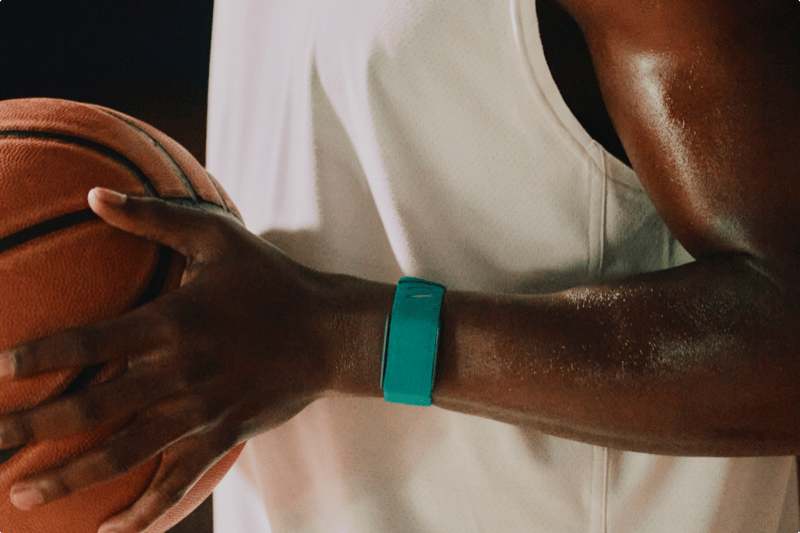
Yes. WHOOP is designed for continuous wear including training, showering and sleeping. There’s no screen, no distractions and it’s extremely lightweight, which is why most users forget it’s even on.



This article is for informational purposes only, even if and regardless of whether it features the advice of physicians and medical practitioners. This article is not, nor is it intended to be, a substitute for professional medical advice, diagnosis, or treatment and should never be relied upon for specific medical advice. The views expressed in this article are the views of the expert and do not necessarily represent the views of Healf
Samantha Nice is a seasoned wellness writer with over a decade of experience crafting content for a diverse range of global brands. A passionate advocate for holistic wellbeing, she brings a particular focus to supplements, women’s health, strength training, and running. Samantha is a proud member of the Healf editorial team, where she merges her love for storytelling with industry insights and science-backed evidence.
An avid WHOOP wearer, keen runner (with a sub 1:30 half marathon) hot yoga enthusiast and regular gym goer, Samantha lives and breathes the wellness lifestyle she writes about. With a solid black book of trusted contacts (including some of the industry’s leading experts) she’s committed to creating accessible, well-informed content that empowers and inspires Healf readers.