














_2026-10-13_14-11-48.png)


"Eating Your Anti Wrinkle Injections": Why Influencers Are Skipping Their Clinic Appointments
Written by: Pippa Thackeray
Written on: 24 June 2025
The trend dominating your feed isn’t a newly formulated filler, nor a high-tech facial. It's a simple ingredient with an age-old therapeutic use: gelatin. Influencers are even swerving injectables in favour of it. Could the key to smooth and wrinkle-free skin come in the form of simple dietary nourishment?
From TikTok, Instagram Reels to YouTube, creators are busy telling us about the benefits of dietary collagen, specifically gelatin, which is the protein derived from collagen. Their claims include naturally plump and hydrated skin.
It might seem old-fashioned, perhaps even a step backwards, considering the vast array of advanced cosmetic treatments there are currently available on the market. And yet the humble collagen may still have a place among the skin-smoothing racket. Its use is backed by decades of research and centuries more of anecdotal evidence, spanning a global wave of collagen-crazed health and beauty specialists.
Gelatin vs collagen: what’s the difference?
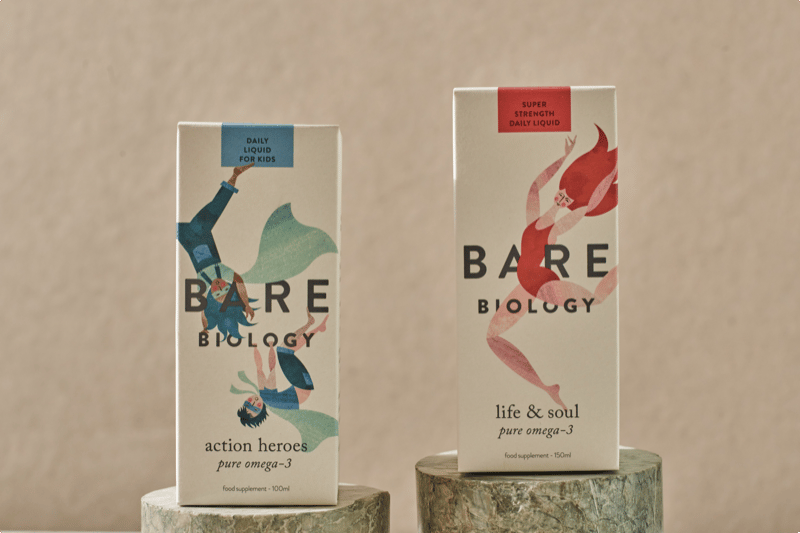
Collagen and gelatin are both derived from a protein found in animal tissues, but they differ in processing and solubility. Collagen supplements are often hydrolysed, meaning they are broken down into smaller peptides for easier absorption, according to studies cited by Bare Biology. Gelatin, on the other hand, is a cooked form of collagen, resulting in a product that forms a gel when cooled.
What is gelatin used for?
As gelatin is a protein sourced from collagen, it’s the structural support network found in skin, bones and connective tissue. It is extracted via a process that breaks the collagen down into smaller, more easily digestible peptides.
The resulting product is a supplement rich in glycine, proline and hydroxyproline, which are the amino acids that your body uses to rebuild collagen in body tissues once consumed.
In other words, gelatin use for plumper skin is supported by the concept that you are essentially providing the building blocks for your skin, the components from which it’s made.
Are there arguments against gelatin use for anti-ageing?
The counterargument is that once gelatin is digested, its amino acids are not guaranteed to be used for skin regeneration alone. The body could distribute them to additional places. This may include the skin, but also bones, tendons, the gut lining or other areas.
However, when viewed holistically, processes such as this can still support anti-ageing, not only through improved skin appearance, but by helping the body stay strong, resilient and better equipped to repair itself over time.
When should gelatin be considered?
Your body’s natural collagen production begins to decline around the age of 25. Environmental factors such as UV exposure, smoking, and poor nutrition accelerate the breakdown of collagen and elastin fibres in the dermis layer of the skin.
The good news is, it is thought that gelatin helps to replenish the raw materials needed to support new collagen formation, acting like a scaffolding for healthier-looking skin. Unlike topical skincare products, which primarily operate at the surface level, gelatin taken orally supports dermal repair from the inside out.
This form of supplementation presents a fundamental difference, and it’s potentially why gelatin may be especially effective for areas of the body that don’t typically respond well to serums, like the neck or hands.
Why gelatin is having its moment
The 'jello skin' aesthetic is all about skin that’s taut, springy and full of bounce, much like you would see in a perfectly set dessert.
Beauty influencer Ava Lee helped coin the term, but it’s a much bigger trend than any one voice.
Could the trend have deeper implications?
The trend also supports the hypothesis that people are increasingly moving away from reactive or skin-deep treatments and leaning into practices that support the body from within. Therefore, it could be said that the hype around gelatin is due to simplicity and the ease that comes with fitting it into a busy schedule, unlike a dermatologist appointment.
What’s more, gelatin supplementation doesn’t require downtime, making it a more realistic and attainable daily option.
What the research shows
- A year-long animal study found that gelatin intake improved skin structure, increasing dermal thickness and collagen content.
- Clinical studies in humans have shown that collagen peptides improve skin hydration and elasticity within a matter of weeks.
- Likewise, systematic reviews suggest that consistent use supports improved dermal density, skin smoothness and a more even texture.
Explaining the results
Collagen peptides interact with fibroblasts, the cells responsible for collagen production, which prompts them to create new fibres.
And the process works better with other collagen supporting nutrients. Vitamin C is required to help stabilise collagen structures during synthesis. Zinc and copper also play a part in the enzymatic steps that facilitate connective tissue repair. Without them, collagen supplementation is thought to be less effective. Then there’s glycine, known to encourage restful sleep by reducing core body temperature and balancing neurotransmitters. As such, better rest means better skin recovery, not just overnight, but long-term.
Emerging studies also suggest glycine may support blood sugar regulation, influencing hormonal balance and inflammation, and in turn, impacting the skin.
Does gelatin contain collagen types 1 and 3?
Many influencers will tell you that types 1 and 3 collagen are the ones to focus on if you’re aiming for stronger skin, thicker hair and tougher nails. Studies support this, suggesting that they build the framework that keeps these tissues resilient, hydrated and able to repair.
The source materials for gelatin (usually bovine skin, bones, and sometimes porcine hide) are predominantly made up of type 1 collagen, with some type 3 present in connective tissues.
Therefore, while gelatin doesn't maintain the same structural integrity as collagen, it still provides the essential amino acids that the body can use to synthesise and rebuild.
More than skin deep
Gelatin supports more than just skin. Its benefits stretch beyond, into many areas of physical health and function, thanks to the amino acids it contains.
- Joint support: Types 1 and 3 collagen strengthen the connective tissues surrounding joints. Although gelatin lacks type 2 collagen, which directly supports cartilage, it still plays a structural role that helps maintain joint integrity and mobility.
- Bone health: Type 1 collagen is the main collagen found in bones. Regular intake of gelatin contributes to a denser, more resilient bone matrix.
- Gut function: The glycine content in gelatin helps reinforce the gut lining. This supports digestion, reduces inflammation, and may ease symptoms like bloating or discomfort.
- Liver support: Glycine also plays a role in detoxification. By supporting liver function it helps the body process and clear excess hormones and metabolic waste. When the liver is under pressure, skin often shows it, through dullness, congestion or uneven skin tone.
- Post-exercise recovery: After training, the body needs amino acids to repair muscle tissue. Gelatin supplies these building blocks to support tissue regeneration. For those who exercise regularly, this can translate into faster recovery and skin that mirrors the effort put in elsewhere.
Try pairing it with vitamin C-rich foods like kiwi, citrus or red pepper for the best absorption.
Consistency matters when getting results. Signs of improvement from collagen supplementation tend to appear after up to eight weeks of daily use, with skin hydration often improving first, followed by firmness and elasticity.
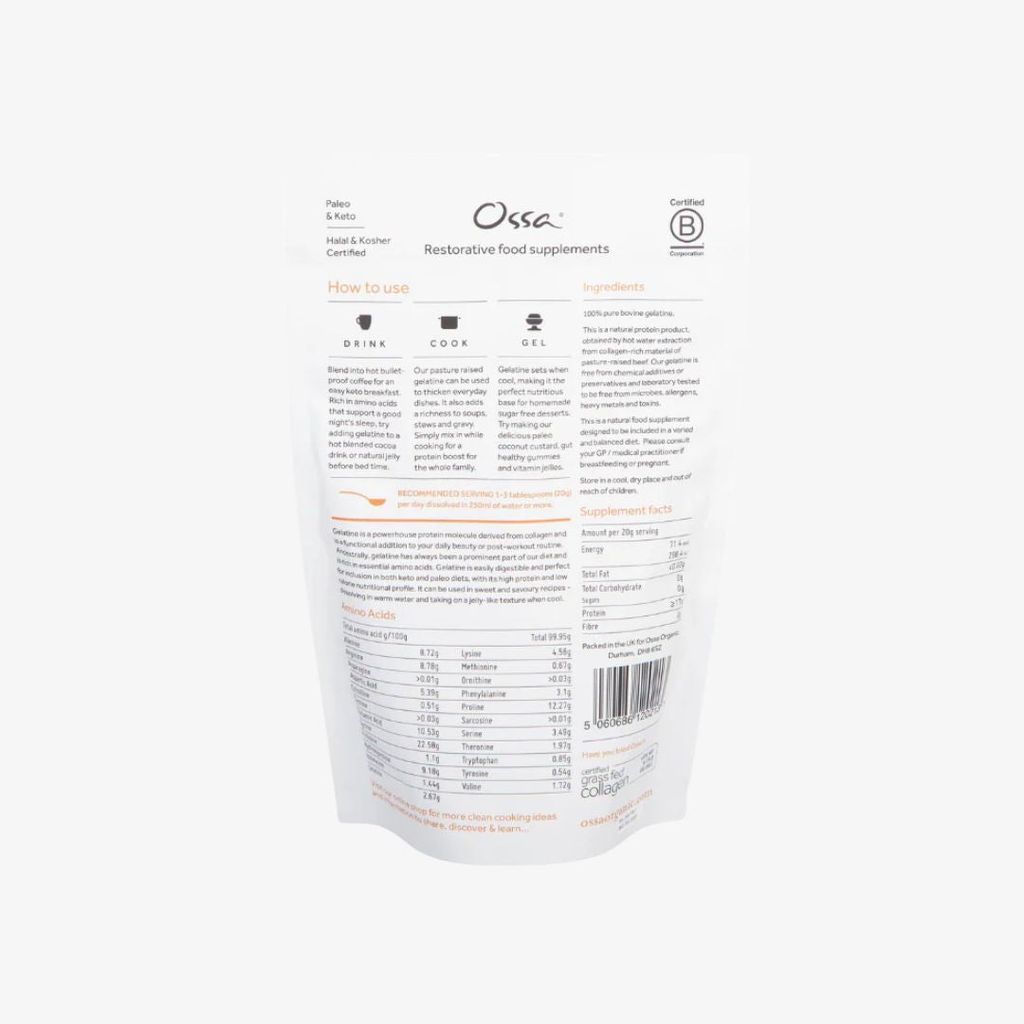
How to use OSSA Pasture Raised Gelatin
• Make collagen-rich gummies: Combine gelatin powder with real fruit juice and a natural sweetener.
• Blend it into your drinks: Add unflavoured gelatin to your coffee, tea or post-workout smoothie.
• Use it in cooking: It works brilliantly in soups, sauces or anything that could benefit from a thickening boost.



References:
2. https://www.instagram.com/chefdavemartin/reel/C_YgWmovYzZ/
5. https://pubmed.ncbi.nlm.nih.gov/25884286/
6. https://pubmed.ncbi.nlm.nih.gov/33742704/
7. https://link.springer.com/article/10.1007/s00726-017-2490-6
8. https://pmc.ncbi.nlm.nih.gov/articles/PMC8000627/
9. https://pubmed.ncbi.nlm.nih.gov/28929384/
10. https://pmc.ncbi.nlm.nih.gov/articles/PMC8309321/
11. https://pmc.ncbi.nlm.nih.gov/articles/PMC10707495/
12. https://pmc.ncbi.nlm.nih.gov/articles/PMC11845971/
13. https://edition.cnn.com/cnn-underscored/beauty/jello-skin-beauty-trend
14. https://pubmed.ncbi.nlm.nih.gov/31187836/
15. https://pmc.ncbi.nlm.nih.gov/articles/PMC11254459/
16. https://pubmed.ncbi.nlm.nih.gov/30681787/
17. https://pmc.ncbi.nlm.nih.gov/articles/PMC6204628/
18. https://pmc.ncbi.nlm.nih.gov/articles/PMC4397399/
19. https://www.sciencedirect.com/science/article/pii/S0002916523060628
20. https://pubmed.ncbi.nlm.nih.gov/3676091/
21. https://pubmed.ncbi.nlm.nih.gov/36776717/
22. https://pmc.ncbi.nlm.nih.gov/articles/PMC9496548/
23. https://pmc.ncbi.nlm.nih.gov/articles/PMC10379184/
This article is for informational purposes only, even if and regardless of whether it features the advice of physicians and medical practitioners. This article is not, nor is it intended to be, a substitute for professional medical advice, diagnosis, or treatment and should never be relied upon for specific medical advice. The views expressed in this article are the views of the expert and do not necessarily represent the views of Healf
Pippa is a content writer and qualified Nutritional Therapist (DipNT) creating research-based content with a passion for many areas of wellbeing, including hormonal health, mental health and digestive health.
As a contributor to The Healf Source, she regularly attends seminars and programmes on a plethora of contemporary health issues and modern research insights with a drive to never stop learning. In addition, interviewing experts and specialists across The Four Pillars: EAT, MOVE, MIND, SLEEP.
In her spare time, she is an avid swimmer, mindfulness and yoga lover, occasionally bringing a raw, honest approach to the topics she faces. You may also discover some personal accounts of eye-opening wellbeing experiences amidst the reality of a disorientating, and often conflicting, modern wellbeing space.