














_2026-10-13_14-11-48.png)


7 Reasons Your Bedroom Temperature Is Sabotaging Your Sleep
Healf sat down with Eight Sleep to understand how to beat the heat.
Written by: the Healf Editors
Written on: 10 June 2026
You've tried magnesium. You've done the no-screens-before-bed rule. You've even invested in blackout curtains. And yet you're still waking at 3am, or taking an hour to drift off in the first place. One thing that you may not be taking into account which can wreak havoc on your rest? The temperature — of both your body and your bedroom.
This isn’t just a “nice to have” add-on to your sleep rituals. It’s a biological imperative. "The body's temperature naturally fluctuates across a 24-hour period, where it's lowest in the middle of the night and highest in the late afternoon," explains Dr. Nicole Moyen, PhD, Senior Director of Science & Clinical Research at Eight Sleep. "This is your circadian rhythm of body temperature, and it modifies your sleep tendencies."
Said another way: when it comes to sleep, if you get the thermal environment wrong, you're working against a biological system that will stay in “alert” mode until it starts to cool it down.
Here are seven ways temperature could be secretly undermining your sleep — and what to do about it.
1. Your room is too warm to initiate sleep
Falling asleep isn't just about feeling tired — it requires a specific physiological process that encourages sleep onset. "As bedtime approaches, core body temperature falls, and sleep onset tends to occur when that cooling process is underway," says Dr. Moyen. "If the environment is too warm, it becomes harder for the body to offload heat, which can delay sleep and fragment it."
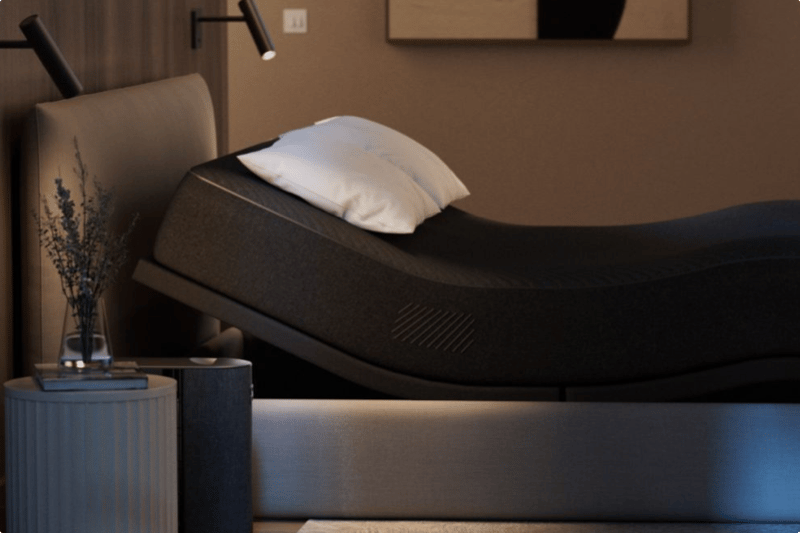
This fact is backed by science. A 2019 review in Frontiers in Neuroscience found that sleep onset and a reduction in core body temperature occur together across all mammals, and that when the body's cooling cycle is disrupted, insomnia often follows. This suggests that sleep isn't just triggered by fatigue — it's also gated by thermal conditions. Most sleep experts suggest a cool bedroom in the 15–19°C range as a starting point. Sleep surface temperature is also an important factor. The Eight Sleep Pod 5 circulates water through a mattress cover, heating and cooling to the user’s preferences and biology throughout the night. In the brand’s clinical data, this approach was associated with an average 44% faster sleep.
2. You're losing deep sleep in the first half of the night
Deep sleep — the most physically restorative sleep stage — is concentrated in the first few hours after you fall asleep, and it's particularly sensitive to warmth. "In the first half of the night, your core temperature is dropping, and this is when you get most of your deep sleep," Dr. Moyen explains. "This fluctuation in temperature is crucial for good-quality sleep."
Research supports this directly. In an Eight Sleep Labs study published in MDPI Bioengineering — which tracked 54 participants across more than 300 nights — those sleeping on the cooled Pod setting in the first half of the night gained an average of 14 additional minutes of deep sleep per night, a statistically significant 22% increase. The Pod's Autopilot feature applies cooler temperature offsets early in the night specifically to support deep sleep.
3. You're waking in the early hours — and blaming stress
Those inexplicable 3am wake-ups often have a temperature-related explanation. The second half of the night is when REM sleep, which is essential for memory consolidation, brain development, and emotional regulation, dominates. And REM is the stage most vulnerable to temperature disruption. "During REM sleep especially, which is predominant in the second half of the night, our temperature regulation system is impaired," says Dr. Moyen, "and so we're more likely to wake up too hot or too cold."
This process is well-established in sleep science. A study in Frontiers in Neuroscience confirmed that thermoregulatory responses to temperature changes are not operational during REM sleep in the way they are during wakefulness or non-REM sleep — meaning the body is effectively flying blind when it comes to self-regulating temperature during this stage. Another Eight Sleep study found that participants sleeping on the Pod gained an average of nine additional minutes of REM sleep per night — a 25% improvement — when the mattress cover adjusted to a slightly cooler setting in the first half of the night.

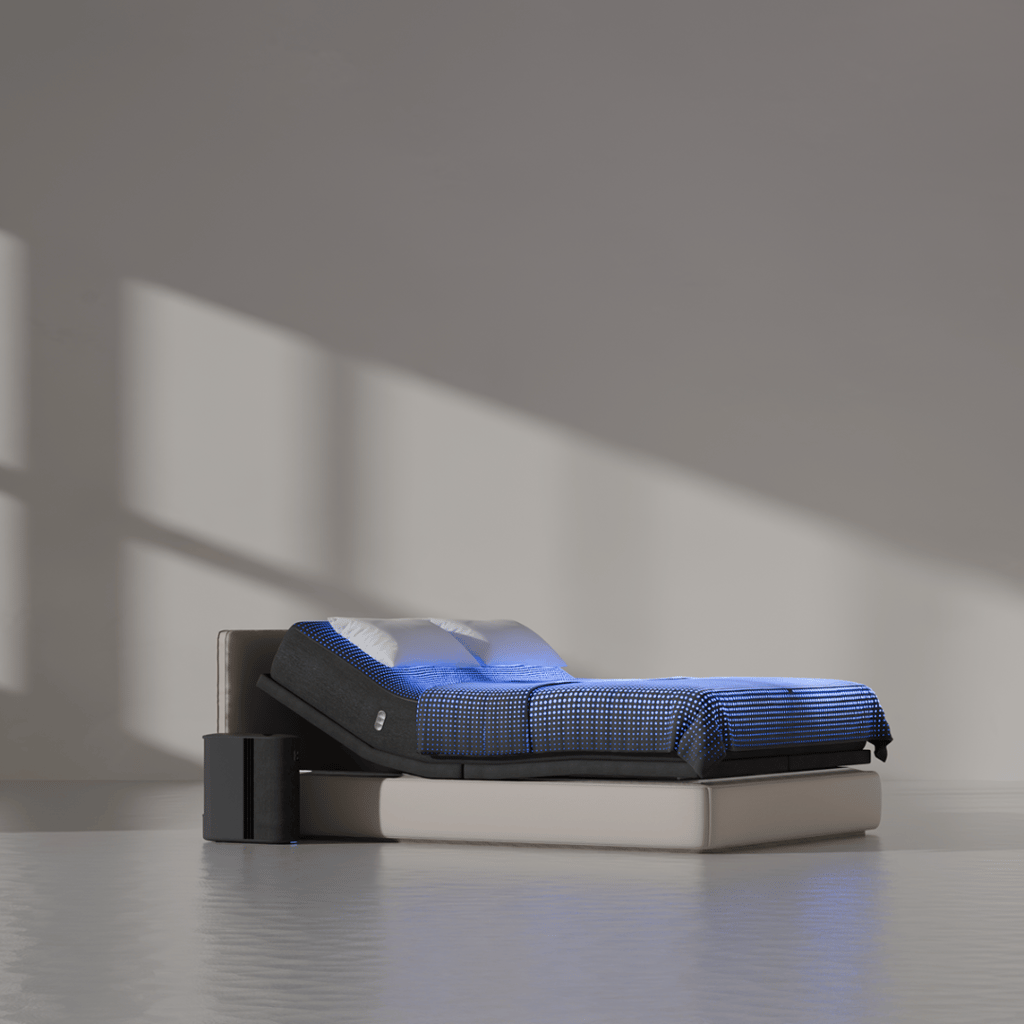
Eight Sleep Pod 6 Core
4. You and your partner have incompatible temperature needs
One of the most common pre-purchase complaints Eight Sleep hears is that people have a thermostat war at home: one partner is overheating while the other is freezing, both end up compromising and neither sleep well. It's not a personality conflict — it’s physiology. Metabolic rate, body composition, age, hormonal status, and even medication can all influence an individual's thermal comfort zone during sleep.
Other Eight Sleep research has noted meaningful sex differences in thermal response: what constitutes an optimal sleep temperature varies not just between two people, but between men and women. The Pod 5's dual-zone control means each side of the bed operates independently across its full temperature range of 12°C to 43°C — no negotiation required.
5. Hormonal changes are disrupting your thermal regulation
Night sweats linked to menopause or perimenopause are among the most disruptive sleep disturbances there are — and they're fundamentally a temperature problem. A 2025 review found that hot flashes result from changes of the hypothalamic thermoregulatory centre caused by estrogen decline — the brain's thermostat becomes hypersensitive to small shifts in body heat, triggering unnecessary cooling responses (hot flashes) that pull women out of sleep. Vasomotor symptoms affect the majority of women going through the menopausal transition, and their impact on sleep quality is significant.
Eight Sleep's clinical data shows an average 56% reduction in nighttime hot flashes among menopausal members sleeping on the Pod — a figure that reflects the product's active cooling capability. As Dr. Moyen notes, older adults may also prefer somewhat warmer baseline environments, which is where the personalisation aspect of the Pod becomes particularly relevant.
6. A static temperature setting ignores how sleep actually works
Setting your bedroom to a fixed temperature, whether via a thermostat or a basic cooling mattress pad, misses a fundamental truth about sleep architecture. "Sleep comfort depends not just on room temperature, but on the temperature at the sleep surface, and ideally that should adjust across the night," says Dr. Moyen. There isn't one perfect temperature for the whole night; the body needs different things at different times.
Eight Sleep's Autopilot feature was built around this principle. A 2025 analysis found that real-time, sleep-stage-based Pod temperature adjustments improved both sleep quality and cardiovascular recovery metrics — making it the first study to demonstrate benefit from dynamic, rather than static, sleep surface temperature. Separately, a polysomnographic study published in PMC found that adaptive thermal regulation — adjusting temperature in response to sleep stage transitions — improved sleep architecture compared to a constant temperature setting.
7. Poor sleep is affecting your energy the next day — not just your night
The consequences of temperature-disrupted sleep don't stay in the bedroom. Insufficient deep and REM sleep affects cognitive function, mood, immune regulation, and cardiovascular recovery. Other research found that shorter sleep duration was directly associated with greater decline in executive function and processing speed among older adults. "This fluctuation in temperature is crucial for good-quality sleep," Dr. Moyen says — and the downstream effects of getting it wrong can compound over time.
Eight Sleep has collected data from over 11 million hours of sleep across clinical studies on more than 26,000 subjects. In one study, the Eight Sleep Clinical team found that users sleeping on the Pod reported 34% higher daytime energy scores alongside improvements in sleep architecture. The Pod also tracks heart rate and HRV throughout the night, validated at 99% and 95% accuracy against gold-standard ECG, giving users insight into how their cardiovascular recovery is actually progressing.
Temperature is one of the most powerful yet underestimated levers in sleep health. Unlike supplements or wind-down routines, it works at a biological level — supporting or hindering the processes your body is already trying to carry out each night. Getting it right doesn't require a perfect bedroom or a rigid routine. It requires understanding what your body actually needs, and giving it the conditions to do what it does naturally.


This article is for informational purposes only, even if and regardless of whether it features the advice of physicians and medical practitioners. This article is not, nor is it intended to be, a substitute for professional medical advice, diagnosis, or treatment and should never be relied upon for specific medical advice. The views expressed in this article are the views of the expert and do not necessarily represent the views of Healf
Healf's editorial team works hard to produce science-backed, expert-vetted stories to break down trends and cut through the noise in the wellbeing ecosystem. Our team of writers and editors specialise in everything from nutrition, to exercise science, women's health, skincare, sleep, and more.