












_2026-10-13_14-11-48.png)

The Neuroscience Of Intuition: What 'Gut Feelings' Really Mean
Ever felt your skin prick or stomach clench? That's your body consciously experiencing — and recognising — our interoceptive “sixth sense” in action.

Written by: Currie Engel Weber
Written on: 14 July 2026
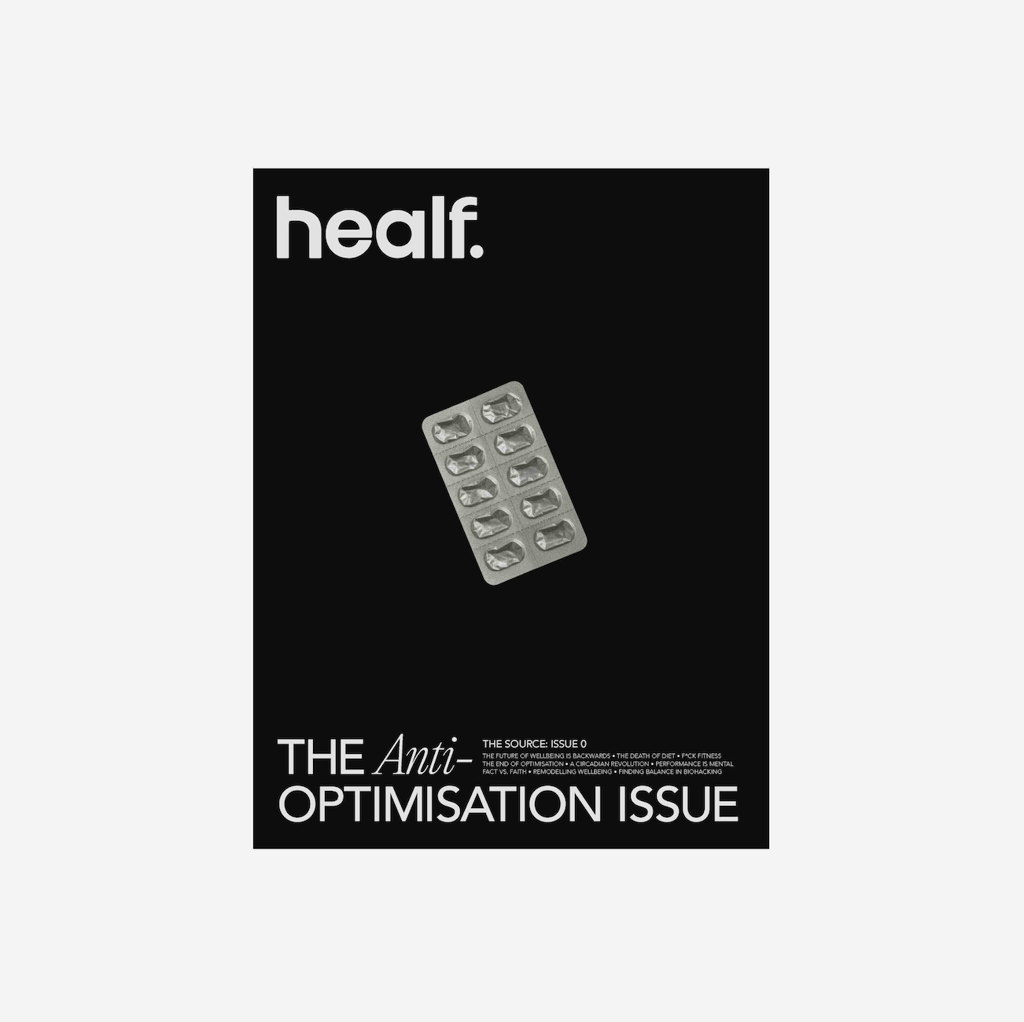
This piece originally appeared in The Source: The Anti-Optimisation Issue, Healf's print magazine.
In recent years, Dr. Tara Swart, PhD, has been fascinated by the ways trauma and PTSD remain in the body long after the events have passed — showing up in our cells, tissues, musculature, and more. “And that made me think, well, if trauma can be hidden in the body like that, why can’t wisdom be too?” the neuroscientist and author says.
Intuition, it turns out, also lives in your body. It’s not just a passive thought or random feeling. If you’ve had a shiver run down your spine, or had a visceral reaction to something in your environment, that’s your body sending messages to your brain, which then tells you to take a certain action. When you really break it down, intuition is what your body knows before your mind is able to catch up.
Biologically, intuition works through a process called Hebbian learning, named by the neuropsychologist Donald Hebb, who theorised in 1949 that neurons’ synaptic strength increases when two neurons are repeatedly activated simultaneously. Said another way, experiences help the brain rewire — “neurons that fire together, wire together”. “The more we experience something, the more neurons connect up through synapses, creating new pathways that get embedded deeper into the brain,” says Dr. Swart.
Humans can’t remember everything that happens in their life, but thanks to neurons’ pattern recognition, you might get a vague sense, one you can’t quite explain, that you’ve been in a situation before, even if that’s not the case. It might even feel like déjà vu. In essence, this is just your brain recognising a familiar pattern, with neurons firing faster than you’re consciously aware of. That vague, unconscious brain processing then signals to your autonomic nervous system, causing your skin to prick or stomach to clench. Those physical responses, in turn, send signals back to your brain via your vagus nerve. Only then do we consciously experience — and recognise — that interoceptive “sixth sense” in action. This entire subliminal process drives your choices and actions in that moment, whether the neurons originally acted on a real memory or not.
Dr. Swart has studied how our ancestors used their senses to interpret the world, and the ways our central and peripheral nervous systems connect with and affect our organs, and vice versa. “Physicality was very, very important when we were in Paleolithic times, and we’ve become very disembodied in the modern world,” she says. Back then, you had to pay attention to your body’s signals because it was, quite literally, a matter of life or death.
Take goosebumps. That’s your skin telling your brain that there’s something to pay attention to. “The skin is not just the physical boundary of our body, it’s actually a psychological boundary,” says Dr. Swart. “If your values are transgressed, if you’re taken advantage of — financially, physically, verbally — that can actually show up physically on your skin.”

Your gut, on the other hand, has its own neurons that relay crucial information to your brain. Your gut neurons, central nervous system, and microbiome “all need to be in good condition and speaking to each other for you to be able to access your intuition at its best.”
This ancient principle has never been more essential. In the future, “intuition will become [an] irreplaceable, important human skill,” says Dr. Swart. Think about it: how many decisions do you make each day, not based on what your wearable tells you, but because you simply know it’s the best (and often the right) way to solve an issue? You don’t need a chatbot to tell you that it feels good to take a short walk after a meal, or that you might not actually be hungry, but simply stressed. Nor do you need an algorithm to warn you that something feels unsafe.
“It’s the most valuable human skill that we are going to have going forward,” says Dr. Swart. “It usually leads to much better outcomes than logic alone.”
Your intuition is not an outdated structure, but a complex, irreplaceable tool that has guided humanity for centuries. It’s high time it got some recognition.


This article is for informational purposes only, even if and regardless of whether it features the advice of physicians and medical practitioners. This article is not, nor is it intended to be, a substitute for professional medical advice, diagnosis, or treatment and should never be relied upon for specific medical advice. The views expressed in this article are the views of the expert and do not necessarily represent the views of Healf
Currie Engel Weber is the Editorial Lead at Healf. She is an award-winning journalist and editor, and former News & Features editor at Women's Health Magazine in New York. She has written for outlets like The New York Times, Wired, Business Insider, Women's Health. Currie loves writing about the intersection of women's health and culture.