

























_2026-10-13_14-11-48.png)


The Truth Behind Salt - Is Celtic Sea Salt Worth The Hype?

Written by: Rachel Sacks
Written on: 30 October 2024
With regular table salt falling out of fashion on social media, are Celtic salt benefits truly legitimate, or are the “superior” health claims pure marketing fluff?
Thanks to a general shift toward organic and natural foods (as well as the health risks of consuming excessive refined salt), Celtic sea salt has been growing in popularity. The benefits of Celtic salt are supposedly superior, with claims that it may support hydration, nerve function, and electrolyte balance.
But are these benefits legitimate or simply good marketing?
What is Celtic sea salt?
“Celtic salt, also called Celtic sea salt or sel gris, is a type of unrefined sea salt that originates from the coastal region of Brittany, France,” says Andrea Soares, MS, RDN, CSSD, a registered dietitian with Top Nutrition Coaching.
Celtic salt, like other sea salts, is produced from evaporated seawater and not processed. Thanks to how Celtic salt is harvested, Soares explains that it retains “moisture and natural minerals… has a light grey colour (thanks to the clay-lined salt ponds) and a slightly moist texture.”
Besides colour, Celtic salt also differs from common table salt in texture and taste, as Staci Gulbin, MS, MEd, RDN, a registered dietitian at Lighttrack Nutrition, explains.
“This type of sea salt has a larger grain than refined table salt and… a unique, briny taste, reminiscent of the ocean that reflects its origin,” says Gulbin.
Nutritional profile of Celtic sea salt
Like other types of salt, Celtic salt is mostly sodium chloride. But one of the potential Celtic salt benefits could be that it contains slightly less sodium than its table salt counterpart. “The potential health benefits of Celtic salt originate from the fact that it’s slightly lower in sodium by volume than standard table salt,” Gulbin explains. “One-fourth of a teaspoon of regular table salt is around 590 mg of sodium, while Celtic sea salt ranges from around 410-480 milligrams of sodium.”
Due to its harvesting method, Celtic sea salt also contains trace amounts of several minerals, including magnesium, potassium, and iron.
“Celtic salt… contains around 665 milligrams of chloride or about 20% of the recommended daily value, 6 milligrams of magnesium (2% daily value), and trace amounts of other minerals like potassium, calcium, among many others,” Gulbin points out.
Apart from sodium chloride, these other minerals also provide unique health benefits:
Sodium chloride: Also known as salt, sodium chloride is essential for hydration, maintaining blood pressure, and proper nerve and muscle function.
Magnesium: Another mineral the body needs to function, magnesium helps maintain the health of the cardiovascular system, nerves, muscles, blood sugar levels, bones, and more.
Potassium: A key mineral, potassium works with sodium to maintain electrolyte levels in your body for proper hydration, nerve function, and more.
Iron: The body needs iron to produce red blood cells, support the immune system, and carry oxygen throughout the body.
Calcium: Providing several health benefits, calcium helps build strong bones, keeps teeth healthy, ensures blood clots normally, and regulates muscle contractions.
Proposed health benefits of Celtic sea salt
So, is Celtic salt good for you?
For starters, it’s true that using Celtic sea salt could lower daily sodium intake. The American Heart Association (AHA) suggests that a heart-healthy diet should contain no more than 2300 milligrams of total sodium per day, so “because the crystals are larger and moist, you often end up using a bit less actual sodium [with Celtic sea salt] compared to finely ground table salt,” Soares points out.
There are several more reported Celtic sea salt benefits, from better hydration to muscle function.
Improved hydration and electrolyte balance: One of the biggest claims of Celtic salt is its ability to improve hydration, thanks to the electrolytes it contains. Electrolytes are minerals, like calcium, magnesium, sodium, and potassium, that dissolve in water and help your body function by replenishing fluids lost through sweat or dehydration.
Enhanced digestive health: Sodium chloride and magnesium improve digestion, thanks to smoother production of digestive enzymes that help break down food, according to some.
Support for cardiovascular health: Minerals like magnesium and potassium in Celtic salt help regulate blood pressure and support heart health.
Potential anti-inflammatory properties: Several essential minerals, such as magnesium and iron in Celtic salt, may help support systemic inflammation and the immune system.
Contribution to maintaining proper muscle and nerve function: Many of the minerals in Celtic sea salt also support healthy muscle and nerve function, including magnesium, potassium, and sodium.
Scientific perspective: are these benefits supported by evidence?
All the above Celtic salt benefits sound great. But let's take a closer look at the research and see if these claims hold up.
Replenishing electrolytes. Since Celtic salt and other sea salts are minimally processed, they do contain some minerals, including potassium, iron, magnesium, and calcium. However, the amount of these minerals in sea salts is present in only small amounts. In a quarter teaspoon serving of Celtic salt, there’s less than 0.5 percent of magnesium, potassium, and calcium individually. “A very typical claim here is that Celtic salt [is] 'more mineral rich' which is true in the sense they contain more trace minerals than regular salt,” says Brian O'hAonghusa, BSc, ANutr, registered nutritionist at Triage Method. But as O'hAonghusa explains, there’s such a small amount of minerals “that they will make no meaningful nutrient contribution to someone's diet.” While hydration and electrolyte balance are purported Celtic salt benefits, the amount present in a serving may not have a notable effect on electrolyte levels.
Decreasing sodium intake. Celtic salt and other sea salts may contain less sodium in a quarter-teaspoon serving simply because the larger flake size takes up more space. But excessive sodium consumption can contribute to high blood pressure levels and a higher risk of heart disease. As Soares points out, “Just like with any salt, too much is still too much.”
Improving digestion. The sodium chloride in Celtic salt and other sea salts does help produce stomach acid necessary to break down food during digestion and transport nutrients in the intestines. One study found that drinking mineral water rich in sodium and magnesium improved constipation symptoms in 75 otherwise healthy people. However, it’s unclear whether sea salt water alone improved digestion.
Better muscle and nerve function. “The sodium in Celtic salt helps pull water into the body’s cells for hydration purposes, and the natural mineral content plays a role in nerve function,” explains Jordan Hill, MCD, RD, CSSD, sports dietitian and owner of Hill Health Nutrition in Denver, Colorado. Eating a moderate amount of sodium, whether Celtic salt or another type of sea salt, can help muscle contractions and prevent muscle cramps, fatigue, and other electrolyte-related issues.
“While research is still limited, we think [electrolyte balance, digestion support, and less sodium] could be beneficial,” says Soares. “That said, the benefits are modest… Celtic salt isn’t a miracle ingredient, but it can be part of a balanced approach.”
How to use Celtic sea salt effectively
Curious about how to take Celtic sea salt and get the most health benefits possible? One easy way is to “add a pinch to smoothies or water post-workout for a mineral boost, especially after sweating,” according to Soares.
Hill adds, “Individuals looking for minimally processed salts, those needing to rehydrate from working in humid temperatures, highly active individuals, or folks experiencing low blood pressure” could benefit from adding Celtic salt to their diet.
Other ways to add Celtic salt include using it as a finishing salt on fish or roasted veggies.
“Since the larger, coarser granules of sea salts like Celtic salt don’t dissolve as easily or evenly in cooking as table salt, their flavor can be best enjoyed when you sprinkle them onto your food for flavour,” Gulbin points out. “An example of this is preparing fish or root vegetables with a drizzle of olive oil and sprinkling Celtic salt and herbs on top of them before roasting in the oven.”
You can also “Use it in soups, stews, or salad dressings,” adds Soares. “But start small, its flavour can be more intense than regular salt.”
Soares also notes that “some use Celtic salt as a homemade electrolyte drink,” although she recommends consulting with your doctor first.
Gulbin echoes this sentiment, adding that moderation is key when it comes to sodium intake. “Those following a heart-healthy diet may benefit from adding Celtic salt to their diet, if used in moderation, since it is slightly lower in sodium than table salt by volume,” explains Gulbin.
Possible risks and considerations
Are there risks to consider when taking Celtic sea salt?
The biggest risk to be aware of is consuming too much sodium, regardless of the type of salt.
“Since both [sea salt and table salt] have similar sodium content by weight, you should limit your intake of Celtic salt in a heart-healthy diet just as much as you would limit table salt intake,” explains Gulbin.
High sodium consumption can raise blood pressure and increase the possibility of heart disease, kidney disease, stroke, and more.
Because of these effects of increased sodium, Hill cautions that those with “high blood pressure, heart disease, kidney disease, or who have been recommended to follow a low-sodium diet should be cautious of their salt intake.”
Alternatives to Celtic sea salt
Himalayan salt, also known as pink salt, is a type of salt mined from the mountains in Pakistan, although it can be found in other regions. Similar to Celtic sea salt, Himalayan or pink salt contains sodium chloride and trace minerals such as magnesium and potassium.
Because Himalayan pink salt has a similar texture and size to Celtic sea salt, with larger flakes, a serving size takes up less volume compared to finely ground table salt. One teaspoon of Himalayan salt, for example, contains just over 1550 mg of sodium.
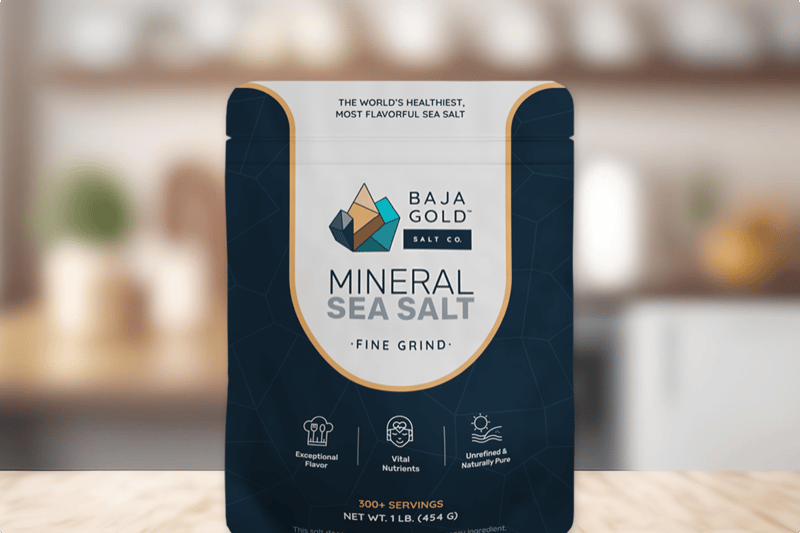
The amount of minerals in other unrefined sea salts can vary by brand. Some, such as Baja Gold Mineral Sea Salt, may contain more potassium and magnesium compared to Ancient Purity Celtic Sea Salt, but have similar amounts of sodium.
Although table salt may not contain as many trace minerals as Celtic salt, this type of salt often has iodine added.
“Celtic salt is… minimally processed,” Soares explains. “Table salt, on the other hand, is heavily refined, stripped of most natural minerals, and usually contains additives like anti-caking agents and iodine.”
Trying to decide between Celtic sea salt and the alternatives? The decision can come down to flavour, nutrition, and minimal processing.
“Celtic salt can be a fun and flavourful addition to your kitchen if used mindfully. It offers a few trace minerals and a unique taste,” offers Soares.
Meanwhile, Gulbin cautions that people “shouldn’t choose Celtic salt over table salt merely for these minerals since they’re insignificant in value when looking at the overall dietary needs daily of most adults.”
The takeaway
Celtic sea salt is making waves across social media, with many touting its potential health benefits. While some of the claims may be overstated, emerging research and anecdotal reports suggest it could be more than a flavorful, natural alternative to table salt.
What is Celtic salt? An unrefined sea salt harvested from coastal regions known for its grey color, briny taste, and containing trace minerals like magnesium, potassium, iron, and calcium, giving it a slight nutritional edge over table salt.
The health claims of Celtic salt include improved hydration, electrolyte balance, better digestion, and healthy muscle and nerve function, mostly due to its natural mineral content and lower sodium volume.
However, experts say the actual mineral content is too low to provide meaningful health benefits in a typical serving size of Celtic salt.
While Celtic salt may be slightly lower in sodium due to its larger flakes, overconsumption of any salt still poses health risks like high blood pressure and heart disease.
Celtic salt can still be used in moderation as a flavourful, minimally processed alternative and not as a substitute for dietary minerals or iodine, an important mineral present in iodised table salt.
FAQ
How much Celtic salt should you consume in one day? A typical serving size of Celtic salt, or one-quarter of a teaspoon, contains 460 mg of sodium. The recommended daily amount of salt adults (those aged 11 and older) should consume is no more than 6 g, which contains roughly 2400 mg of sodium.
What are the side effects of Celtic Sea Salt? There are no reported direct side effects of Celtic salt, but too much sodium can lead to heart disease, high blood pressure, and stroke.
Is Celtic salt good for the gut? While the sodium chloride in Celtic salt does play a role in the stomach acid necessary for breaking down food during digestion, more research is needed to determine how much of a role this salt plays in gut health.
What does putting salt under your tongue do? Many influencers put Celtic salt under their tongues to reap the benefits, such as better hydration and electrolyte replenishment, although there’s limited scientific evidence supporting these claims.
Which is better, Celtic or Himalayan salt? Neither is definitively better, as both Himalayan and Celtic salt contain similar amounts of sodium.
Is Celtic salt good for the kidneys? There’s mixed evidence on whether Celtic salt is good for the kidneys, as the minerals in the salt are necessary for kidney function; however, excessive salt intake can increase the risk of kidney disease.
Which salt is the healthiest? While Celtic salt may be considered healthier due to trace amounts of important minerals, all salts have similar amounts of sodium, no matter where they’re from.

References
Kreider, R.B., Kalman, D.S., Antonio, J. et al. International Society of Sports Nutrition position stand: safety and efficacy of creatine supplementation in exercise, sport, and medicine. J Int Soc Sports Nutr 14, 18 (2017). https://jissn.biomedcentral.com/articles/10.1186/s12970-017-0173-z
Forbes, S. C., Cordingley, D. M., Cornish, S. M., Gualano, B., Roschel, H., Ostojic, S. M., Rawson, E. S., Roy, B. D., Prokopidis, K., Giannos, P., & Candow, D. G. (2022). Effects of Creatine Supplementation on Brain Function and Health. Nutrients, 14(5), 921. https://pmc.ncbi.nlm.nih.gov/articles/PMC8912287/
Rasmussen, C., Greenwood, M., Kalman, D., & Antonio, J. (2008). Nutritional Supplements for Endurance Athletes. ResearchGate. https://www.researchgate.net/publication/227249571_Nutritional_Supplements_for_Endurance_Athletes
Dunn J, Grider MH. Physiology, Adenosine Triphosphate. [Updated 2023 Feb 13]. In: StatPearls [Internet]. Treasure Island (FL): StatPearls Publishing; 2025 Jan-. https://www.ncbi.nlm.nih.gov/books/NBK553175/
Guimarães-Ferreira L. (2014). Role of the phosphocreatine system on energetic homeostasis in skeletal and cardiac muscles. Einstein (Sao Paulo, Brazil), 12(1), 126–131. https://pmc.ncbi.nlm.nih.gov/articles/PMC4898252/
Aujla RS, Zubair M, Patel R. Creatine Phosphokinase. [Updated 2024 Feb 27]. In: StatPearls [Internet]. Treasure Island (FL): StatPearls Publishing; 2025 Jan-. https://www.ncbi.nlm.nih.gov/books/NBK546624/
Butts, J., Jacobs, B., & Silvis, M. (2018). Creatine Use in Sports. Sports health, 10(1), 31–34. https://pmc.ncbi.nlm.nih.gov/articles/PMC5753968/
Wu, S. H., Chen, K. L., Hsu, C., Chen, H. C., Chen, J. Y., Yu, S. Y., & Shiu, Y. J. (2022). Creatine Supplementation for Muscle Growth: A Scoping Review of Randomized Clinical Trials from 2012 to 2021. Nutrients, 14(6), 1255. https://pmc.ncbi.nlm.nih.gov/articles/PMC8949037/
Burke, D. G., Candow, D. G., Chilibeck, P. D., MacNeil, L. G., Roy, B. D., Tarnopolsky, M. A., & Ziegenfuss, T. (2008). Effect of creatine supplementation and resistance-exercise training on muscle insulin-like growth factor in young adults. International journal of sport nutrition and exercise metabolism, 18(4), 389–398. https://pubmed.ncbi.nlm.nih.gov/18708688/
Chandler, T. Jeff EdD, FNSCA. Strength and Conditioning Journal: A Key to the Future. Strength and Conditioning Journal 47(3):p 251, June 2025. https://journals.lww.com/nsca-scj/fulltext/2025/06000/strength_and_conditioning_journal__a_key_to_the.1.aspx
Olsen, S., Aagaard, P., Kadi, F., Tufekovic, G., Verney, J., Olesen, J. L., Suetta, C., & Kjaer, M. (2006). Creatine supplementation augments the increase in satellite cell and myonuclei number in human skeletal muscle induced by strength training. The Journal of physiology, 573(Pt 2), 525–534. https://pmc.ncbi.nlm.nih.gov/articles/PMC1779717/
Avgerinos, K. I., Spyrou, N., Bougioukas, K. I., & Kapogiannis, D. (2018). Effects of creatine supplementation on cognitive function of healthy individuals: A systematic review of randomized controlled trials. Experimental gerontology, 108, 166–173. https://pmc.ncbi.nlm.nih.gov/articles/PMC6093191/
Lyoo, I. K., Yoon, S., Kim, T.-S., Hwang, J., Kim, J. E., Won, W., Bae, S., & Renshaw, P. F. (2012). A Randomized, Double-Blind Placebo-Controlled Trial of Oral Creatine Monohydrate Augmentation for Enhanced Response to a Selective Serotonin Reuptake Inhibitor in Women With Major Depressive Disorder. American Journal of Psychiatry, 169(9), 937-945. https://psychiatryonline.org/doi/full/10.1176/appi.ajp.2012.12010009
Allen P. J. (2012). Creatine metabolism and psychiatric disorders: Does creatine supplementation have therapeutic value?. Neuroscience and biobehavioral reviews, 36(5), 1442–1462. https://pmc.ncbi.nlm.nih.gov/articles/PMC3340488/
Smith-Ryan, A. E., Cabre, H. E., Eckerson, J. M., & Candow, D. G. (2021). Creatine Supplementation in Women's Health: A Lifespan Perspective. Nutrients, 13(3), 877. https://pmc.ncbi.nlm.nih.gov/articles/PMC7998865/
Cribb, P.J.; Hayes, A. Effects of Supplement Timing and Resistance Exercise on Skeletal Muscle Hypertrophy. Medicine & Science in Sports & Exercise 38(11):p 1918-1925, November 2006. https://journals.lww.com/acsm-msse/fulltext/2006/11000/effects_of_supplement_timing_and_resistance.6.aspx
Buford, T.W., Kreider, R.B., Stout, J.R. et al. International Society of Sports Nutrition position stand: creatine supplementation and exercise. J Int Soc Sports Nutr 4, 6 (2007). https://jissn.biomedcentral.com/articles/10.1186/1550-2783-4-6
Dickinson, H., Ellery, S., Ireland, Z., LaRosa, D., Snow, R., & Walker, D. W. (2014). Creatine supplementation during pregnancy: summary of experimental studies suggesting a treatment to improve fetal and neonatal morbidity and reduce mortality in high-risk human pregnancy. BMC pregnancy and childbirth, 14, 150. https://pmc.ncbi.nlm.nih.gov/articles/PMC4007139/
Poortmans, J. R., & Francaux, M. (2000). Adverse effects of creatine supplementation: fact or fiction?. Sports medicine (Auckland, N.Z.), 30(3), 155–170. https://pubmed.ncbi.nlm.nih.gov/10999421/
Antonio, J., Candow, D. G., Forbes, S. C., Gualano, B., Jagim, A. R., Kreider, R. B., Rawson, E. S., Smith-Ryan, A. E., VanDusseldorp, T. A., Willoughby, D. S., & Ziegenfuss, T. N. (2021). Common questions and misconceptions about creatine supplementation: what does the scientific evidence really show?. Journal of the International Society of Sports Nutrition, 18(1), 13. https://pmc.ncbi.nlm.nih.gov/articles/PMC7871530/
Is the Creatine Loading Phase Worth It? (2024, November 5). Cleveland Clinic Health Essentials. https://health.clevelandclinic.org/creatine-loading-phase
Kaviani, M., Abassi, A., & Chilibeck, P. D. (2019). Creatine monohydrate supplementation during eight weeks of progressive resistance training increases strength in as little as two weeks without reducing markers of muscle damage. The Journal of sports medicine and physical fitness, 59(4), 608–612. https://pubmed.ncbi.nlm.nih.gov/29722252/
This article is for informational purposes only, even if and regardless of whether it features the advice of physicians and medical practitioners. This article is not, nor is it intended to be, a substitute for professional medical advice, diagnosis, or treatment and should never be relied upon for specific medical advice. The views expressed in this article are the views of the expert and do not necessarily represent the views of Healf
Rachel Sacks is a freelance writer and copywriter with over 10 years of experience writing about health and wellness, e-commerce, and lifestyle topics. She’s blended research, storytelling, and strategy for various brands and digital publications.
Her work has appeared in places like Healthline, Hims & Hers, Business Insider, Ro, Maximus, SheKnows, and Elite Daily. Her work includes feature and editorial writing, copywriting, and content marketing.
Rachel graduated from Miami University in Oxford, Ohio, with a Bachelor of Arts in Journalism and a Bachelor of Fine Arts in Art and Architecture History.