Loading...
The Healf Source
Why Are Neuroscientists Fascinated With God?
The evidence suggesting faith in a higher power measurably changes how the brain handles performance is building, and it has implications for all of us.

Written by: Ed Cooper
Written on: March 2, 2026
by Ed Cooper
Muhammad Ali thanked Allah before and after every fight. Simone Biles has spoken openly about how her Catholic faith carried her through the darkest period of her career. Novak Djokovic points to the sky after every title win, and Anthony Joshua has said he wouldn't step into the ring without praying first. Weight rooms and podiums, changing rooms and tracks — elite sport is saturated with athletes convinced that their performance is not entirely their own.
It's easy to dismiss this as ritual or superstition. But it’s harder to dismiss when Andrew Huberman — a Stanford neuroscientist who has built a global following on the back of mechanism-first health science — says he believes in God and has read the Bible. It's a small statement, but it points to a much larger (and longer) conversation. If someone whose entire platform is built on peer-reviewed science thinks faith has health benefits and is worth taking seriously, it's probably worth asking what the science of faith actually says.
So, what does science make of the fact that so many high performers keep pointing upward?
Is there a neurological basis for spiritual experience?
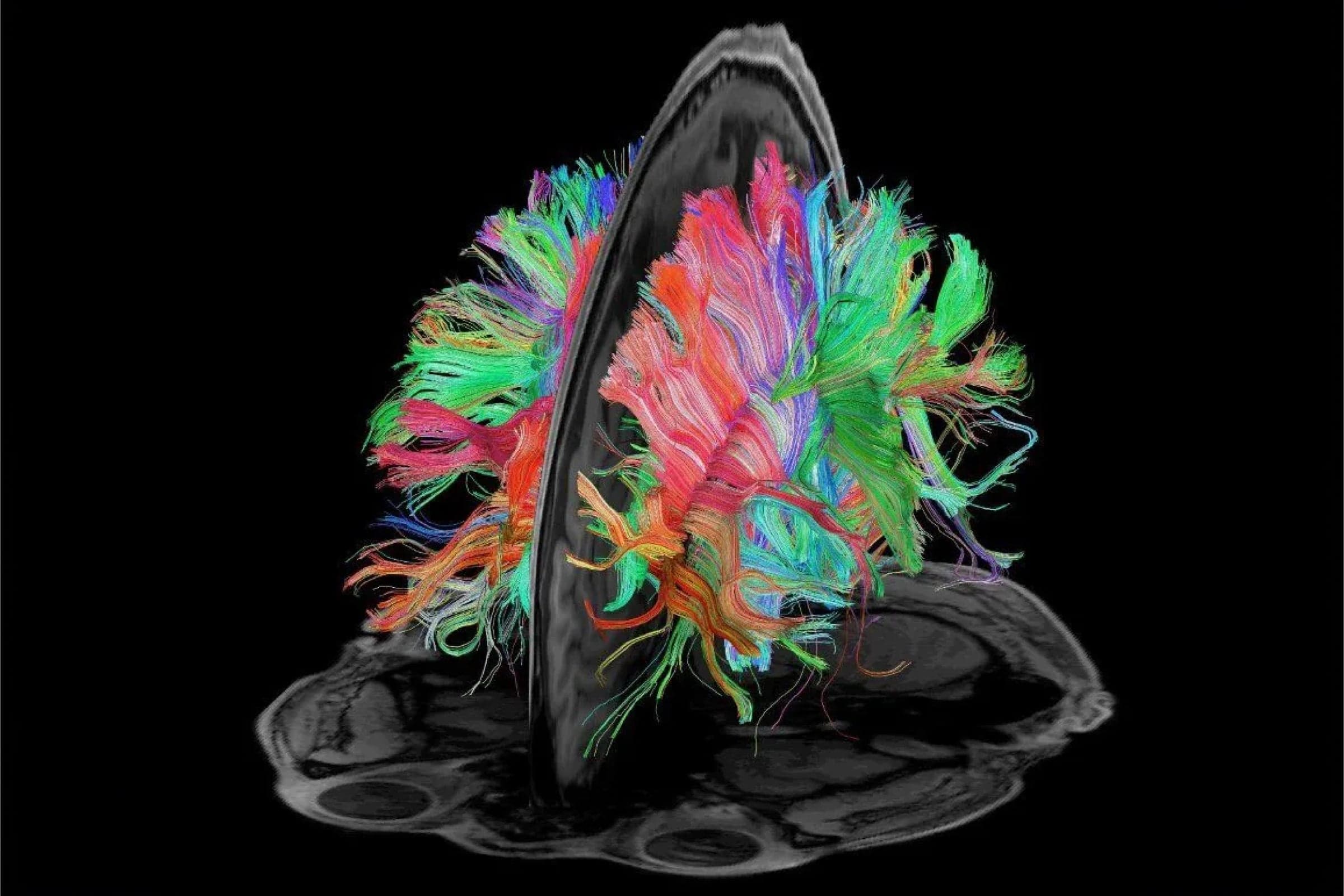
As a professor at Thomas Jefferson University and a neurotheologian, Andrew Newberg has scanned the brains of people mid-prayer and mid-religious experience — watching in real time what belief does to the organ responsible for everything we think, feel, and decide. His findings provide evidence that the brain responds to faith in pretty concrete, measurable ways.
"The brain is set up in such a way that makes religious and spiritual beliefs very easy to engage," Newberg explains, as "it does help with survival as well as self-transcendence." Data backs this up consistently — people with strong spiritual or religious lives tend to show lower rates of physical and mental illness and better overall mortality outcomes. These signals have shown up across cultures, methodologies and decades of research.
What does belief in a higher power do in the brain?
The more granular question is not just whether faith changes the brain, but how it changes it. This is where the imaging work Newberg has done becomes particularly telling — and where the findings start to have implications well beyond religion.
The more you believe in what you're doing, the more your brain responds to it.
People whose spirituality is sincere, rather than performative — and who genuinely believe in the practice, show more pronounced changes in activity in the brain's nucleus accumbens — the same reward and pleasure-processing regions active while listening to music, having sex, and exercising. Belief, in neurological terms, is less about content and more about intensity. "Our research has shown that when people fully engage and 'buy into' a practice, they are more likely to have an effect in their brain," says Newberg. "If religion provides that extra sense of engagement, it is likely to be beneficial." It’s here the nucleus accumbens releases dopamine, the “feel good” neurochemical and reward signal that the brain produces during experiences it finds pleasurable or meaningful, reinforcing belief itself.
Further research has shown that cortisol — the body's primary stress hormone — measurably decreases during prayer and meditation, with regular practice linked to improved hippocampal function and increased serotonin release. The brain, it turns out, functions differently when it believes it is part of something that extends beyond itself.
Do prayer and meditation impact brain chemistry?
As part of a ministry operating inside CrossFit gyms since 2014 called Faith RXD, Matt Wilcox is familiar with the intersection of faith and physical performance. His observations, built from inside a training environment rather than a brain scanner, align with Newberg's.
"One of our messages to athletes is that they are not competing for themselves, or with their own strength," he says. "It is for God and because of God and the gifts he has given them. Win or lose, they win." That reframing, he theorises, produces tangible changes in athletes: reduced anxiety and stronger performance under pressure. When your identity is no longer contingent on the result — when the weight of winning or losing is lifted — the brain's threat response is different and can reframe the concept of competition. Research, for example, shows the cortisol spike that impairs performance is driven less by competition itself and more by the perceived threat of an outcome you can't control.
Between faith and fitness, "there are many similarities," says Wilcox. "Both require considerable faith in the unseen future, that the effort that we are putting in today will one day lead to success and reward." Training, he says, “builds our humility, ability, discipline…and brings us peace, joy and mental wellbeing."
Wilcox points to Eric Liddell, the Scottish sprinter and missionary immortalised in Chariots of Fire, who said that when he ran, he felt “God's pleasure”. It's a description of operating above performance; and, according to Newberg’s finding, that distinction matters. What you believe about your situation could shape how it behaves.
Research also suggests that belief carries a measurable physical power — people with the conviction that they can overcome a situation have a demonstrably higher likelihood of doing so, with that mindset influencing not just the brain, but the body as a whole. In theory, the neural pathways built through religious practice don't only support faith, but could build a more robust ability to believe in outcomes.
What can belief do for your brain chemistry during moments of stress or trauma?
These findings apply whether you've set foot in a place of worship or not. Newberg is unambiguous: the neurological benefits of spirituality are not exclusive to formal religious belief or practices. "Secular individuals can engage their spiritual side through music, art, creativity, science, meditation, helping others, saving the environment," he says. What the brain appears to need is not doctrine, but orientation toward something larger than the self.
Newberg's research returns to a simple instruction: find ways to connect to something greater, something outside of your own brain. The data links this kind of mental orientation to lower stress, anxiety, and depression.
Whether that something is a higher power or service to others may be a question science cannot answer. What it can say is that the athletes pointing skyward are doing something neurologically meaningful. While it might look like gratitude, it could just as likely be a little spiritual medicine.



This article is for informational purposes only, even if and regardless of whether it features the advice of physicians and medical practitioners. This article is not, nor is it intended to be, a substitute for professional medical advice, diagnosis, or treatment and should never be relied upon for specific medical advice. The views expressed in this article are the views of the expert and do not necessarily represent the views of Healf
Ed is a freelance journalist and former Men’s Health digital editor, with bylines in Red Bull, BBC StoryWorks, Guardian Labs, Third Space, Natural Fitness Food and Form Nutrition, among others. Having run marathons, conducted sleep experiments on himself and worked with some of the world’s most in-demand experts — from sleep scientists and strength athletes to high-performance trainers and elite-level nutritionists — one thing remains clear for The Healf Source contributor: fitness trends come and go, but as long as you keep turning up for yourself, consistency will win every time.