

























_2026-10-13_14-11-48.png)


How Djokovic Turns Frustration Into Focus In 60 Seconds
When the crowd, score, and momentum are gone, his secret is a game-changing breathwork reset.
Written by: Samantha Nice
Written on: 18 August 2025
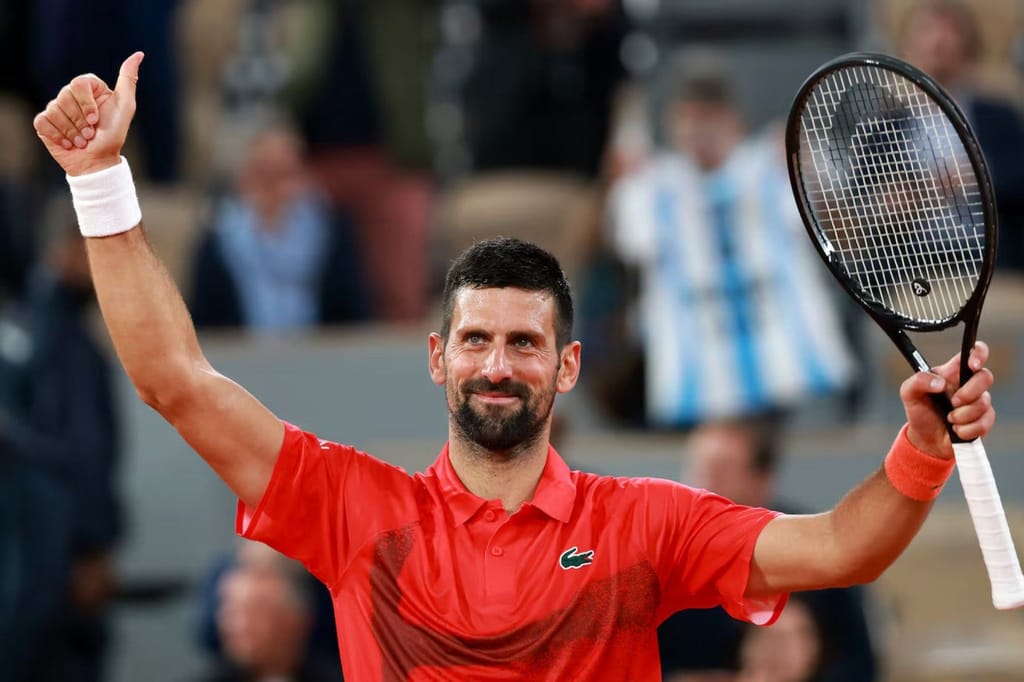
Last year at Wimbledon, Novak Djokovic faced one of those moments every athlete dreads… the crowd against him, the score slipping away and frustration bubbling up. Yet in the next point, he flipped the match. How? Not with a new serve or trick shot, but with his breath.
Djokovic’s courtside reset wasn’t just a mental pause, and as breathwork trainer, Stuart Sandeman pointed out, it was a full-body, physiological intervention. Here he tells us more about how breathwork can work wonders as a high-performance tool, not just for recovery or relaxation, but for real-time control of body and mind under pressure.
Djokovic’s secret mid-match reset
Watching Novak Djokovic at Wimbledon, it was clear he wasn’t at his peak. The tension on the court was visible and the scoreboard wasn’t in his favour. Yet, as always, he managed to turn the momentum around.
According to Sandeman, what made this moment remarkable wasn’t just Djokovic’s resilience, it was his use of breathwork as a strategic tool. “I’m a big fan of Djokovic. He’s a master of internal control. What stood out in this moment was how publicly he used breathwork to reset,” he says. “Most players use their 90-second changeover to simply hydrate and regroup, but Djokovic used every second in this moment to run a strategic breathing protocol to optimise his body and mind. I love how at 38 he’s still dominating the game. He’s also spoken openly about using breath, visualisation and meditation which are all core pillars in my work and life,” explains Sandeman.
Reading the body: What breathwork looks like in action
You might think breathwork is invisible, but careful observation reveals subtle, precise techniques. “He wasn’t playing his best to be honest and you could see the tension rising in him,” Sandeman says when describing Djokovic’s mid-match routine. “As he walked to his chair, he placed his fingers in his ears, a subtle move that stimulates the vagus nerve via the auricular branch, helping shift the body into a parasympathetic state. Then, on his seat, he massaged his diaphragm, especially around the solar plexus - another key point for vagal activation and releasing breath-holding tension. You could see the deliberate diaphragmatic breaths. It was clearly a step by step process to regulate his nervous system in real time.”
This combination of small, intentional movements and focused breathing helped Djokovic down-regulate tension and regain control, a technique that elite athletes often practice away from the cameras.
The diaphragm: Your body’s performance engine
The diaphragm isn’t just for breathing - it’s central to stress regulation and peak performance. Sandeman explains why: “In high-pressure situations, whether you’re on Centre Court or in a high-stakes meeting, engaging the diaphragm isn’t just about relaxation. It’s how you switch on your most efficient performance state: focused, energised and in control. It’s your body’s primary breathing muscle. When it’s working well, it draws air deep into the lungs, improves oxygen uptake, and reduces tension in the neck and shoulders. Two-thirds of your energy comes from your breath and if you’re not using the diaphragm properly, you’re leaking performance. It also plays a huge role in core stability. A strong diaphragm means better posture, less fatigue, and more efficient movement,” he adds.
Dr Andrew Huberman on the physiological sigh
It is not always about being in a breathwork or meditation class, or being on retreat. Sometimes, the breath that makes the difference is the one you do in the moment. That is where neuroscientist Dr Andrew Huberman brings in the physiological sigh. The breathing technique that acts as a fast reset when you need it. A double inhale through the nose, followed by a long, deliberate exhale.
When we are stressed, carbon dioxide builds in the blood. At the same time, the tiny air sacs in the lungs start to collapse. The double inhale reopens those sacs and the long exhale clears out a larger volume of carbon dioxide. The result is not just a sense of relief but a real change in the internal state. One to three rounds are usually enough to bring the body back into balance.
As Huberman notes, this is not a new concept. You can see it in nature. Animals like dogs will often do a version of it before they settle. You can also see it in people, especially children, when they cry hard and then instinctively do a double inhale before calming down.
How to do the physiological sigh
This technique works best when done through the nose, but if needed, you can use the mouth. You can do it anywhere, whether you are in the car, at your desk or caught in a difficult moment.
- Sit or stand in a comfortable position
- Take a deep inhale through the nose
- Without exhaling, take a second shorter inhale through the nose to top up the lungs
- Then exhale fully, slowly and steadily, through the nose or mouth
- Repeat this cycle one to three times as needed
This breath can be done on demand. It is not a daily protocol or a meditative routine. It is for use in the moment when stress hits.
Huberman also explains how this influences heart rate variability, which is often used as a signal of how well your body is coping with stress. When you inhale, the diaphragm moves downward to make space for your lungs to expand, which in turn stretches the heart slightly. That small stretch slows blood flow, and the brain responds by sending a signal to increase your heart rate.
During the exhale, the diaphragm lifts, the heart contracts again, blood flows more quickly, and the brain slows the heart down. Essentially, when you make your inhales longer or more vigorous than your exhales, you increase your heart rate and alertness. Longer exhales do the opposite, helping to calm the system down and lower your heart rate.
The science of a breath reset
Breathwork isn’t just about calming down - it reshapes how the brain and body respond to stress. “When you release tension in the diaphragm, you also release stored stress in the body,” says Sandeman. “Slow, conscious breathing, especially with extended exhales, activates your parasympathetic nervous system. That’s the brake pedal for stress and it can tame anger and frustration too - something that was affecting him at this moment. In this type of reset your brain shifts out of the limbic system (reactive, emotional) and into the prefrontal cortex (strategic, focused, calm). You literally move from survival mode to flow state mode and you get ‘in the zone.’ Blood pressure drops, cortisol reduces, and alpha brainwaves increase which helps you think clearly and perform under pressure,” adds Stuart.
In other words, a few deliberate breaths can switch you from reactive to strategic thinking, giving you the clarity needed to turn a game (or any high-pressure situation) around.
Breathwork as a performance tool
While many associate breathwork with relaxation, Sandeman emphasises its broader applications too. “Relaxation is just the entry point. In high performance, you don’t want to be sleepy - you want to be switched on and fully in control,” he adds. Breathwork can do way more than just calm the system. “It can also manipulate CO2 levels, increase nitric oxide and enhance oxygen delivery to tissues, meaning your brain and muscles work better under pressure. It boosts vagal tone and HRV, which helps you recover faster between points or sprints too,” says Sandeman.
Structured breathwork can even improve stamina, recovery and sleep. Breathwork isn’t just for managing stress - it’s a tool to upgrade your entire physiology and Djokovic’s performance shows exactly how effective it can be.


Can anyone harness this power?
Breathwork is surprisingly accessible and it’s a skill anyone can develop - not just athletes. “Anyone can start using breathwork right now and feel a shift,” says Sandeman who explains that’s the beauty of it. “But like any skill, the more reps you put in, the more automatic it becomes. Your nervous system becomes more flexible and more adaptable.”
Even a minute of simple breathing can sharpen focus and lower heart rate. “Whilst 60 seconds of 5-5 breathing (coherent breath) can really help, the real power comes with consistency. You literally train your system to stay steady under pressure. I’ve worked with the England football team, Olympians, execs, artists, and through our app, thousands of people have tapped into this,” says Sandeman. “The ones who practice daily are operating at a whole other level.”
How breath shifts competitive momentum
Breathing doesn’t just affect your internal state, it can shift outcomes in real time too. “Breath shifts your state and your state drives your next move. It affects your timing, your decision-making and your recovery,” he says. “When you can down-regulate in seconds, you regain control of certain situations. That shift is felt by others too. When you’re calm and centred, it impacts the whole environment. You can drop into that ‘in the zone’ state where everything clicks and performance feels effortless. I’ve seen athletes use one minute of breath between rounds and come back like a different person: sharper, more present, more powerful,” he adds. This is the kind of edge that allows elite performers like Djokovic to turn matches around seemingly effortlessly.
The breathpod approach
Sandeman's method, Breathpod, combines science, music, mindset and somatics to help anyone harness breath for transformation. “It’s a multi-sensory experience that rewires your system from the inside out. Whether through the app or in person, we help people shift fast… from stressed to present, from blocked to energised. It’s grounded in neuroscience and designed for transformation, not just relaxation,” he explains.
Keen to discover the benefits on the Breathpod app?
Start your 7-day FREE trial of the Breathpod app with hundreds of guided breathwork sessions to help you feel calmer, clearer, and more energised anytime, anywhere. As a Healf reader, you also get 20% off an Annual Membership which you can claim HERE.
Transformations beyond the court
The results go far beyond athletic performance. “I’ve seen people overcome anxiety that ruled their life, athletes improve focus and stamina, artists unlock flow and creativity and CEOs find confidence to command clarity in the boardroom,” says Sandeman. “One client recently said our sessions helped her finally sleep after 10 years of insomnia. Another used it to heal emotionally after burnout and divorce. Many people come to me for support with grief too.”
From physical performance, mental and emotional support, to deeper connection with purpose and meaning in life, the common thread is that everyone is looking to reconnect to who they really are. Sandeman helps strip back any noise and build a new baseline - physically, mentally and emotionally.
Closing thoughts: The breath that wins championships
Djokovic’s mid-match reset wasn’t luck. It was precision, training and deep body awareness, all executed under pressure. As Sandeman explains, “Calm under pressure isn’t luck… it’s a trained skill. Whether on the tennis court, in the boardroom, or navigating life’s toughest moments, the power of the breath is a tool accessible to everyone but only fully effective when practiced consistently.



This article is for informational purposes only, even if and regardless of whether it features the advice of physicians and medical practitioners. This article is not, nor is it intended to be, a substitute for professional medical advice, diagnosis, or treatment and should never be relied upon for specific medical advice. The views expressed in this article are the views of the expert and do not necessarily represent the views of Healf
Samantha Nice is a seasoned wellness writer with over a decade of experience crafting content for a diverse range of global brands. A passionate advocate for holistic wellbeing, she brings a particular focus to supplements, women’s health, strength training, and running. Samantha is a proud member of the Healf editorial team, where she merges her love for storytelling with industry insights and science-backed evidence.
An avid WHOOP wearer, keen runner (with a sub 1:30 half marathon) hot yoga enthusiast and regular gym goer, Samantha lives and breathes the wellness lifestyle she writes about. With a solid black book of trusted contacts (including some of the industry’s leading experts) she’s committed to creating accessible, well-informed content that empowers and inspires Healf readers.