








































_2026-10-13_14-11-48.png)


Hold The Room – Can Your Breath Make You Persuasive?

Written by: Samantha Nice
Written on: 12 March 2025
Ever feel like an imposter in the room? Discover how mastering nose breathing can bring clarity to your voice, dispel self-doubt, and enrich your message to command attention in a way that is truly authentic and confident.
In this article, we will discuss how nose breathing can help override imposter syndrome, giving you the vocal strength to speak with confidence, authority, and resonance.
Breathe out doubt: confronting imposter syndrome
Have you ever heard two people say exactly the same words but you interpret them both completely differently? That is because the human brain tunes into a wealth of hidden communication signals, both visual and audible, to decipher the true meaning and feeling behind the message that is being conveyed. Crucially, the voice is the most important carrier of this message, but is often where most people fall short.
Transforming anxiety into authority
Research indicates that the brain readily interprets vocal cues like pitch and tone to assess trustworthiness. And, when you stop to think about it, this makes perfect sense. We do appear to all have an innate sense of who is (seemingly) confident and who is nervous or insecure.
Let’s use questions as the first example. Hesitation and use of questions are sometimes needed in conversation. However, overuse of questions can make a person seem too unsure of what they are saying or their place in the social hierarchy. Likewise, there is a term called 'uptalk', used to describe inflections at the end of statements that make them sound like questions when they are not. Uptalk can also be unhelpful in some conversational contexts, particularly if you desire to sound authoritative in that moment.
Another example includes ‘vocal fry’, which is used to describe the voice when it becomes too low and too textural or ‘creaky’, which disrupts the audibility and clarity of what a person is saying. It is common in both males and females, yet the culprit tends to be a lack of breathing awareness — primarily breath that is ‘too shallow’.

Crafting a confident voice: don’t “fake it ‘til you make it”
Regardless of a person’s hierarchical position in society or company role, and irrespective of gender or preferred gender identity, it is possible to sound confident and carry one's unique personality in a way that is truly aligned with the core self. The power is always in the breath.
You can start by thinking deeper about your tone and by using these simple tips to alter your physicality when speaking:
Step 1: Find the correct posture
In order to allow your body to carry your voice at your best possible capacity, feet should always be shoulder width apart with your weight evenly distributed when standing.
Take a few deep breaths before you start and remember to not gesticulate too heavily as it can take the power and volume away from your voice, it can even make you a bit breathless if you are feeling nervous. Instead, use minimal hand gestures and ensure a straight back, no hunching. Amy Cuddy delivers an excellent TED Talk on this topic alone.
Step 2: Adopt deep breathing throughout.
In order to convey your message in the best possible manner, breathing must be balanced at a speed and depth that does not bring you discomfort. It is something worth practicing in your own time. You should be aiming to avoid shallow breaths, but do not make the breath too dramatic. Keep a steady core and breathe in through the nose from the stomach, not the chest.
People often refer to this technique in the context of meditation as ‘belly breathing’. Belly breathing is designed to follow the biological function of the diaphragm and place your attention just at the point of your upper abdomen, and not the chest when you are breathing naturally.
Step 3: Speaking with the breath
Deep breathing, for most people, might seem like the easy part. Yet, public speaking tends to get most difficult when you combine the breath with words. When a full breath has entered your lungs, through your nose, use that breath to form your next sentence, and let it out steadily like a balloon whilst doing so. A lot of people turn to counting techniques when looking to polish this craft.
Inhale through your mouth as you prepare to speak.
Relax your tongue to avoid noisy or gasping breaths.
Breathe deeply into your belly, feeling it rise on inhalation and fall on exhalation.
Monitor your breath by placing one hand above and one below your navel—observe your breath as it moves through your body.
Speak on the exhale, allowing your belly to draw in naturally. Practise this in your own time by vocalising “AH” on exhalation.
Repeat until airflow is smooth and tension-free.
Let your breath settle naturally before reversing direction. Over time, and with proper practice it should sync up with your speech more effortlessly.
Follow your breath’s natural rhythm, rather than forcing it.
Trust your breath to support your speech, reflecting your emotions and intentions.
Develop breath control with counting exercises:
Count aloud, pausing for a new breath at regular intervals (e.g. 1, 12, 123, 1234…).
Start with shorter sequences (up to 10) and gradually extend (up to 15 or 20) as your breath control improves.
Add only one number at a time to avoid straining your breath.
Step 4: Listen to yourself
If you are not used to hearing your voice recorded, this might be a point of controversy. Yet it is something that is so important to hear. Experts believe that listening to a recording of yourself delivering your message, rather than the traditional ‘practicing-in-the-mirror technique’ is the optimal way to recognise and face up to any issues there might be with your voice.
If this option is unavailable to you, you can also use a friend or a partner to pick up on any subtle cues you might be missing.
Some additional talking points
Slowing it down for clarity
Perhaps, most crucially, over digital platforms and video conferences, clarity is a key point in mastering your own voice. Hearing and understanding are, of course, two separate things. But you must be heard completely for people to engage fully with your message.
Yet, clarity is not just about volume, speaking loudly and courageously. It’s about precision and careful delivery at a pace that is most suitable to your audience. Most people speak far too fast without realising it. Practice your nasal breathing technique, slowing down, recording it, and perceiving for yourself the difference it can make.
Speaking with true emotion
Going back to earlier points regarding layered visual and audible cues that we are primed to interpret over words alone, perceived emotion is a massive area that is often overlooked in professional environments.
Most people struggle to balance the ‘warm and friendly’ with the ‘acute, authoritative and professional’ emotional undertones to the voice. Striking a perfect balance of the two, based on your position and your natural character will put forward a winning combination.
Gentle and considered breathing techniques such as nasal breathing, can help promote parasympathetic activation and allow for a more intuitive sense of self awareness as you talk.
The key is in the pitch
Lower pitch is famously more authoritative. Research demonstrates that people are more likely to be convinced and build a sense of trust towards a voice at a deeper pitch. Nose breathing can help to balance the pitch of the voice by reducing any nervousness. Of course, lowering the pitch of your voice should be done in a way that is most natural to you as an individual and shouldn't be forced, as you may then risk losing some of the clarity you have worked so hard to achieve.
The power of a pause
A strategically positioned pause, that is. The speech or the point you are delivering, may not be new to you, but it is new to your audience.
This is a vital factor, worth considering when you are designing natural pauses in your vocal flow. It allows people to absorb what has just been said. It also allows you a little time to catch up on your breath and prepare for the next leg.
Research shows people are more receptive to speeches with pauses because it allows for more memorability of the points that are being made.
The takeaways
If you are looking to step-up your public speaking, rule number one is: don’t try to be someone else.
Instead of mimicking another person, focus on enriching your own voice through deep and considered nasal breathing techniques. After all, your voice is the only one that is deeply entwined with your own personality and identity; it is accompanied by the deserving depth and resonance every time you speak. Ultimately, when your vocal presence mirrors the strength of your message, your audience will undoubtedly be impressed.
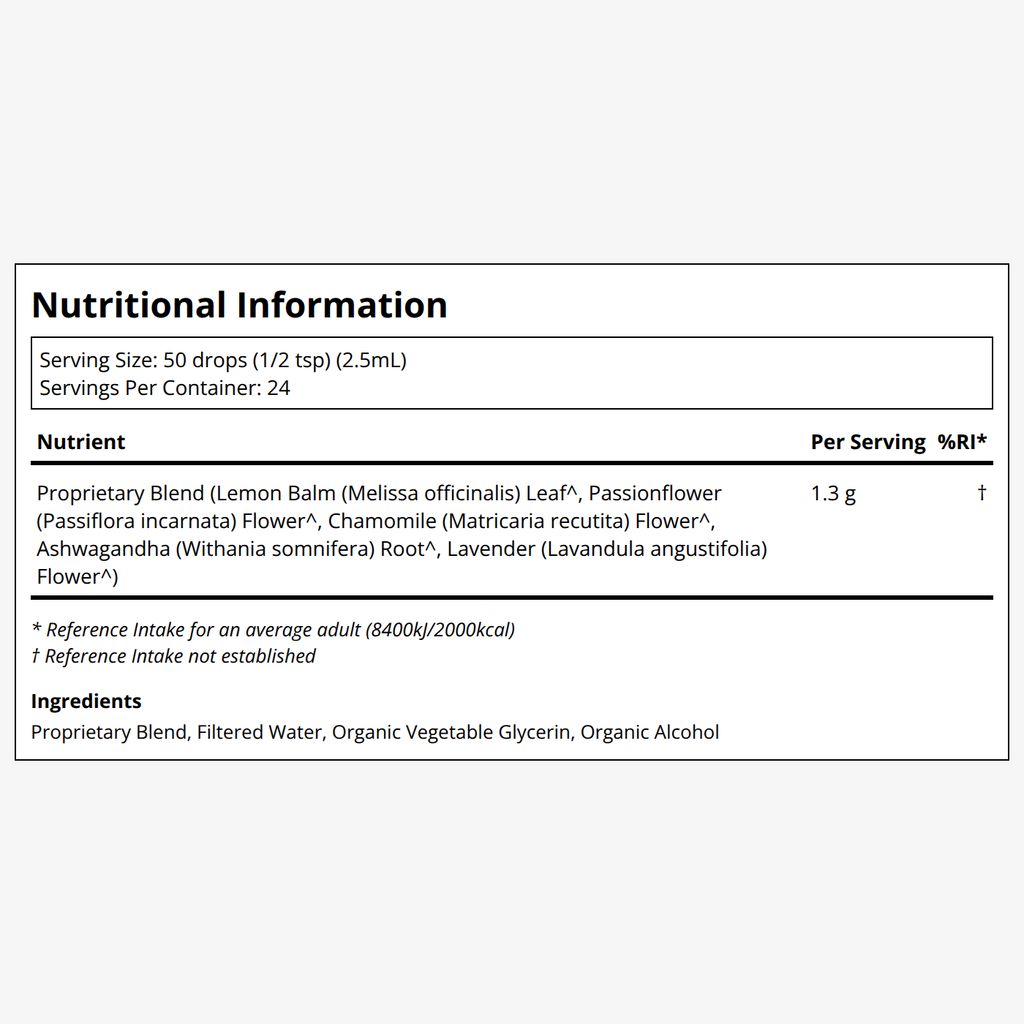
Shop MIND at Healf for unique ways to nurture your internal and external voice and bring power to how you show up every day.



References used
https://www.nidcd.nih.gov/health/taking-care-your-voice
https://pmc.ncbi.nlm.nih.gov/articles/PMC2852650
https://pubmed.ncbi.nlm.nih.gov/36074921/
https://www.bbc.co.uk/news/magazine-28708526
https://pmc.ncbi.nlm.nih.gov/articles/PMC7065773/
https://pmc.ncbi.nlm.nih.gov/articles/PMC6123225/
http://www.ted.com/talks/amy_cuddy_your_body_language_shapes_who_you_are?language=en
https://pubmed.ncbi.nlm.nih.gov/36333216/
https://voicefoundation.org/articles/breathe-and-speak-with-ease/
https://pmc.ncbi.nlm.nih.gov/articles/PMC6124796/
https://www.frontiersin.org/journals/communication/articles/10.3389/fcomm.2022.869084/full
https://pmc.ncbi.nlm.nih.gov/articles/PMC3350713/
https://pubmed.ncbi.nlm.nih.gov/12150370/
https://pmc.ncbi.nlm.nih.gov/articles/PMC6189422/
https://voicefoundation.org/articles/breathe-and-speak-with-ease/
This article is for informational purposes only, even if and regardless of whether it features the advice of physicians and medical practitioners. This article is not, nor is it intended to be, a substitute for professional medical advice, diagnosis, or treatment and should never be relied upon for specific medical advice. The views expressed in this article are the views of the expert and do not necessarily represent the views of Healf
Samantha Nice is a seasoned wellness writer with over a decade of experience crafting content for a diverse range of global brands. A passionate advocate for holistic wellbeing, she brings a particular focus to supplements, women’s health, strength training, and running. Samantha is a proud member of the Healf editorial team, where she merges her love for storytelling with industry insights and science-backed evidence.
An avid WHOOP wearer, keen runner (with a sub 1:30 half marathon) hot yoga enthusiast and regular gym goer, Samantha lives and breathes the wellness lifestyle she writes about. With a solid black book of trusted contacts (including some of the industry’s leading experts) she’s committed to creating accessible, well-informed content that empowers and inspires Healf readers.