














Breathwork vs Vagus Nerve Stimulation: Which Calms Your Nervous System Faster?
Both can help with stress, sleep and recovery, but which works quickest depends on the person, the moment and the method.

Written by: Samantha Nice
Written on: 13 March 2026
If there’s one thing that’s booming in the world of wellbeing right now, it’s nervous system regulation. As life speeds up, stress levels rise and recovery becomes harder to maintain, we’re all looking for practical ways to help our bodies switch off properly.
Two approaches are gaining particular attention: breathwork, which has moved from niche practice to an everyday ritual, and vagus nerve stimulation, which has a long clinical history (with newer, non-invasive versions now becoming more visible in wellbeing spaces). Both are now firmly on the radar for anyone trying to feel calmer, sleep better and recover more reliably. The goal is similar, but the mechanism is not.
So which works faster? Which works deeper? And does one have an advantage over the other when it comes to helping the body truly settle? Who better to ask than psychologist and neuroscientist Dr Sabina Brennan C.Psychol., PsSI., PhD who specialises in brain health and the neuroscience and psychology of stress, attention and behaviour change.
What’s the difference between breathwork and vagus nerve stimulation?
Before comparing, Brennan says it’s essential to understand that vagus nerve stimulation isn’t one single technique. “The phrase ‘vagus nerve stimulation (VNS)’ is often used to describe very different things so I think it’s useful to slot them into three categories.” These include:
- behavioural breathwork (like slow nasal breathing or extending your exhale)
- behavioural vagus-focused practices (such as humming, splashing cold water on your face, or grounding exercises)
- medical-grade vagus nerve stimulation (device-based electrical stimulation)
While all three can influence how calm or alert you feel, they work through different systems in the body and tend to be used in very different contexts.
Breathwork uses slower breathing to move your body out of stress mode
Breathwork is the practice of deliberately slowing and controlling your breathing, often by breathing more slowly and extending your exhale. “Breathwork acts through the respiratory system. Breathing is unusual because it is both automatic and under voluntary control which makes it a powerful route for influencing our arousal state,” Brennan explains.
This matters because your breathing pattern and your stress level are directly linked. When you feel stressed, breathing naturally becomes faster and shallower. When you deliberately slow it down, the opposite signal is sent back to the brain — that the body is safe. Brennan explains that changing breathing patterns can alter “physiological arousal, carbon dioxide balance, heart rhythm patterns associated with breathing, and body-to-brain signals that influence how safe or threatened a person feels.”
That shift changes how your nervous system behaves. For many, heart rate slows, muscle tension reduces, and the body can begin moving out of a heightened stress state and into recovery. This is why even a few minutes of slower breathing can make you feel calmer, clearer, and more settled.
Behavioural vagus-focused practices use sensory cues to interrupt stress and help your body settle
Vagus-focused practices are techniques that use simple physical or sensory actions to help calm the nervous system. “These may help through a combination of pathways, rather than one single ‘vagus switch’,” Brennan says. Common examples include humming, chanting, splashing cold water on your face, gentle movement, or grounding exercises like focusing on physical sensations.
One reason these can be effective is that they give your nervous system new input to respond to. When you’re stressed, your brain tends to stay locked onto the source of that stress. Brennan explains that sound, vibration or cooling “can provide strong bottom-up sensory input that interrupts escalating distress and gives the brain new information to process besides the stressor.”
These signals help break the stress loop, with effects that are both physical and mental. Humming naturally slows your breathing, and splashing cold water on your face can trigger reflex-like physiological changes in some people that help interrupt escalation/calm down. Brennan explains that these responses are not simply psychological: “Certain practices may trigger automatic physiological responses. This matters because it means people are not simply ‘thinking themselves calm’ – the body itself is contributing to the change in state.”
This is why these techniques can feel surprisingly effective in the moment. They shift both your attention and your physical state, helping your nervous system move out of high alert and into a more settled mode.
Medical-grade vagus nerve stimulation uses electrical signals to influence vagal pathways
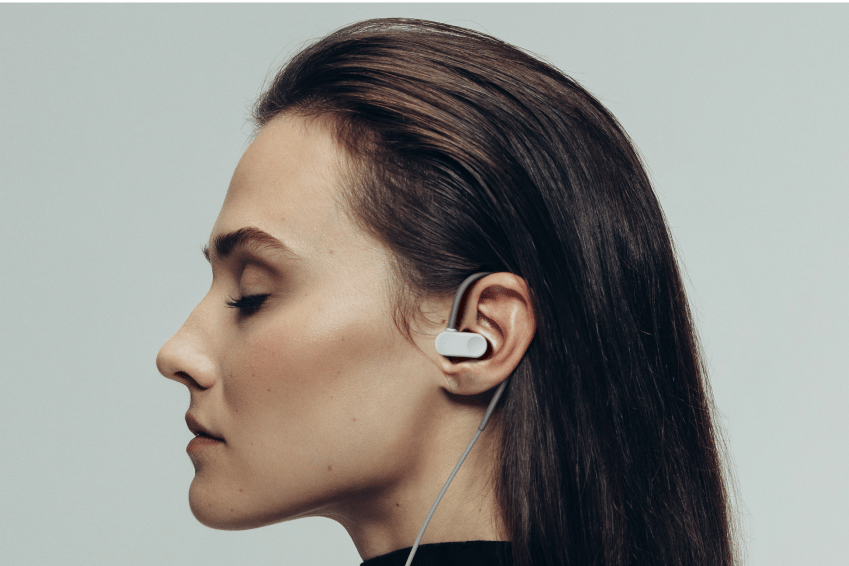
Medical vagus nerve stimulation works differently again and uses electrical stimulation to interact with vagal nerve pathways. “This is a device-based neuromodulation treatment often used in clinical settings for specific diagnosed conditions,” Brennan explains. Traditionally, this has involved implanted or handheld medical devices prescribed for conditions such as epilepsy, treatment-resistant depression, or certain headache disorders. The aim is to influence nervous system activity more directly using controlled electrical impulses rather than behavioural techniques.
Brennan also notes that newer non-invasive devices are beginning to appear more widely, but their role is still being defined. “Device-based vagus nerve stimulation is used in clinical settings for specific conditions, and non-invasive devices are also being explored more broadly in some scenarios, but evidence and regulatory approval vary depending on the device, indication and country.” This makes them distinct from breathwork or sensory practices, which are self-regulation skills anyone can use without equipment.
Which works faster when you feel stressed or overwhelmed?
When stress hits, the most useful tool is often the one you can use immediately for instant relief. “For most, breathwork is the fastest and most practical first-line option because it doesn’t require any equipment, can be used discreetly, and directly influences arousal via the breathing system,” Brennan explains. That accessibility is a big part of its strength and appeal. You don’t need an app, a device, or a quiet room. Slowing your breathing on a commute, at your desk, or before a meeting can begin shifting your physiological state within minutes.
Vagus-focused practices can also work quickly, particularly for those who find breathing exercises difficult to focus on in stressful moments. “These approaches can be especially helpful for people who need an external anchor – something sensory or action-based that shifts attention away from stress amplification, threat monitoring, spiralling thoughts, and helps interrupt escalation,” Brennan says. In other words, if focusing on your breath feels frustrating or makes you more aware of your anxiety, something like humming, cooling your face, or grounding your body can be easier to access.
Brennan is clear that device-based stimulation plays a different role. “Medical-grade VNS is not a first-line strategy for ordinary day-to-day stress. It’s most appropriate for condition-specific treatment under clinical guidance,” she explains.
That distinction matters because nervous system regulation in daily life relies heavily on skills your body can generate itself. Behavioural methods like breathing or sensory grounding strengthen your ability to shift out of stress when it happens, rather than relying on external intervention.
Which is better for long-term nervous system regulation?
When it comes to building lasting nervous system resilience, Brennan says the most effective tools are usually the ones you can practise consistently. “Breathwork is usually the best foundation for self-regulation,” she explains. “The nervous system adapts through repetition and behaviour change depends on consistency and habit.”
This is where breathwork has a clear advantage. It is accessible, free, repeatable, and can be used anywhere, anytime. Over time, regular practice helps your nervous system move more easily between stress and recovery. That flexibility is the real aim of nervous system regulation. It means being able to respond to stress when needed and recover efficiently afterwards.
Behavioural vagus-focused practices can play an important supporting role here and often work well alongside breathwork. “They are often best used as helpful additions to a broader regulation toolkit, especially for those who need sensory or social routes into calming,” Brennan says.
Device-based vagus nerve stimulation is beginning to be explored more commonly as an additional layer of support. Brennan notes that these interventions are not to be considered the same as behavioural tools and that their role, evidence, and appropriate use can vary depending on the device and individual context.
What matters most is not relying on a single technique, but having a few different methods that each help your nervous system recover. A good starting point, Brennan recommends, is practising slow, comfortable breathing for a few minutes each day when you already feel calm. “This simple practice builds familiarity and increases confidence, making it easier to access the skill in times of stress,” she explains. From there, additional tools can be layered in based on personal preference and response. The aim is to improve your ability to handle stress and return to balance more easily afterwards.
When vagus nerve-focused practices may work better than breathwork
Although breathwork works well for many, it isn’t always the easiest thing to master and some do feel more regulated using external or sensory-based tools instead. “People who may benefit most are those who find breath-focused exercises uncomfortable or difficult, become more anxious when trying to control their breathing, respond better to sound, vibration, cooling, or movement, or need a more external focus when dysregulated,” Brennan explains.
This highlights that nervous system regulation, like with most things in the wellbeing world, is not one-size-fits-all. What works best depends on your preferences, the situation and what your nervous system responds to most easily in that moment.
Is combining both more effective than using just one?
Rather than choosing one over the other, you may benefit from using both breathwork and vagus nerve stimulation together. “From a psychological perspective, stress is not one single process. It can involve body arousal, anxious thoughts, emotional reactivity, sensory overload, and social context,” she adds. Since it affects multiple systems, different tools can help address different parts of that response.
“For example, use slow breathing to lower physiological arousal, then add humming, grounding, movement, or social support to help the system settle more fully,” says Brennan. This reflects how nervous system regulation actually works in real life. Some situations call for slowing your breath, whereas others respond better to movement, temperature, sound, or connection. “Combining tools can be useful, but effectiveness will again depend on the mechanism and the person,” Brennan adds.
Where to start if you want better nervous system regulation
“Regulation does not mean being calm all of the time. It means being able to shift gears appropriately in response to change, challenge, or stress and then recover,” Brennan explains. For most, she recommends starting with repeatable breathwork. “Try two to five minutes of slow, comfortable breathing once or twice a day, ideally when feeling calm. Without forcing, give a slightly longer exhale than inhale.”
Practicing when calm helps build familiarity, so the technique is easier to access when stress rises. From there, adding other tools can strengthen your overall resilience. “Then build a small, personalised toolkit. A sample toolkit could include humming, vocalisation, a short walk, calm supportive social connection, a cool splash of water on the face, or grounding through touch or movement.”
The bottom line? Start with breathwork and build from there
If you’re wondering where to start, breathwork should be your first move. It gives you a direct, repeatable way to influence your nervous system that you can use anywhere, and the more consistently you practise it, the more effective it becomes.
Vagus-focused techniques come into their own in specific moments, especially when you feel too overwhelmed to focus on breathing or need something more physical to break the stress cycle. They work best as in-the-moment tools rather than the main foundation.
Device-based vagus nerve stimulation isn’t a replacement for learning how to regulate your system yourself, but for some, it can be a useful add-on, especially when used intentionally alongside behavioural tools rather than instead of them.
So if you’re deciding where to put your energy and time, put it into learning how to control your breathing first. Once that skill is in place, the other tools can make it easier to access calm more quickly, more reliably, and in a wider range of situations. That’s ultimately what regulation is about: not choosing one method, but having the ability to steady your system when it matters most.

This article is for informational purposes only, even if and regardless of whether it features the advice of physicians and medical practitioners. This article is not, nor is it intended to be, a substitute for professional medical advice, diagnosis, or treatment and should never be relied upon for specific medical advice. The views expressed in this article are the views of the expert and do not necessarily represent the views of Healf
Samantha Nice is a seasoned wellness writer with over a decade of experience crafting content for a diverse range of global brands. A passionate advocate for holistic wellbeing, she brings a particular focus to supplements, women’s health, strength training, and running. Samantha is a proud member of the Healf editorial team, where she merges her love for storytelling with industry insights and science-backed evidence.
An avid WHOOP wearer, keen runner (with a sub 1:30 half marathon) hot yoga enthusiast and regular gym goer, Samantha lives and breathes the wellness lifestyle she writes about. With a solid black book of trusted contacts (including some of the industry’s leading experts) she’s committed to creating accessible, well-informed content that empowers and inspires Healf readers.