




















Dopamine Decor Meets Cloud Dancer
Dopamine decor is the viral interiors microtrend directed at easing overstimulation through mood-led design. Pantone’s Cloud Dancer defines calm, clarity of mind and stillness.
Written by: Pippa Thackeray
Written on: 22 January 2026
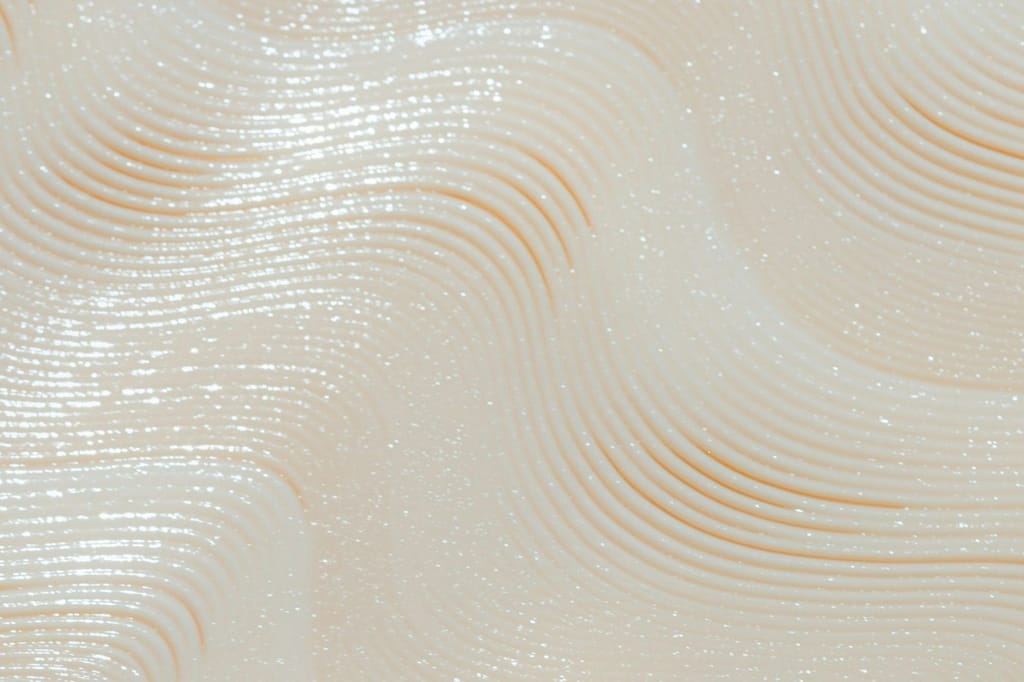
“A billowy white imbued with a feeling of serenity” – Pantone’s Cloud Dancer described by Leatrice Eiseman, Executive Director.
Colour can provide a powerful immersive experience for the senses and has been explored scientifically for its unique ability to augment our mood. White, when used with purpose, can transform how a space feels.
That’s why for 2026, Pantone has recognised this with its Colour of the Year: Cloud Dancer.
It’s a pale tone, a derivative of white, coded as PANTONE 11-4201, and part of a much wider movement in interiors.
Reflecting a growing demand for calm, simplicity and emotional clarity amidst a chaotic societal backdrop, the Dopamine Decor trend and Cloud Dancer are now set to join forces, prioritising design that soothes and helps to reduce overstimulation, somehow without getting too boring.
Colour as part of wellbeing
Excessive clutter, contrast or colour saturation can increase background stress. That’s where dopamine comes in.
Dopamine plays a central role in emotional regulation, motivation and response to environmental cues. Something the design concept Dopamine Decor aims to hijack.
How to do Dopamine Decor
Dopamine Decor is a joyful interior design trend focused on generating feelings of happiness by using bright colours, bold patterns, unique textures, and personal items that stimulate pleasure, tapping into the source of the brain's "feel-good" chemical it's named after.
It encourages breaking from minimalism to embrace individuality, nostalgia, and playful, mood-boosting elements like vibrant art, quirky accessories, and clashing prints.
You can think of it like your own personal stage set, and you’re the protagonist.
Dopamine decor avoids feeling "tacky" or "trashy" through intentional curation and visual balance, recasting a potentially chaotic space into a sophisticated, personal sanctuary. Unlike generic maximalism, it relies on several design principles to maintain a high-end feel.
Is Cloud Dancer the antithesis to Dopamine Decor? What might they have in common?
Cloud Dancer offers a sensory pause and can also alter mood, not through energy or vibrancy, but by reducing any internal friction. It could be said that’s the core functional aim of this trend: to provide a space that doesn’t ask the nervous system to do extra leg work.
What they have in common
Despite their stark differences, the two aesthetics do share some similarities:
Focus on emotional wellbeing: Both styles aim to positively influence mood and create a comfortable living space, albeit through opposite means.
Intentionality: Both move away from "cookie-cutter" or "fast-design" approaches that tend to use standardised, mass-produced methods, often sacrificing personalisation for speed or efficiency.
Versatility: Both can serve as a base for other elements. Cloud Dancer can act as a backdrop that makes bold accents "pop" and allows other elements to breathe, while the principles of dopamine decor can be applied to various items within a room (e.g., a single piece of statement furniture).
Texture is key: In both styles, texture is still relevant for both trends. Dopamine decor uses varying textures for visual interest and a tactile experience, while Cloud Dancer relies on natural materials and finishes to add depth and warmth to the soft neutral palette.
The emotional intention behind cloud dancer
Each year, Pantone releases a colour chosen because it is said to reflect the zeitgeist.
Cloud Dancer is a soft white; it doesn’t immediately portray anything revelationary or revolutionary. Why then, was it selected? Laurie Pressman, Vice President of the Pantone Color Institute, refers to it as a structural colour. It also serves as a foundation that helps other colours appear more clearly.
Leatrice Eiseman, Executive Director of the Institute, adds that the decision comes in response to overstimulation. She describes Cloud Dancer as a way to simplify visual input and create room for clarity. Designed to support focus and ease distraction, she refers to it as “a billowy white imbued with a feeling of serenity”.
Pressman describes this current period we are experiencing as ‘transitional’. She notes that people are increasingly looking for a way of living that is more considered.
Cloud Dancer was selected to represent just this. It sits between digital intensity and a growing movement toward an interest in the tactile and grounded.
The colour is a statement, but also a threshold. One that represents a clear want for environments that support our mental and emotional rest.
“Similar to a blank canvas, Cloud Dancer signifies our desire for a fresh start. Peeling away layers of outmoded thinking, we open the door to new approaches. An airy white hue, PANTONE 11-4201 Cloud Dancer opens up space for creativity, allowing our imagination to drift so that new insights and bold ideas can emerge and take shape.” – Laurie Pressman, Vice President, Pantone Color Institute
Emotional duality in white
There is a problem with white, however, in that it can have opposing psychological effects depending on how it’s used.
White often carries positive associations with purity, new beginnings, simplicity and order. These qualities make it a common choice in spaces designed to promote clarity and calm. Yet, the same colour can also introduce negative responses if handled without balance. In environments that lack warmth, texture or contrast, white may register as cold or emotionally flat. Some interpret it as isolating or even empty. The mood impact could depend entirely on what surrounds it.
What scientists tell us about using white
Scientific studies show that the colour white affects the brain by promoting focus, but excessive use can lead to feelings of sterility, or mental fatigue. The impact is highly dependent on factors such as lighting, and an individual’s memories, associations or personality traits.
One study explored how people judge the colour white, especially in dark settings. Researchers found white appears less stable in the blue-yellow range, likely due to uncertainty about natural lighting. When participants viewed a white surround, their perception of it became more consistent. The findings suggest that the way in which we interpret, recognise and experience white is shaped primarily by its environmental context.
White as a sensory tool in Zen traditions
In Zen philosophy, white symbolises clarity, cleanliness, simplicity. It may be used to clear visual space and create stillness. That’s because white represents a neutral mental state.
In Zen Buddhism, spiritual cleansing is primarily an internal practice of cultivating mindfulness and letting go of attachments. These associations are embedded into Zen interiors and garden design. For example, white gravel or sand is often raked into flowing shapes that represent rivers or streams. These forms become objects of meditation.
White is not seen as blank or static
In such contexts, white is a foundational tool for creating environments that support reflection and stillness. In interiors shaped by Zen principles, white is paired with natural materials.
Textures such as raw wood, cotton, stone or linen are added to maintain warmth. When applied this way, white may contribute to emotional spaciousness and encourages mindfulness.
The role of tone and texture
White exists in variations, and the choice of tone affects how a space feels.
Chrissie Rucker OBE, founder of The White Company, works with a palette of soft whites and cloudy neutrals. She observes that white is not one fixed colour but a spectrum of tones, each subtly different from one another. A commonality they share is to successfully create softness without dominating a room. Therefore, Rucker uses them deliberately to support wellbeing. In a time of constant, relentless and perhaps forced connection, white interiors may feel more desirable than ever.
Lucy Steele, interiors specialist at V&CO Paint, adds that these tones are becoming essential in residential spaces. She identifies a movement and a demand toward colours that contribute to an emotionally grounded home.
Her view is that white, when layered correctly, offers gentle visual depth. That is due to the unique way in which it doesn’t compete with other elements, but stabilises them.
She points out that warm whites are now often chosen to soften hallways and living spaces and any place where tone and atmosphere are affected by flow and transition.
How to use cloud dancer
Cloud Dancer’s selection signals a move toward environments designed to stabilise, rather than energise. It functions best as a base, used across walls, furnishings and surfaces to control light and soften edges, while supporting other elements.
Unlike cooler whites, which can appear flat or cold in low light, Cloud Dancer carries with it a subtle warmth, making it more versatile in homes that rely on artificial or shaded light.
The colour also adapts well when paired with materials that have natural textures. Think the likes of linen, wool, ceramic, and stone.
Minimalism is not purely the aim here, but clarity. On a practical level, creating a small zone within a home using this approach can have significant effects. One section of a room, structured with reduced stimuli and a consistent tonal range, can support attention and emotional balance.
Cloud Dancer: Beyond interiors
Pantone’s selection this year extends far beyond a pot of paint.
The Institute has partnered with Spotify to produce a playlist aligned with the tone and mood of the colour. It has also infiltrated the world of fashion and graphic design, branding and digital spaces.
So, Cloud Dancer, in all its newfound popularity may well enter our senses in many forms, and with it a sense of escape far from the pressures of overstimulation modern life may bring.
Shop MIND at Healf and choose considered tools that help reduce overstimulation and support mental clarity throughout your day.

This article is for informational purposes only, even if and regardless of whether it features the advice of physicians and medical practitioners. This article is not, nor is it intended to be, a substitute for professional medical advice, diagnosis, or treatment and should never be relied upon for specific medical advice. The views expressed in this article are the views of the expert and do not necessarily represent the views of Healf
Pippa is a content writer and qualified Nutritional Therapist (DipNT) creating research-based content with a passion for many areas of wellbeing, including hormonal health, mental health and digestive health.
As a contributor to The Healf Source, she regularly attends seminars and programmes on a plethora of contemporary health issues and modern research insights with a drive to never stop learning. In addition, interviewing experts and specialists across The Four Pillars: EAT, MOVE, MIND, SLEEP.
In her spare time, she is an avid swimmer, mindfulness and yoga lover, occasionally bringing a raw, honest approach to the topics she faces. You may also discover some personal accounts of eye-opening wellbeing experiences amidst the reality of a disorientating, and often conflicting, modern wellbeing space.