








































Micro-Grounding: How To Ground With Objects When You Can’t Get Outdoors
Microgrounding uses small intentional sensory anchors to connect your mind back into the present moment.
Written by: Pippa Thackeray
Written on: 7 January 2026
Grounding in nature can help ease anxiety, manage trauma responses, and reduce stress by bringing your focus back to the here and now. It can look like being barefoot on the earth, touching the textured leaves on plants, soft green mosses, or the crisp bark of a tree trunk.
But grounding comes in many forms. Some might say that microgrounding techniques can be used as a more seasonally appropriate version, one that involves household objects to achieve a similar effect and removing the need to expose yourself to the harsh winter climate outside your front door.
Why is grounding becoming so popular? And how can the benefits be explained?
It’s become a popular topic amongst wellbeing experts due to a specific desire to calm an overstimulated brain amidst the constant bombardment of a digital world.
Recently, Andrew Huberman also explored the idea of "grounding" in a psychological context. He proposed that the act of grounding oneself psychologically by using external focal points can be a helpful strategy for regaining balance during times of stress or acute panic.
What is earthing?
Proponents suggest that a form of grounding known as ‘earthing’ connects the body to the Earth’s natural direct current (DC), a subtle but continuous electrical flow. The human body also runs on DC signals; everything from heart rhythm to neural firing depends on this form of electrical conductivity. And, because the body is highly conductive, direct contact with the ground allows us to join the Earth’s electrical circuit.
Studies suggest this connection supports healing by regulating key systems like the nervous, muscular and cardiovascular systems.
As the evidence for earthing emerges, it’s being explored as a tool with far reaching implications for our health, like reduced inflammation, better sleep and lowered stress responses.
However, the term grounding can have other meanings within the sphere of wellbeing. There are also various modalities that may constitute ‘grounding’.
Do earthing, grounding and microgrounding differ from each other?
Earthing, grounding and microgrounding often refer to different practices.
Earthing specifically means direct skin contact with the Earth’s surface, such as walking barefoot on grass or soil.
Whereas, generally speaking, grounding is a much broader term that includes earthing but also refers to using conductive mats, like HigherDOSE’s Infrared PEMF Mat, connected to grounded electrical outlets.
Microgrounding, on the other hand, is viewed as more of a psychological technique to mentally ground oneself. It’s less about direct current (DC), and more centred around simple sensory exercises. This could be noticing textures, sounds or the breath, with a goal to bring awareness back to the present during moments of stress or overwhelm.
Microgrounding for the nervous system in a modern world
The foundation of microgrounding is attention redirection. Small, repeatable actions like temperature exposure, textured object handling and deliberate breath pacing all target stress-regulating regions of the brain to lower the fight or flight response managed by the sympathetic nervous system.
Modern life often maintains a heightened state of alertness. This chronic activation can lead to burnout and dysregulation.
Microgrounding works by:
- Activating the parasympathetic nervous system: These small acts trigger the body's natural ‘rest and digest’ response.
- Interrupting stress loops: They break the cycle of anxious thoughts or panic by bringing awareness to the immediate, safe environment.
- Building resilience: Consistent practice over time teaches the body that it is safe to settle, strengthening your ability to manage future stressors.
9 microgrounding techniques you can do from home
Here are some at‑home micro‑grounding exercises you can try, suited to different areas of the home and common household objects.
Kitchen grounding
- Temperature exposure
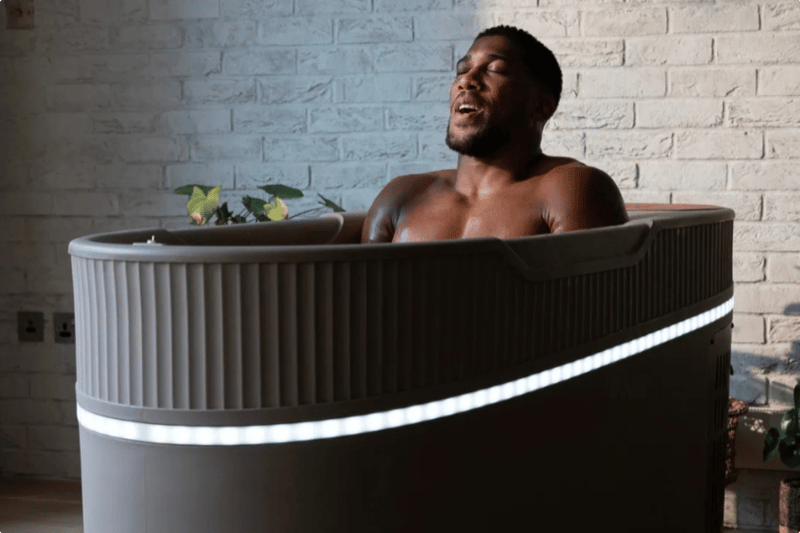
Hold an ice cube or run hands under warm and cold water in 30-second intervals. This activates thermoreceptors and pulls attention into direct sensory awareness.
The skin contains specific sensors (thermoreceptors) that respond exclusively to temperature changes. Rapidly switching between cold and warm stimuli sends intense, competing signals to the brain's somatosensory cortex. The sharp sensation of cold, like holding an ice cube, acts as a powerful "anchor" that pulls your attention away from internal rumination and back into the present moment.
It is difficult for the brain to maintain anxious thought loops when it is forced to process such an intense and immediate physical sensation.
- Anchoring with scent
Open a jar of cinnamon, clove, or rosemary. Inhale slowly, then identify three specific qualities of the scent.
This olfactory (scent) input reaches limbic centres faster than other senses.
Unlike vision, hearing, touch, and taste, which all route through the thalamus before reaching the cerebral cortex for conscious thought, the olfactory system sends signals from the olfactory bulb directly to the limbic system, including the amygdala (emotion centre) and the hippocampus (memory centre).
This shortcut is why scent-triggered memories and emotions often feel more immediate and unfiltered than those evoked by other senses.
Therefore, it’s thought that the association of scents with specific positive emotional experiences, through a process called classical conditioning or ‘anchoring’, can help regulate mood and promote wellbeing.
- Mechanical rhythm
Many recipes require you to chop vegetables, stir stock or knead dough. Here there is an opportunity to focus purely on texture, resistance and pressure.
These rhythmic actions involve fine motor control and actively focusing on physical sensations, known as somatosensory engagement.
To explain this further, attention follows a rhythmic pattern, including how the brain responds to physical touch. Focusing on internal signals engages areas such as the anterior insular cortex, which helps regulate how we process sensory input. This change in focus can support clearer thinking by reducing distraction and keeping attention within the present moment.
Living room grounding
- Texture scanning
Touch a fabric with defined texture. Move fingers along seams or weaves and identify variations in softness, density and their temperature.
Texture scanning specifically engages slow-adapting mechanoreceptors, which respond to steady pressure and skin stretch. SA Type I receptors track fine spatial detail like edges and surface texture, allowing for accurate perception of form and roughness.
SA Type II receptors, found deeper in the skin, detect tension and movement, supporting grip control and proprioception. Therefore, this practice engages slow-adapting tactile receptors that promote sensory presence.
- Visual feature tracking
Choose a picture or shelf. Challenge yourself to count how many items share a colour or shape without getting distracted. Use your eyes to locate structural edges or spatial symmetry.
This ‘visual scanning’ technique is thought to work by activating certain large-scale networks in the brain. The default mode network (DMN) is highly active during internally focused processes like self-reflection, mind-wandering, worry and rumination. By contrast, attention networks, like the dorsal attention network, become active when a person focuses on external and goal-directed tasks, like visual scanning, for example.
- Movement and breath matching
Roll your shoulders or tilt your head gently side to side, coordinating the movement with breath.
Rhythmic movements such as walking are coupled with rhythms, including respiration. The respiratory system naturally adjusts its rhythm, creating a timing pattern that generates coordination.
Breathing rhythms themselves can influence and be influenced by emotional states and cognitive processes, demonstrating a strong link between regulated breathing and brain-body connectivity. That’s why movement combined with breathing techniques is often used in protocols for stress exposure management.
Object-based grounding
- Heel pressing
Heel pressing on a hard floor is a bodyweight exercise that can improve balance and stability by engaging the muscles in your lower legs and feet. Start by standing on a firm surface, pressing your heels down, and then visualising a physical connection to the ground.
- Weight comparison
Place a light object, such as a remote, and a heavier one, like a hardback book, on a flat surface. Sit upright and focus on your dominant arm. As you lift the remote slowly to eye level, notice the minimal engagement of the brachioradialis, the light grip, and the relaxed alignment of your wrist and fingers.
Now lift the heavier object at the same pace. The extensor carpi radialis contracts to stabilise the wrist, the fingers press more firmly, and tension builds near the inner elbow.
This contrast in muscle activation may help to draw attention into the body’s mechanics and away from abstract thought.
- Grounding with a houseplant
Scientists have observed that physical contact with living organisms in nature stimulates the parasympathetic nervous system, a.k.a the rest and digest response.
Focus on a nearby houseplant. Study closely the leaf patterns, surface texture and colour variation. Then touch the stem or the underside of a leaf and notice how it feels.
Is it smooth, raised, cool, dry or damp?
This form of grounding works by engaging multiple senses at once, anchoring attention in the present. Research shows that, even if you can’t be outside right now, interacting with plants indoors can also reduce cortisol levels, lower blood pressure and slow heart rate, much like a nature walk can.
Whilst caring for your houseplant, pruning or watering it, you’re also facilitating tactile contact with textured leaves and activating somatosensory pathways, while the act of observation engages visual processing networks, as mentioned previously.
What’s the evidence for microgrounding?
The concepts behind microgrounding are formed from established links between breath, touch, attention and physiological regulation.
The techniques are informed by research findings in cognitive neuroscience, behavioural therapy, and theories stemming from somatic experiencing.
Tactile awareness and nervous system reset
Sensory feedback from textured surfaces, weight differences or temperature activates low-threshold mechanoreceptors (sensory neurons that detect light touch, pressure, and vibration). These communicate with spinal and cortical regions involved in sensory integration.
Studies have found that tactile-based grounding reduces dissociative symptoms and helped participants maintain presence during emotionally demanding tasks.
Movement and connection
Likewise, according to a study published in The Arts in Psychotherapy, grounding techniques used within dance and movement therapy helped individuals in hyper-aroused states become more aware of their surroundings and more connected to their sensory experience.
Visual scanning and attention networks
Visual identification tasks activate dorsal attention networks, and reduce activity in default mode regions. In other words, it quiets the brain areas that tend to wander or get stuck in overthinking.
Similarly, combining object handling with visual and auditory naming improves response speed and reduces emotional interference.
Interoception and emotional regulation
Noticing internal cues like heartbeat pressure or breath temperature increases activity in the insular cortex. This is the region that mediates the link between body states and emotional experience.
In clinical applications, an intervention called Mindful Awareness in Body-oriented Therapy (MABT) has shown promise particularly among individuals with trauma histories or stress-related conditions. Preliminary clinical trials show improved regulation of emotional responses and stress levels through improved interoceptive awareness following body-awareness-based intervention.
Practice and frequency of microgrounding
The benefits for mental clarity come more easily and instantaneously when microgrounding techniques are used consistently.
That’s because when used across the day during short pauses or transitions, the techniques reduce accumulated reactivity and increase your efficiency at switching tasks with optimal levels of focus.
Microgrounding is a great go-to when time and resources are short. It simply allows space for the nervous system to reset without needing silence or withdrawal.
Final thoughts
The attention we give to small, physical cues is not always incidental.
These mindful moments are observable inputs with measurable effects on our mental state, both in the moment and in the long-term.
Studies have demonstrated that structured sensory engagement influences how the body manages stress, how the brain holds focus and how attention reorients itself under pressure.
So, here’s your cue, in case you needed one, to add more houseplants to your New Year’s shopping list.
There’s value in the detail
The cooling sensation of that glass of water in your hand, or the intricate weave of the jumper you’re wearing, the smell of mint from a fragrant cup of tea.
These are all tools that can become immediately useful to you at any given moment.
All you have to do is feel and re-focus.
Shop MIND at Healf, and discover tools designed to support grounding, sensory focus and nervous system regulation.
FAQs
What is microgrounding?
Microgrounding is a sensory-based technique that uses small physical actions like touch, scent or movement to bring awareness back to the present moment.
How is microgrounding different from grounding or earthing?
Earthing involves direct contact with the Earth’s surface. Grounding can also involve tools such as HigherDOSE’s Infrared PEMF Mat. Microgrounding focuses on internal regulation through sensory engagement, without needing outdoor access.
Does microgrounding help with stress?
Yes. Research shows that sensory grounding can lower cortisol, activate the parasympathetic nervous system and support mental focus during high-stress or distracted states.
Do I need special tools or equipment for microgrounding?
No. Most techniques use everyday items like ice cubes, textured fabrics, plants or movement. They can be done quickly and in most settings.
How often should I practise microgrounding?
Short, regular practice is most effective. Use microgrounding during daily transitions or moments of stress to help train the body to recover more efficiently.



This article is for informational purposes only, even if and regardless of whether it features the advice of physicians and medical practitioners. This article is not, nor is it intended to be, a substitute for professional medical advice, diagnosis, or treatment and should never be relied upon for specific medical advice. The views expressed in this article are the views of the expert and do not necessarily represent the views of Healf
Pippa is a content writer and qualified Nutritional Therapist (DipNT) creating research-based content with a passion for many areas of wellbeing, including hormonal health, mental health and digestive health.
As a contributor to The Healf Source, she regularly attends seminars and programmes on a plethora of contemporary health issues and modern research insights with a drive to never stop learning. In addition, interviewing experts and specialists across The Four Pillars: EAT, MOVE, MIND, SLEEP.
In her spare time, she is an avid swimmer, mindfulness and yoga lover, occasionally bringing a raw, honest approach to the topics she faces. You may also discover some personal accounts of eye-opening wellbeing experiences amidst the reality of a disorientating, and often conflicting, modern wellbeing space.