Loading...
The Healf Source
Moringa Powder: Benefits, Dosage And How To Use It
Moringa is rich in plant compounds and micronutrients, but not every health claim survives closer inspection. A nutritionist explains what a realistic serving actually provides.
Written by: Samantha Nice
Written on: September 4, 2026
Moringa powder gets sold as a near-instant fix for energy, iron, and blood sugar. Some of that reputation comes from its nutritional profile. Some of it comes from nutrient claims measured per 100g, a serving size nobody actually eats. Here's what a realistic serving provides, and how to use it well.
What is moringa powder?
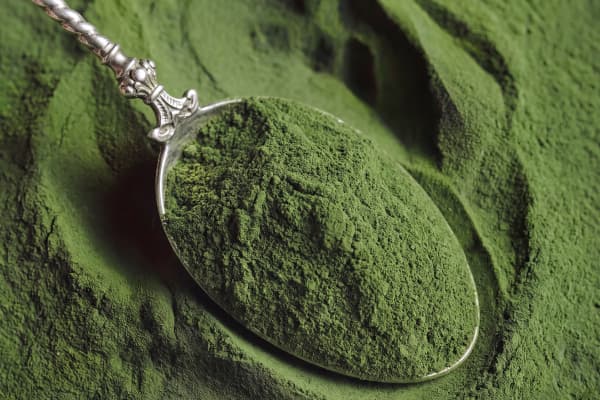
Moringa powder is made by drying and grinding the leaves of Moringa oleifera, a tree native to South Asia that is now grown across tropical and subtropical regions. Its leaves have a long culinary history, typically eaten fresh, cooked into dishes, or dried, long before "superfood powder" became a marketing category.
Leaf powder isn't the same as moringa seed oil, root preparations, or concentrated leaf extracts, and research on one shouldn't automatically be applied to another. The leaf is the part with the nutritional research behind it. Expect an earthy, grassy flavour with a bitter edge, like a stronger cousin to matcha.
What nutrients does moringa powder contain?
Moringa leaf powder can provide protein, fibre, carotenoids, minerals, and plant polyphenols. Nutrient levels shift depending on soil, climate, harvest timing, and drying method. Drying concentrates some nutrients by removing water, while reducing others that are heat-sensitive.
Nutritionist April Morgan, Dip Nut. mBant. CNHC. ANP., puts the 100g comparisons into scale. "A teaspoon is typically around 1–2g, depending on how finely it is milled and how tightly it is packed. At that amount, you're getting a small but useful contribution of micronutrients rather than a nutritional powerhouse in the quantities suggested by the 100g numbers." One product she references lists roughly 1mg of iron and 27mg of calcium per teaspoon, figures that vary between brands. She thinks of moringa "as a nutrient-dense addition to the diet, rather than a replacement for nutrient-rich foods."
What are the benefits of moringa powder?
It adds antioxidants to the diet
Moringa leaves contain polyphenols and carotenoids, and lab testing confirms antioxidant activity. What we don't yet know is whether the amount in a typical teaspoon translates into meaningful health outcomes in humans. A varied diet is still a far bigger source of antioxidant compounds than any single powder.
It won't give you a caffeine-like energy boost
Moringa contains no caffeine, so it isn't a stimulant in any sense. Morgan is clear about where the energy association comes from. "I wouldn't describe it as something that directly 'boosts energy' in the way caffeine does. The energy claims are more likely to come from its micronutrient content,” she says. Fatigue has a long list of possible causes, and assuming it's a nutrient gap then treating that assumption with a powder skips the step of finding out what's actually going on.
It contains iron, but it isn't an iron treatment
Moringa provides non-haem iron, the plant form of the nutrient that absorbs less efficiently than the haem iron found in meat and fish. That absorption can be reduced further by compounds like phytates, other natural compounds that store phosphorus and bind to minerals like iron, zinc, and calcium. Experimental work has found the bioavailability of iron from dried moringa leaves to be low.
Morgan is cautious about using it for low ferritin. "The evidence isn't strong enough to recommend moringa as a replacement for an iron supplement in someone with low ferritin. If ferritin is genuinely low, I'd want the underlying cause investigated and an appropriate iron strategy agreed with a healthcare professional,” she says. A teaspoon supplying roughly 1mg of iron can contribute to your overall intake, but it's a relatively small amount and shouldn't be treated as a way to correct iron deficiency.
It may influence blood sugar, though evidence is preliminary
Small human trials have looked at moringa's effect on post-meal and fasting glucose, with mixed results depending on dose, preparation, and who's being studied. In one trial, 20g of moringa leaf powder taken with a meal reduced the post-meal glucose response in people with diabetes, but showed no significant difference in healthy participants. A more recent review pointed to possible reductions in fasting glucose and HbA1c in people with metabolic conditions. But the evidence there is preliminary due to inconsistent study quality. Morgan is clear that for people without diabetes, taking moringa to lower blood glucose isn’t the best idea. Anyone on glucose-lowering medication should check with a clinician first, given the possibility of additive effects.
How much moringa powder should you take?
There's no clinically established dose for general wellbeing, since studies use widely varying amounts and preparations. If you're new to moringa powder, around half a teaspoon is a practical place to start, particularly given its strong flavour and fibre content. A typical food-level serving is around one teaspoon, though the exact weight depends on how finely the powder is milled, so check the label.
Studies sometimes use considerably larger amounts, including around 8g daily, but those doses are research protocols rather than recommendations to replicate at home.
When should you take moringa powder?
No strong evidence points to a specific optimal time to take moringa powder. The morning might seem like the obvious choice given moringa's association with energy, but it contains no caffeine, so there's no stimulant effect tied to the clock. Taking it with food may be easier on the stomach, particularly when you're first introducing it.
Put simply, don’t overthink timing. Choose a point in the day when it's easy to add to something you already eat, whether that's breakfast, a smoothie, or an evening meal. If you're taking medication, check with your doctor or pharmacist whether you need to leave a gap between the two.
How to use moringa powder
Its flavour works best paired with something stronger or naturally sweet:
- ½ - 1 teaspoon blended into a smoothie with banana, mango or pineapple
- Stirred into yoghurt with berries and nut butter
- Blended into a green juice with apple, lemon and ginger
- Whisked into soup, dhal or curry
- Added to pesto, hummus or salad dressing
- Mixed into overnight oats
- Combined with cacao in a smoothie, which softens the grassy edge
Citrus, ginger, cinnamon, coconut and cacao all pair well; mixing moringa into plain water is the fastest way to notice how bitter it actually is.
Moringa powder vs capsules: which is better?
Powder is cheaper per gram, easier to work into food, and lets you adjust the dose, at the cost of a strong flavour and inconsistent measuring by spoon. Moringa powder capsules, on the other hand, don’t have a taste and have more of a precise serving size, which makes them easier to travel with, but you'll often need several to match a single spoonful of powder, and they typically cost more per gram.
Concentrated extracts are a separate category with a different chemical profile, and research on one doesn't transfer automatically to the other. As Morgan puts it, "you can't automatically apply research on a concentrated extract to a teaspoon of leaf powder, or vice versa." When comparing moringa supplements, check whether the label specifies whole moringa leaf powder or a concentrated extract, since the doses aren't interchangeable.
How to choose a good moringa powder
The ingredient list is the first place to look. Choose 100% moringa leaf rather than root or bark, then check where it was grown and whether the brand provides batch-level testing for heavy metals, pesticides, and microbial contamination.
Morgan flags testing as an important quality consideration. "I'd want batch-level testing for things such as heavy metals, pesticides, and microbiological contamination, as well as checks that the product actually contains what the label says it contains... contamination and variability between batches are real considerations."
Powder that lists a specific country or region of origin allows you greater traceability, and opaque, resealable packaging helps protect the powder from light, air and moisture. A fresh green colour and no added sweeteners or ingredients are useful secondary checks, but proper testing should carry the most weight when comparing products.
Is moringa powder safe? Side effects and who should be cautious
Moringa powder is generally well tolerated in the amounts typically used in food or drinks, though higher intakes may cause nausea, diarrhoea, or digestive discomfort. People on diabetes or blood-pressure medication should speak to their GP before taking it regularly, and if you’re pregnant or breastfeeding, be aware that safety data on these supplements is limited. If you're being treated for iron deficiency, moringa shouldn't substitute for that treatment. Stop taking it and seek advice if you develop persistent side effects.
The verdict: is moringa powder worth taking?
Moringa powder earns its place as a convenient way to add a small amount of dried leafy plant material to your diet. Its micronutrients and plant compounds are real, but a teaspoon provides considerably less benefits than the impressive per-100g figures used in much of its marketing. If you like the taste, it's an easy addition to smoothies, yoghurt, or meals. Just treat it as another ingredient in a varied diet rather than expecting a teaspoon to transform your energy, iron levels or blood sugar.
Your most asked moringa powder questions
Can you take moringa powder every day?
Most people tolerate a small daily serving well, but starting low and watching for digestive discomfort is a sensible approach before making it a daily habit.
Does moringa powder contain caffeine?
No. It has no stimulant effect, so any "energy" claim relates to nutrient content rather than a caffeine-like lift.
Can you take moringa on an empty stomach?
Taking it with food is usually easier on digestion, though this varies by individual.
Can moringa powder replace an iron supplement?
No. Its iron is plant-based and less readily absorbed, and low ferritin needs proper investigation and, where necessary, a clinician-guided iron strategy.
Does moringa powder break a fast?
Any calorie-containing ingredient technically breaks a fast, and moringa powder does contain small amounts of protein and carbohydrate.
How should you store moringa powder?
Keep it in an airtight, opaque container away from heat and direct light, and check the label for a use-by date once opened.

This article is for informational purposes only, even if and regardless of whether it features the advice of physicians and medical practitioners. This article is not, nor is it intended to be, a substitute for professional medical advice, diagnosis, or treatment and should never be relied upon for specific medical advice. The views expressed in this article are the views of the expert and do not necessarily represent the views of Healf
Samantha Nice is a seasoned wellness writer with over a decade of experience crafting content for a diverse range of global brands. A passionate advocate for holistic wellbeing, she brings a particular focus to supplements, women’s health, strength training, and running. Samantha is a proud member of the Healf editorial team, where she merges her love for storytelling with industry insights and science-backed evidence.
An avid WHOOP wearer, keen runner (with a sub 1:30 half marathon) hot yoga enthusiast and regular gym goer, Samantha lives and breathes the wellness lifestyle she writes about. With a solid black book of trusted contacts (including some of the industry’s leading experts) she’s committed to creating accessible, well-informed content that empowers and inspires Healf readers.
- 1. What is moringa powder?
- 2. What nutrients does moringa powder contain?
- 3. What are the benefits of moringa powder?
- 4. How much moringa powder should you take?
- 5. When should you take moringa powder?
- 6. How to use moringa powder
- 7. Moringa powder vs capsules: which is better?
- 8. How to choose a good moringa powder
- 9. Is moringa powder safe? Side effects and who should be cautious
- 10. The verdict: is moringa powder worth taking?
- 11. Your most asked moringa powder questions