







































_2026-10-13_14-11-48.png)


Everything You Need To Know About Collagen Peptides

Written by: Olivia Aurora
Written on: 24 June 2024
The popular dietary supplement can work wonders for your skin and muscle health when used correctly.
What are collagen peptides?
Collagen is a vital protein made in your body that is responsible for providing structure and strength to various tissues, like your skin, muscles, tendons, and ligaments. Collagen peptides, or hydrolysed collagen, are small bioavailable fragments of that collagen protein that have been broken down into smaller peptides during a hydrolysis process, making them easier for the body to absorb.
Each year, we actually lose roughly 1% of our collagen, starting at age 20. And it's not always easy to get collagen through diet alone, which is where supplements like peptides come in.
What are the benefits of collagen?
Skin health - Collagen is famous for its skin benefits, boosting your skin's elasticity, enhancing hydration, and helping your complexion glow.
Joint health - The protein is an important element in your body's cartilage, so supplementing with collagen can actually help ease joint pain and improve mobility, especially in people with osteoarthritis or general achey joints.
Bone health - Collagen a major structural protein in bone. Think of it as the scaffolding on which your bone is built. As such, collagen supplementation can be especially helpful for postmenopausal women in reducing their risk for osteoporosis.
Muscle Mass - Beneficial in muscle growth and maintenance, collagen is very helpful for older adults looking to maintain muscle mass.
Gut Health - Collagen peptides actually contain an amino acid called glycine, which is known to promote gut health by strengthening the gut lining and supporting digestive health.

What are the sources of collagen?
We’ve said it once, and we’ll say it again. There is no such thing as vegan collagen. However, there are various sources of collagen that are all animal-sourced, including:
Bovine (Cow) - Sourced mainly from bones, hides, and the muscles.
Marine (Fish) - Obtained from the scales, bones and skin.
Porcine (Pig) - Derived from the bones and skin.
Chicken - Made from the cartilage and bones.

There are actually 28 different types of collagen, but the majority in your body are Types 1, 2, 3, 4 and 5. Each has different properties and vital functions:
Type 1 - Makes up around 90% of the body's total collagen and is responsible for tensile strength and wound healing.
Type 2 - This one is essential for joint health and can help alleviate symptoms of arthritis.
Type 3 - Aimed at skin health and elasticity, Type 3 works similarly to Type 1.
Type 4 - This one is essential for filtration of the kidneys and other organs, and is less readily available in supplement form compared to Types 1, 2, and 3.
Type 5 - It plays a role in the regulation of collagen formation and is necessary for the creation of cell surfaces, hair, and placental tissue.
When choosing a collagen peptide it is important to consider the right collagen to suit your specific needs. For example, those looking to improve skin health might opt for a supplement rich in Type I and III collagen, while those seeking joint support might benefit more from Type II collagen.
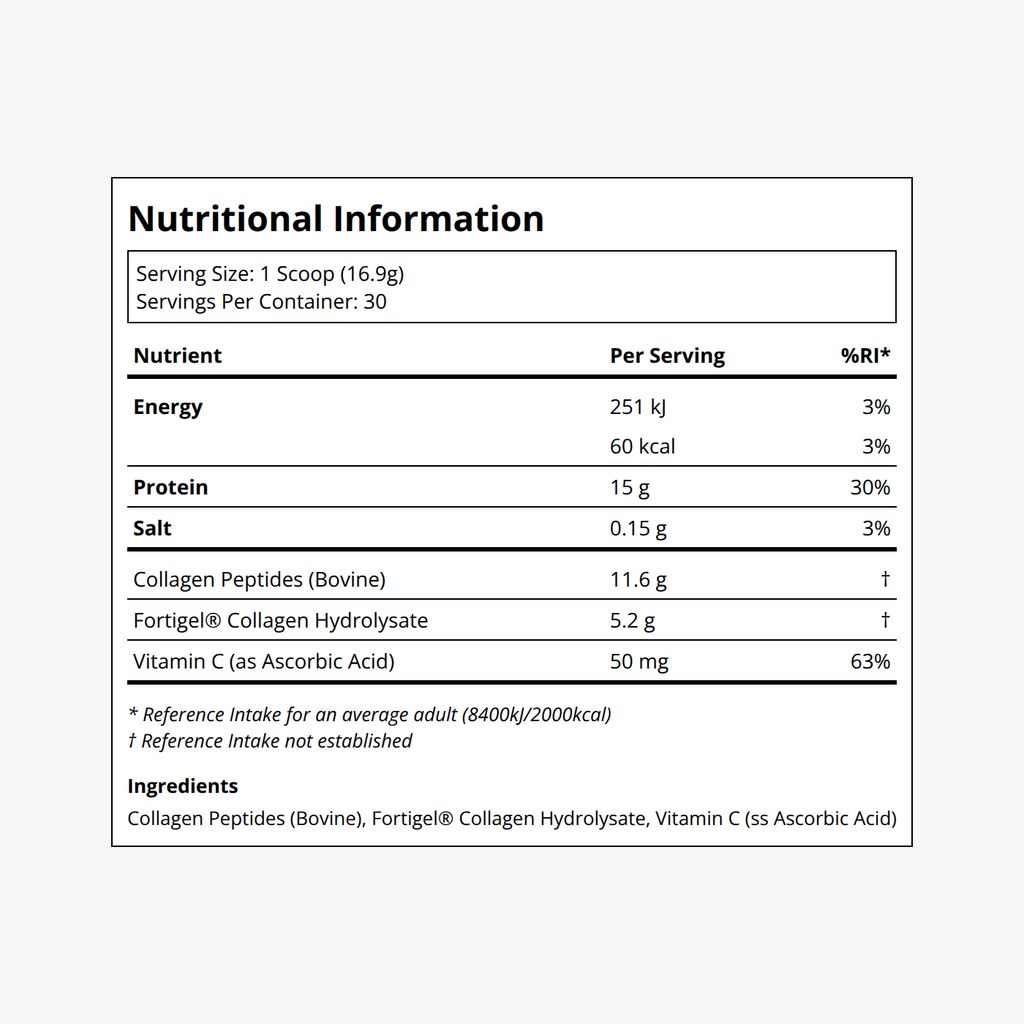
Collagen peptides tend to mostly come in Types 1 and 3. Momentous Collagen Peptides is a bovine derived collagen product with added vitamin C, delivering 16.8g of collagen. Since it covers Types I, II, and III, it's considered a very complete peptide, and can help support skin health and elasticity as well as joint health. Since it comes in a tasteless, powder form, it's easy to stir into your morning smoothie or coffee.
It is important to always consult a healthcare provider when starting a new supplement especially for those with underlying health concerns or are taking other medications.
How to use Collagen Peptides?
Collagen is super versatile and comes in a multitude of forms, such as powder, capsules, gummies, protein bars, and snacks. It is tasteless and very easy to incorporate into beverages without affecting taste or texture. Most research supports the use of 2.5-15g per day for noticeable benefits.
What are the side effects?
Collagen Peptides usually are safe and well tolerated by most people. In rare cases there has been mild discomfort, bloating and gas.
It is important to remember that collagen supplements are often made from food allergens like fish, shellfish, and eggs. If you have an allergy to any of these foods, you should avoid supplements containing these ingredients.

This article is for informational purposes only, even if and regardless of whether it features the advice of physicians and medical practitioners. This article is not, nor is it intended to be, a substitute for professional medical advice, diagnosis, or treatment and should never be relied upon for specific medical advice. The views expressed in this article are the views of the expert and do not necessarily represent the views of Healf