
































_2026-10-13_14-11-48.png)


Mindful Eating Over Macros: How Letting Go Can Make You Healthier
The health benefits of dinner with family and friends often goes beyond nutrients since love, joy, connection and gratitude are all values we can’t track…
Written by: Samantha Nice
Written on: 9 September 2025
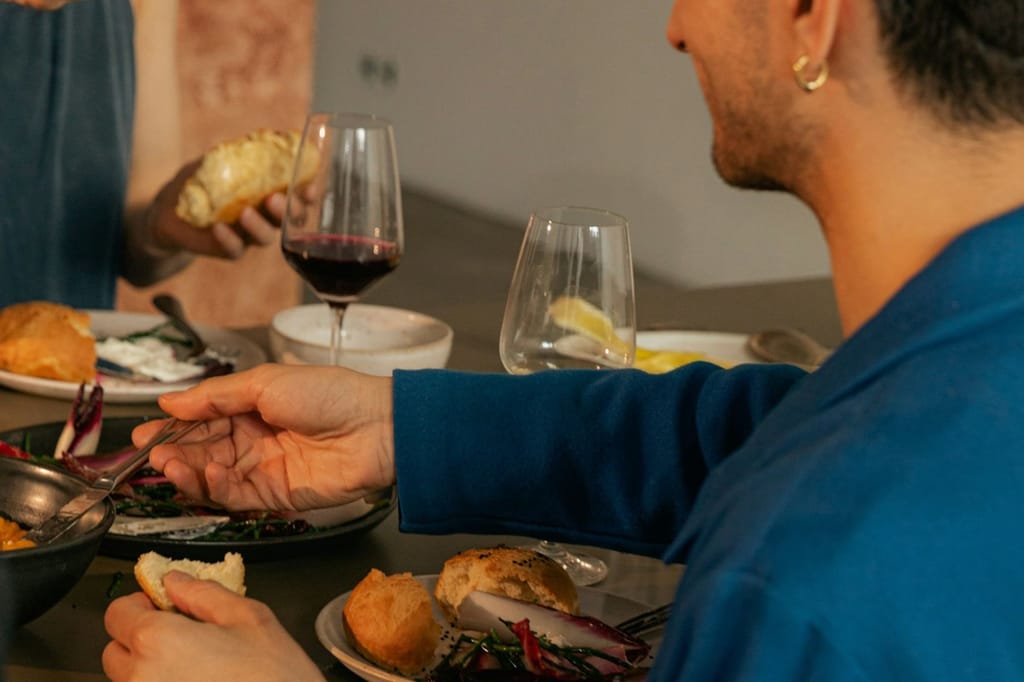
In the age of macros, calorie counters and protein-tracking apps, even a simple family dinner can start to feel like a maths equation. For many of us, the question is no longer ‘what’s for dinner?’, but ‘does this hit my protein goal?’ Food has always been more than fuel… it’s culture, comfort, conversation, and connection.
And as it turns out, our health is shaped not just by what we eat, but by how we experience it too. Slowing down, sharing a meal and enjoying what’s on your plate without guilt or calculation can have benefits that reach way beyond the nutrients themselves.
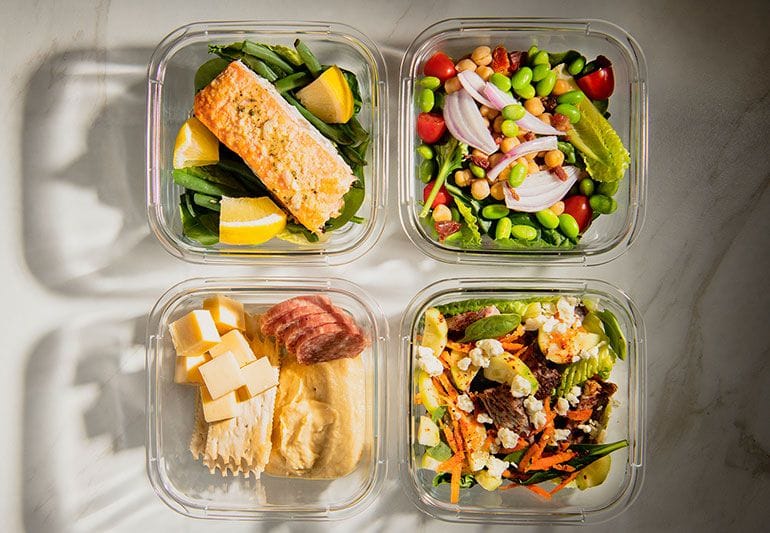
Registered nutritional therapist Natalie Burrows believes that stepping away from strict macro-tracking at mealtimes may be one of the healthiest choices we can make. “Instead of numbers, use your plate as a visual guide,” she says. “I often encourage clients to think of meals as a visual checklist. Do you see a good source of protein? Some colourful vegetables or salad for fibre and micronutrients? A healthy fat like olive oil, seeds or avocado? This shift focuses on nourishment rather than macro-counting, making meals feel more relaxed and enjoyable.”
Moving away from the macro mindset
Tracking protein, carbs and fats can be helpful for a short period and be a good way to learn about food groups. But for most of us, Natalie says it’s neither realistic or necessary to do long-term. “Tracking can be a useful tool for learning what foods provide protein, carbs and fats, but it’s not something to do indefinitely. It risks creating rigidity and can disconnect you from your body’s own cues. Once you understand roughly what balance looks like on your plate, you can move away from numbers and focus on enjoying meals and aiming for ‘good enough’ balance, not perfection,” she adds.
Protein: guidelines… but without pressure
Many of us worry about hitting a precise protein target at every meal, but Natalie reassures us that we can zoom out from this. “A practical guideline is around 20-30g of protein per meal. That might look like a chicken breast, a fillet of fish, a block of tofu or four to five eggs. But it’s not about every meal being perfectly equal. Your body doesn’t work on a meal-by-meal stopwatch. Instead, it’s your overall daily intake that matters most. If lunch is a little lighter on protein but dinner makes up for it, that’s absolutely fine.” This flexibility frees us from obsessing over grams at the table and lets us enjoy the wider benefits of food which are both physical and emotional.
The emotional weight of food ‘rules’
Too much focus on numbers can backfire. “A strict macro focus can reduce food to numbers, ignoring the value of micronutrients, fibre, antioxidants and plant compounds in herbs and spices which are all things that don’t count in macro tracking but have huge benefits for health,” Natalie explains. “It’s also possible to hit your macros while eating in a way that isn’t particularly nourishing or enjoyable. Over time, this can lead to stress and guilt around food. A more sustainable approach is to learn what whole foods offer and enjoy the flexibility they provide. If dinner one night is pizza, that doesn’t undo your overall balance, but could do wonders for your mental health if shared with friends.”
The power and joy of eating together
Shared meals aren’t just about the food… they’re also about connection. “They create connections, conversations and routines,” says Natalie. “Children who regularly eat with their families tend to have better dietary habits in the long term, not because of the nutrients on the plate, but because of the positive associations built around food. Eating together also helps adults slow down, which can aid digestion and mindful eating. Of course, you have to engage in mealtime, be present and discuss food positively to gain these benefits, but they are there to be had as long as you stay screen-free too,” she adds.
Simple, balanced meals without the fuss
You don’t need to turn dinner into a science experiment to eat well. “Think of protein as an anchor,” Natalie suggests. “Build your meal around one protein-rich ingredient (such as fish, chicken, beans, lentils, tofu or eggs), then add vegetables, carbohydrates and healthy fats to complement it. It doesn’t need to be complicated. A beef and bean chilli, salmon with roasted vegetables or even a four-egg, four-vegetable omelette all tick the box.” This approach keeps meals balanced and nourishing without taking away the joy or spontaneity of eating together.
Making room for flexibility
Rigid ‘all-or-nothing’ thinking around food often undermines our health goals, not because of the food itself, but because of the stress it creates. Natalie explains, “Including comfort foods isn’t a failure; it’s part of a healthy relationship with food. One takeaway or slice of cake doesn’t undo your health goals, just as one salad doesn’t make you healthy overnight. If most of your meals are balanced, the occasional indulgence is not only acceptable, it’s beneficial for enjoyment and sustainability.”
Positive role-modelling for children
As we briefly touched upon earlier, family meals are also an opportunity to shape how the next generation sees food which is hugely important. “Children learn more from what we do than what we say,” Natalie says. “Showing them that vegetables are just a normal part of dinner, or that the occasional sweeter food can be enjoyed without guilt, is far more powerful than lecturing about nutrients. Avoid talking about calories or restriction at the table; instead, focus on variety, colour and enjoyment. That way, children grow up seeing food as something positive rather than something to be micromanaged.”
She also encourages parents to be mindful of the words they use. “Instead of calling something a ‘treat,’ describe it for what it is - a chocolate bar, a biscuit, a sugary food. The word ‘treat’ can be confusing for children, as they often connect being ‘good’ with earning food, when in reality, you’re just trying to manage sugar intake. Simple language shifts can make conversations around food much clearer and help children develop a healthier relationship with eating.”
Letting go of perfection
Ultimately, no single meal makes or breaks your health. “Health isn’t defined by one meal, but by patterns over weeks, months and years,” Natalie says. “Sometimes you’ll have a light dinner or a meal that’s not exceptionally balanced; that’s everyday life. It’s also important to listen to hunger cues and satiety signals; maybe one day you go back for seconds, and on another day you don’t quite finish your plate. If you’re always the person who has a second helping, that might be tipping the balance. But if your overall eating pattern is varied and balanced, the occasional less-than-perfect meal makes no meaningful difference to most people’s health.”
And if there’s one myth to leave behind? “That every meal needs to be perfectly balanced or ‘macro-optimised,’” says Natalie. “I’m actually a little exhausted with the word ‘optimised’ and I am seeing how it drives health anxiety and obsessive actions. In reality, our bodies are flexible. If you have slightly less protein at one meal, you can make up for it at another. Likewise, not all carbohydrates are the enemy; high-fibre carbohydrates, when paired with protein and fats, actually help with sustainable energy and satiety. Letting go of perfection is often the healthiest step you can take.”
The key takeaway
The meals that truly matter aren’t measured in grams or calories… they’re the ones that fill more than just our stomachs. They’re the moments that feed our connections, lift our spirits and remind us that health is about the bigger picture. Love, laughter, gratitude and joy can’t be tracked and that’s exactly what makes them so powerful.



This article is for informational purposes only, even if and regardless of whether it features the advice of physicians and medical practitioners. This article is not, nor is it intended to be, a substitute for professional medical advice, diagnosis, or treatment and should never be relied upon for specific medical advice. The views expressed in this article are the views of the expert and do not necessarily represent the views of Healf
Samantha Nice is a seasoned wellness writer with over a decade of experience crafting content for a diverse range of global brands. A passionate advocate for holistic wellbeing, she brings a particular focus to supplements, women’s health, strength training, and running. Samantha is a proud member of the Healf editorial team, where she merges her love for storytelling with industry insights and science-backed evidence.
An avid WHOOP wearer, keen runner (with a sub 1:30 half marathon) hot yoga enthusiast and regular gym goer, Samantha lives and breathes the wellness lifestyle she writes about. With a solid black book of trusted contacts (including some of the industry’s leading experts) she’s committed to creating accessible, well-informed content that empowers and inspires Healf readers.