Loading...
The Healf Source
Is Sleep Optimisation Keeping You Awake?
When Healf's own Sandrine Zivoder got her first wearable, she quickly became obsessed with the metrics. But what she discovered about her intuition became the most valuable tool of all.
Written by: Sandrine Zivoder
Written on: June 24, 2026
This piece originally appeared in The Source: The Anti-Optimisation Issue, Healf's print magazine.
I’m a problem solver by nature. I’ve always been curious about how my body works, and even more curious about what I can do when it doesn’t.
A few years ago, my dad — who’s pretty wellbeing-obsessed — decided he was going to get in the best shape of his life at 57. So, he got a wearable health tracker to help him. He was a very, very early adopter. Every morning, I’d watch him open his app and update a spreadsheet he’d built himself — his own personal wellbeing database. He’s a doctor of economics, so spreadsheets are his happy place.
Watching him do this every day got me curious about my own habits: How well do I actually sleep? What boosts my readiness? What tanks it? How does my cycle play a part? Where can I do better? Push harder? Rest more?
We talked about it, and that Christmas, he got me my very own wearable. I put it on right away, set up the app, and started refreshing it… constantly. “It’s still calibrating my chronotype, Dad,” I said. “Give it time,” he told me.
Refresh. Apparently I’m an evening type. Refresh.
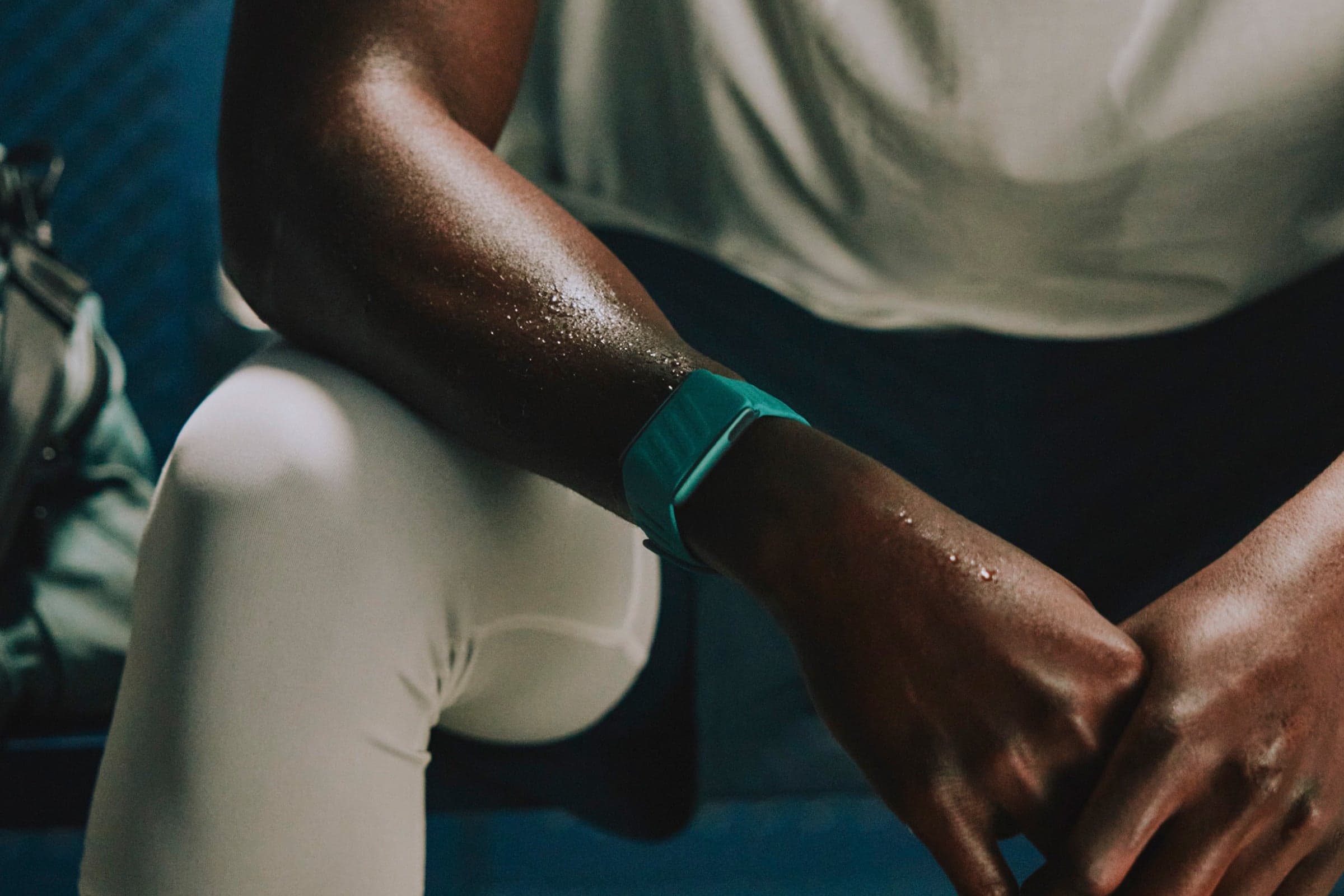
For the next few months, I wore it every single day. When I slept, when I walked, when I worked, when I showered. Every day. All the time. Data. Refresh. Data. Refresh.
At first, my habits started shifting in really positive ways. I stopped drinking when I noticed how much it affected my scores. I scheduled quiet time after stressful meetings.
I adapted my workouts to better support my cycle. I adopted a regular sleeping routine. It wasn’t long until I encouraged everyone I knew to get a wearable of their own — it will change your life! I told them.
But then it tipped. Unlike my dad, who got to a point where he’d check his data once a week, look at the trends, and move on, I couldn’t do that. I was checking and thinking about it constantly. I started tweaking my sleep time to the minute to make sure I’d hit a perfect score. At one point I even had 100/100, which, according to Reddit, is very, very rare.
And then, about eight months in, I developed insomnia, something I had never had before.
As someone who usually falls asleep the second my head hits the pillow, this was strange. It wasn’t even a uniquely stressful period of my life. But suddenly, out of the blue, I just stopped sleeping altogether.
At first, I blamed the new supplements I’d just started. So I stopped taking them — no difference. I meditated — no difference. I cut out screens before bed — no difference.
I took magnesium, L-theanine, lemon balm. You name it, I tried it. I had a whole sleep stack. Still, no difference. After three weeks, I went to the doctor and got prescribed melatonin, then something stronger. They barely made a dent.
And then… I looked at my wearable. Every night, as I was lying in bed unable to fall asleep, all I could think was, if I don’t fall asleep now, my score is going to drop and my readiness is going to be bad tomorrow. The pressure I was putting on myself to nail the numbers was making the insomnia worse.
That’s when it hit me: I think it’s my wearable. So, I took it off. The first week there was no change, just a feeling of guilt that came with not wearing it. I’d take it off, then put it back on. This dance continued for a few weeks.
Finally, I put it in a drawer. Just like that, I slept like a baby. And you know what? You’d think I’d miss it. But I didn’t. No more checking. No more lying in bed running the mental math. After a few weeks, I barely thought about the device at all.
Flash forward to today.
When I see someone who wears one, I wonder, do they sleep well?
Perhaps they do. The truth is, what works for one person doesn’t always work for someone else. There are many benefits to wearables. They’re just not for me. I have an overachieving, perfectionist personality — things need to be perfect or I can’t stop thinking about them. I already push myself, so adding performance metrics on top of that simply doesn’t work for me.
Come to think of it, I’d love a wearable that takes into account your personality and how your brain works. Personally, after this experience, I think something that is more visual-based than numbers-based would probably work better for me. Just give me a little sunshine or rain emoji, based on how I’m doing. With the numbers, I feel like I’m constantly grading myself.
Don’t get me wrong — I’m not anti-wearables at all. I think they’re great, and using one definitely taught me a lot about my health. Several of the good habits it fostered stuck. I still schedule quiet time after stressful meetings, and I’m more gentle with my body depending on which phase of my cycle I’m in. But where I once feared imperfect scores, I now fully embrace my night owl chronotype, send 2am emails with no shame, and go to bed when my body feels ready to sleep. I have a glass of wine here and there — and the French in me is proud.
A lot of the good habits it fostered stuck. But where I once feared imperfect scores, I now fully embrace my natural rhythms and needs.
So no, wearables aren’t evil. They just aren’t a replacement for your body’s intuition.

This article is for informational purposes only, even if and regardless of whether it features the advice of physicians and medical practitioners. This article is not, nor is it intended to be, a substitute for professional medical advice, diagnosis, or treatment and should never be relied upon for specific medical advice. The views expressed in this article are the views of the expert and do not necessarily represent the views of Healf
Sandrine works in Business Operations & Compliance at Healf