

























_2026-10-13_14-11-48.png)


Why Taking Off Your Wearables May Be The Real Key To Recovery
That constant feedback loop can heighten performance anxiety and make us feel disconnected from our bodies.

Written by: Sam Neame
Written on: 8 April 2026
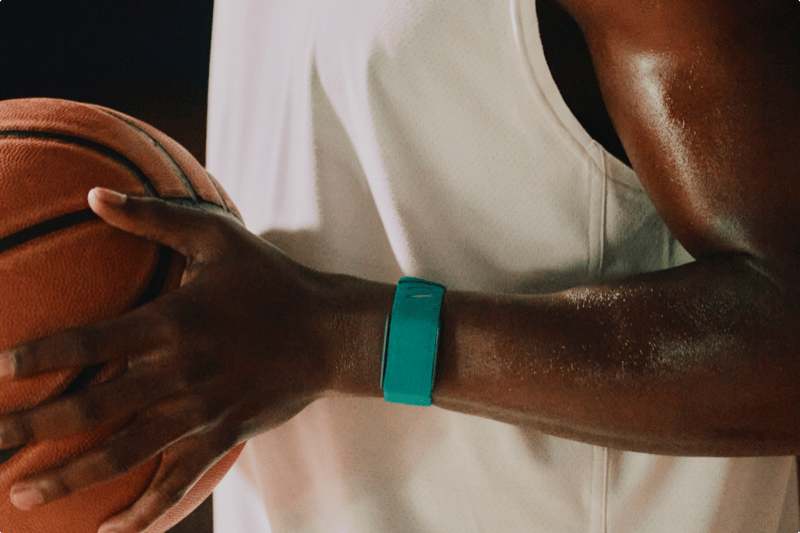
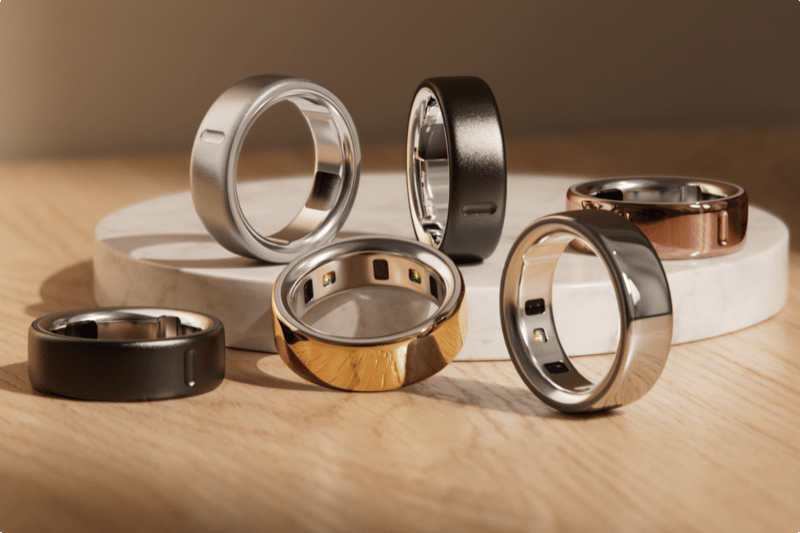
If you’ve ever worn an Apple Watch, Whoop or Oura Ring, you’ll know the feeling: the data says one thing, but your body says another. You wake up feeling great and well-rested, check your sleep score, and suddenly, you’re not so sure. Or maybe, you go on a super hard run, and realise your wearable actually isn't aligned with how hard you felt like you were working.
As more of us track our sleep, daily strain, and recovery around the clock, it’s worth asking a simple question: is more data always better? Or could stepping away from it, particularly at night, actually support deeper recovery?
While wearables offer tons of valuable insight, that constant feedback (especially during a recovery phase) can also heighten performance anxiety and make us feel disconnected from our own internal signals. It's not about rejecting the data or the technology that delivers it, but rather, understanding when to step back and when to tune back in.
What wearables can tell you about recovery
Wearables have transformed how we understand the ways our bodies grow, rest, and heal. Our advanced tech can now deliver useful signals that tell us things we can't often see or observe from the outside. But that's exactly what they are: signals, not the full picture.
When it comes to recovery, a few measurements stand out. Heart rate variability (HRV) is one of the most valuable metrics that wearables can track, reflecting how well your nervous system is coping with stress, from training and work to everyday life. A higher HRV (relative to your baseline) typically signals readiness, while a drop suggests the body is under strain. The key here is context. What matters isn’t the number itself, but how it compares to your normal range over time. Your baseline is actually far more meaningful than any single reading.
Resting heart rate (RHR) is another simple yet reliable marker we can lean on during recovery. When it rises above your normal range, it’s often a sign your body is working harder to recover, whether due to fatigue, poor sleep, or illness. Like HRV, it’s most useful when tracked consistently, allowing you to spot subtle changes rather than one-off fluctuations.
Sleep scores, while popular, require a bit more caution. They can show us a snapshot of our night, but they’re based on algorithms, not how you actually feel. Over longer periods of time, sleep data can highlight patterns and trends, but day to day, they can sometimes be misleading.
At the end of the day, wearables are often most effective when used to track trends over time, rather than used to help us make snap decisions based on a single day’s data. It’s also worth recognising that most metrics that wearables track are retrospective, meaning they reflect how your body has previously responded to stress, rather than predicting exactly how you will perform that day.
Perhaps most importantly, there is often a gap between what the data says and how you actually feel. Learning how to navigate that disconnect is where wearables can really shine. Used well, wearables can act as a guide, highlighting patterns, flagging potential strain, and supporting better decisions. But they are most powerful when not used in isolation, and instead, combined with internal awareness.
Why constant tracking can increase stress and performance anxiety
As humans, we naturally seek to control things, which might be why wearables have seen such a boom in recent years. But there’s a fine line between insight and over-reliance. A common scenario: you sleep reasonably well, wake up feeling okay, then check your score. It’s low. Suddenly, your perception shifts. You start to feel tired, question your energy, and adjust your expectations for the day.
This is where data begins to influence performance. The mind is a powerful tool, and the inputs we allow in — especially around performance — matter. For athletes in particular, this mind-body connection is critical. At the elite level, where physical differences are marginal, sports psychologists and studies often suggest that 70 to 90% of performance is mental. Confidence, clarity, and focus become the differentiators. And wearables can give us feedback that throw us off our mental game or "tell" us that we aren't recovering as well as we could be, or that we might not be at our peak that day.
The pursuit of perfect sleep and recovery scores can backfire, increasing anxiety rather than improving recovery. And as sleep physiologist Stephanie Romiszewski, BSc, MSc, explains, “sleep is supposed to be variable."
But in this sense, data isn’t the problem; it's how we interpret it. “A bad sleep score doesn’t just reflect recovery, it can shape it," says Romiszewski. "The moment an athlete or user sees a low number, it can shift confidence, increase perceived effort, and ultimately influence performance more than the sleep itself.”
Nervous system benefits of digital downtime
In a world of constant stimulation, the nervous system rarely gets a real break. Phone notifications, constant screens, and aggressive external stimuli keep us subtly switched on, even when we think we’re resting. Multiple studies show how creating intentional digital downtime allows the body to shift out of that state. Meanwhile, research suggests that just one hour of smartphone use in bed is linked to a 59% higher risk of insomnia and around 24 minutes less sleep per night, a small habit with a compounding impact.
Stepping away from devices can:
- Reduce stress hormones, lowering cortisol and adrenaline
- Activate the parasympathetic nervous system, supporting recovery and repair
- Improve sleep quality, by supporting melatonin production and circadian rhythm
- Enhance focus and clarity, by reducing cognitive overload
- Support emotional regulation, lowering irritability and anxiety
- Improve physical recovery, allowing energy systems to reset
Unplugging, even briefly, gives the body space to switch off stress, restore balance, and prepare for real recovery.
What to tune into for recovery instead
If you step away from the data, what should you listen to? The answer is simple, and one you've trusted your whole life: your body. In fact, recovery is often better understood through internal signals than external scores.
- Physically: notice soreness, stiffness, or energy levels. These are direct indicators of whether your body needs rest or lighter movement.
- Mentally: check your focus, motivation, and clarity. Brain fog or lack of drive can signal underlying fatigue.
- Emotionally: irritability, stress, or anxiety often reflect nervous system strain before physical symptoms appear.
- Intuitively: your instinct often integrates all of the above, guiding you towards whether to push, maintain, or recover.
The more you practice this, the more accurate it becomes. One way to build this awareness is to treat recovery less like something to optimise and more like a series of small experiments, says Anne-Laure Le Cunff, a neuroscientist at the Institute of Psychiatry, Psychology and Neuroscience at Kings College London. Instead of relying solely on external scores, she suggests testing different behaviours, adjusting your sleep routine, training intensity, or digital habits, and observing how your body responds. Over time, this creates a more personalised understanding of what recovery actually looks like for you, moving the focus away from rigid metrics and towards curiosity and adaptation.
Simple habits to put this into practice
Recovery doesn’t need to be complicated; it needs to be consistent. The goal isn’t to overhaul your routine overnight, but to build small, repeatable behaviours that support your nervous system on a daily basis.
Romiszewski recommends starting with a few simple shifts:
- Create phone cut-off times or no-phone zones (especially in the bedroom)
- Build in rest days and lighter sessions throughout the week
- Dial in on active recovery days, like walking, light running, or mobility work
- Take short naps when needed
- Incorporate journaling, breathwork, or time outdoors to help you mentally reset
- Prioritise sleep quality over sleep scores
Ultimately, recovery isn’t a number or something you can perfectly measure, it’s what your body and mind are telling you. Acting on those signals, rather than obsessing over data, is what keeps you performing at your best.
Key Takeaway
Wearables can be incredibly useful for understanding your recovery, giving you insight into your sleep, heart rate, and nervous system readiness trends that were once invisible. They’re worth trying because they provide an external reference point, helping you notice patterns you might otherwise miss. But the real power comes when you pair that data with your own awareness — tracking trends over time, comparing metrics to your personal baseline, and listening to how your body and mind actually feel.
Used this way, wearables become a guide, not a rulebook, helping you make smarter decisions about rest, training, and recovery without letting the numbers dictate your day.


This article is for informational purposes only, even if and regardless of whether it features the advice of physicians and medical practitioners. This article is not, nor is it intended to be, a substitute for professional medical advice, diagnosis, or treatment and should never be relied upon for specific medical advice. The views expressed in this article are the views of the expert and do not necessarily represent the views of Healf
Sam Neame is a performance coach and writer focused on helping high-achieving individuals live and perform better, working with Olympic athletes, actors, and business leaders. He writes about health, sleep, and fitness, exploring how these areas can help people build healthier, more resilient lives and environments beyond elite performance alone.
Outside of work, he values the simple things in life, a good dinner party, a well-made coffee, and time in the gym.