Loading...
The Healf Source
Ditching Burnout In The City That Never Slows Down
Written by: Eleanor Hoath
Written on: August 11, 2025
In the world’s most fast-paced cities, the line between high performance and burnout can be razor-thin. In places like Dubai, where ambition pulses through every glass tower and networking brunch, the drive to achieve often comes at a steep personal cost.
Ali Hassoun knows this first-hand. Before founding PEAQ, Dubai’s forward-thinking wellness and social club, he was firmly on the corporate treadmill - successful on paper, but increasingly disconnected in reality.
“I was just going through the motions,” he recalls. “Burnt out, numb, and craving something deeper. The usual fixes didn’t work, so I started looking inward.”
What he found wasn’t a productivity hack or a quick reset. It was the slower, quieter work of nervous system recovery. During the pandemic, he began experimenting with cold-water therapy on his balcony. Friends joined, small gatherings formed, and eventually, PEAQ was born, a space designed not just for physical fitness, but for mental recovery, connection, and a redefinition of what resilience really means.
Redefining resilience in the corporate age
For much of his career, Hassoun subscribed to the traditional definition of resilience: the ability to power through anything, no matter the toll. But over time, he discovered that this approach was unsustainable.
“That version eventually broke me,” he says. “Now, I define resilience as adaptability with awareness. It’s not about how hard you can go, it’s about how well you can come back to yourself.”
This shift is especially relevant for professionals in high-pressure cities. The common corporate narrative still equates resilience with endurance, but science, and lived experience shows that nervous system regulation, rest, and reflection are just as essential for long-term success as persistence and output.
The burnout blueprint in busy cities
Dubai is home to some of the most driven, high-achieving people in the world, but Hassoun sees the same patterns play out repeatedly among them.
“Many professionals here measure success purely by output,” he explains. “The self-inflicted pressure to deliver is high, and the constant hum of comparison doesn’t help. People end up highly connected online but deeply disconnected from themselves.”
The result? A nervous system perpetually in overdrive, cortisol levels peaking, and a version of “success” that looks polished on Instagram but feels hollow in reality.
Why wellbeing needs to be social
One of the defining features of PEAQ is that it’s not just a wellness centre - it’s a social club. The decision was deliberate.
“The idea that healing happens in isolation isn’t the full story,” says Hassoun. “Connection with like-minded people is one of the most powerful healing forces there is.”
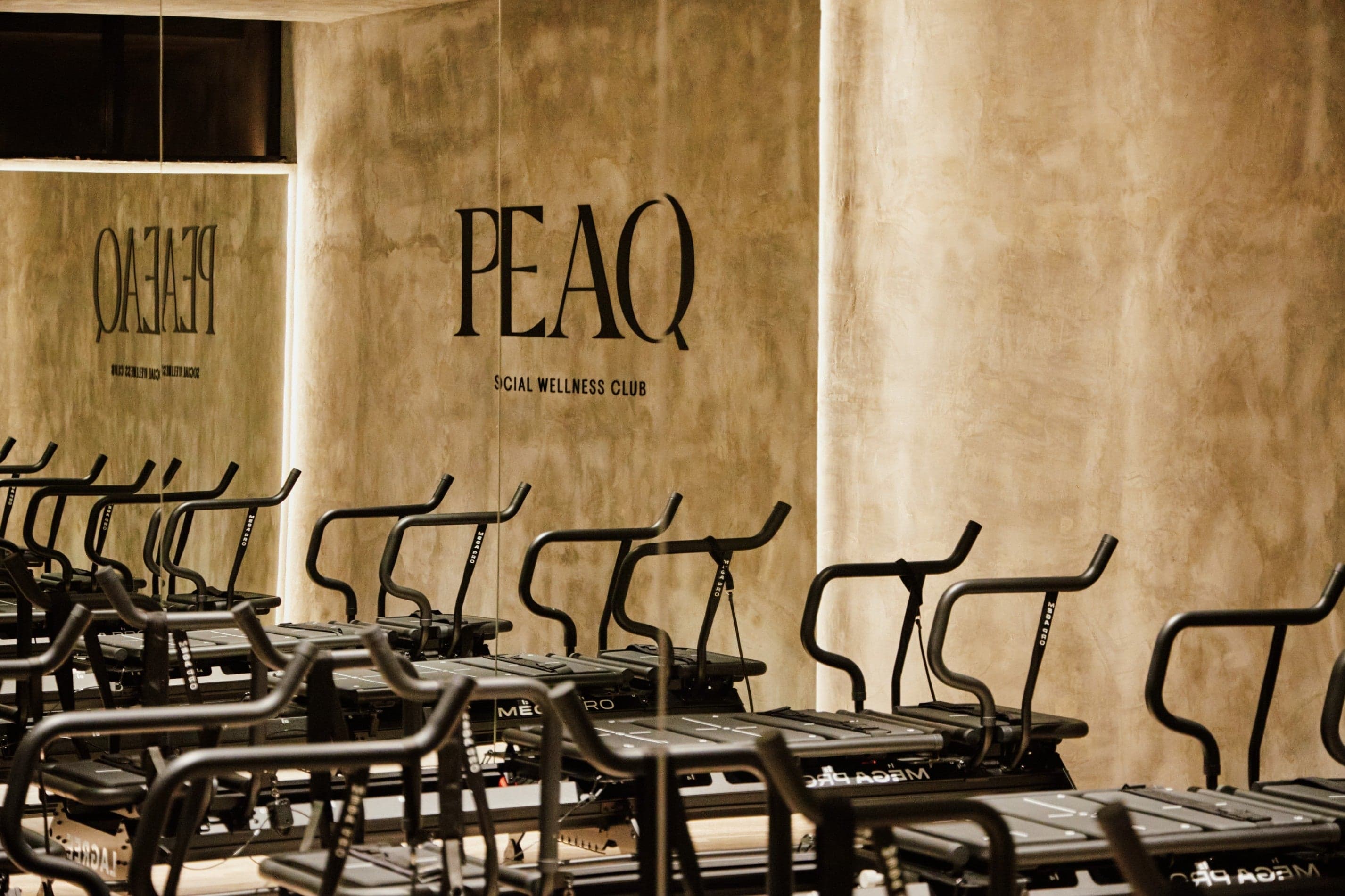
Whether it’s a shared cold plunge or an intense Lagree class, experiencing something challenging alongside others builds bonds and resilience in ways that solitary practices can’t replicate. “There’s strength in shared effort,” he adds. “Community creates resilience in a way nothing else can.”
Designing for nervous system recovery
From the moment you walk into PEAQ, you feel the difference. The space has been intentionally crafted to downshift the nervous system. Circular seating encourages conversation; shared rituals create rhythm; open layouts echo the communal gathering places of the past.
“The services are just the beginning,” says Hassoun. “It’s the energy of the space that invites people to slow down, connect, and gently push their limits.”
The tools that truly “move the needle”
In an industry saturated with wellness trends, PEAQ focuses on a handful of practices that Hassoun believes deliver the deepest impact:
Cold exposure: Training the body to remain calm under stress, both physically and mentally.
Breathwork: Reconnecting you to your body in real time, improving self-awareness and stress regulation.
Slowing down enough to feel: Perhaps the most underrated practice of all. “The real shift happens when people have space for their bodies to catch up with their lives,” he says.
A non-negotiable ritual for the overbooked
For those whose schedules are overflowing, Hassoun’s advice is simple: begin your day with presence. “No phone, no stimulation - just five minutes with your breath, your body, and your intention,” he says. “How you start your day sets the tone for how you handle stress.”
It’s a ritual that requires no equipment, no membership, and no more than a sliver of time, but it can radically change how resourced you feel throughout the day.
Is this the beginning of a cultural shift on the horizon
Hassoun believes busy professionals are slowly moving away from the “push through at all costs” mentality, but the change is still in its early stages.
“The culture of pushing is deeply ingrained,” he admits. “But more people are waking up to the cost of constant overdrive. Burnout is no longer a badge of honour. The next generation of leadership will be defined by self-awareness and nervous system intelligence.”
Staying grounded as a leader
As a founder, Hassoun has learned that he can’t hold space for others if he’s running on empty himself. His personal grounding practices include time in nature, breathwork, and surrounding himself with people who remind him of his identity beyond the brand.
“It’s about carving out time where you’re not productive,” he says. “Just being, not doing.”
Fuel for a calmer mind
Nutrition plays a critical role in regulating the nervous system. Hassoun encourages professionals to favour whole, nutrient-dense foods that help stabilise blood sugar and support neurotransmitter function. Healthy fats like avocado, oily fish, and nuts, plus magnesium-rich greens, can be game-changing for stress resilience. Minimising ultra-processed foods and caffeine overload also prevents the spikes and crashes that leave the body feeling jittery and depleted. What you eat literally informs your mood, focus, and recovery..
The real lesson in resilience
If there’s one takeaway he hopes every PEAQ member leaves with, it’s this: resilience is not force.
“It’s the ability to return to yourself, even when life pulls you off-centre,” Hassoun says. “Your body holds wisdom. When you learn to listen to it, regulate it, and care for it, you stop surviving - and start living.”




This article is for informational purposes only, even if and regardless of whether it features the advice of physicians and medical practitioners. This article is not, nor is it intended to be, a substitute for professional medical advice, diagnosis, or treatment and should never be relied upon for specific medical advice. The views expressed in this article are the views of the expert and do not necessarily represent the views of Healf
Eleanor Hoath is a Registered Nutritional Therapist (DipNT, mANP, mBANT) specialising in gut, skin and women’s health. She is the Editor of The Healf Source and founder of Well Nourished Nutrition Ltd.
Passionate about holistic wellbeing and balanced living, Eleanor combines evidence-based nutrition with a practical, approachable style to help people feel their best through content.
Based in London, she is dedicated to empowering individuals to nurture their health and understand the root cause of their symptoms from the inside out.
- 1. Redefining resilience in the corporate age
- 2. The burnout blueprint in busy cities
- 3. Why wellbeing needs to be social
- 4. Designing for nervous system recovery
- 5. The tools that truly “move the needle”
- 6. A non-negotiable ritual for the overbooked
- 7. Is this the beginning of a cultural shift on the horizon
- 8. Staying grounded as a leader
- 9. Fuel for a calmer mind
- 10. The real lesson in resilience