Loading...
The Healf Source
Red Light Therapy Showerheads: Healf Or Hype?
From clinics to everyday routines, red light therapy is now turning the shower into a moment for recovery and nervous system reset. We looked at how the science stacks up.
Written by: Samantha Nice
Written on: March 31, 2026
Red light therapy is no longer something you only see in specialist clinics or recovery rooms. It’s now found its way into everyday routines, from face masks and handheld devices to full at-home panels. The latest evolution takes red light somewhere even more intimate: your shower.
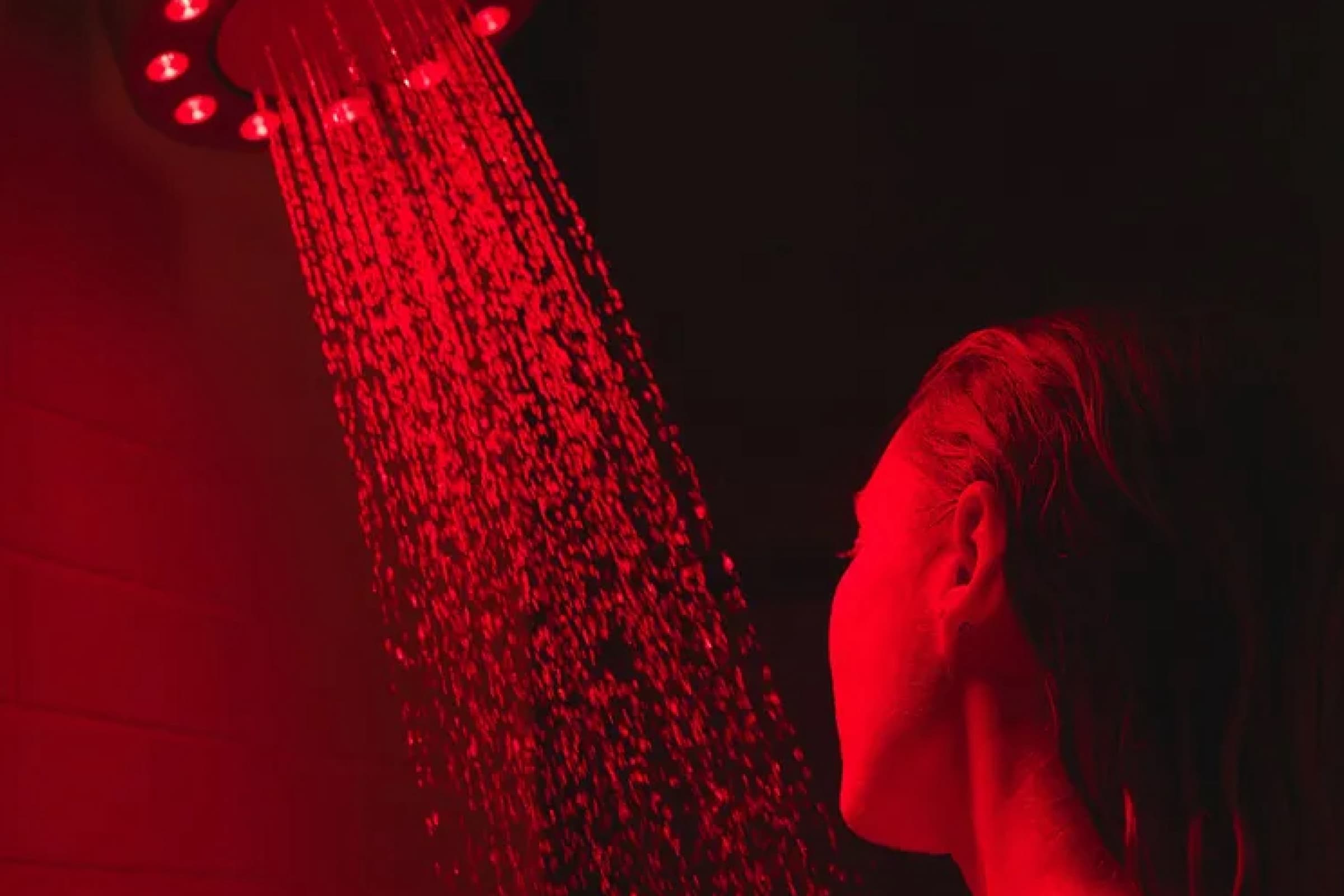
A red light therapy showerhead claims to turn a daily routine into something more functional, exposing the body to specific wavelengths of red and near-infrared light while you wash. These wavelengths are thought to interact with cells at a biological level, supporting mitochondrial activity, which is how cells produce energy, improving circulation, and potentially aiding tissue repair and recovery.
Instead of carving out time for a dedicated session, the exposure happens while you do something already built into your day. It sounds like an easy win, but can a red light showerhead really deliver meaningful red light therapy?
Why red light therapy has become so popular
Red and near-infrared light therapy has gained serious momentum in recent years. A lot of the interest comes from how these wavelengths interact with the body on a biological level. “Red and near-infrared light therapy is one of the most researched non-invasive technologies for supporting cellular energy, nervous system balance, and recovery,” explains Ireny Salama, MRCGP, a wellness doctor at The HVN.
Unlike ultraviolet light, which can damage skin cells, red and near-infrared wavelengths are non-ionising, meaning they don’t break down cellular structures. Instead, they are absorbed by components inside cells and appear to positively influence processes linked to energy production, circulation, and tissue repair. This is why red light therapy is now used across a wide range of settings, from dermatology clinics and physiotherapy practices to elite sports recovery programmes.
The science-backed benefits of red light therapy
While research into photobiomodulation is still very much evolving, several potential benefits appear pretty consistently across studies. Here are some of the areas where the evidence is currently strongest:
Supporting cellular repair and regeneration
Studies suggest red and near-infrared light may help support cellular repair processes, particularly in tissues under stress or recovering from strain. “When mitochondrial efficiency improves, the body has greater capacity to recover, repair and maintain healthy tissue,” explains Dr. Salama.
Boosting circulation and oxygen delivery
“One powerful mechanism behind red light therapy is its effect on nitric oxide,” says Dr. Salama. “By supporting nitric oxide availability, red and near-infrared light may help improve microcirculation and oxygen delivery throughout the body.” This is thought to happen because these wavelengths can help release nitric oxide in the body, allowing blood vessels to relax and widen. You can read more on this red light effect here.
Supporting muscle recovery
Several studies looking specifically at athletes have explored how red and near-infrared light exposure may support post-exercise recovery, with findings suggesting reductions in muscle fatigue and improved recovery markers following training. So, it’s no surprise red light therapy is increasingly used in sports recovery settings to help support muscle repair and reduce fatigue after intense sessions.
Encouraging nervous system balance
The body constantly moves between two main states: the sympathetic “fight or flight” response and the parasympathetic “rest and recover” state. “Red and NIR light may help support the parasympathetic nervous system, which reduces stress-related inflammation and promotes healthy neural function,” Dr. Salama explains. This shift toward parasympathetic activity is associated with recovery, relaxation, and improved resilience to stress. It may also explain why many people report feeling calmer, clearer, or more balanced after consistent red light therapy sessions.
Why the shower is an interesting place for red light therapy
So why the shower? The idea behind a red light therapy showerhead isn’t about adding another step to your wellbeing routine. It’s about integrating the technology into a routine that already exists. Most of us shower every day without thinking twice about it. By layering red light exposure into that moment, the therapy becomes part of something you’re already doing, rather than something you have to carve out time for.
That consistency is one of the main reasons the concept makes sense. Many studies exploring photobiomodulation suggest regular exposure tends to produce stronger results than occasional sessions, which is why repeated use is recommended.
Do red light therapy showerheads actually work?
Yes they can, but it has to be under the right conditions. While the scientific benefits of red and near-infrared light therapy is well established, the real question is whether a device like a showerhead can deliver the right wavelengths and enough power to effectively reach the body. You should look for red light around 620–660 nm to support skin and superficial circulation, while near-infrared wavelengths around 810–850 nm will penetrate deeper into muscle and nervous tissue, according to Dr. Salama.
Exposure time also matters with the recommended time usually between 10 to 20 minutes, three to five times a week. “Most showers last five to 10 minutes. If the device provides therapeutic wavelengths with sufficient irradiance, even that short daily exposure could create physiological effects,” she adds.
So while the underlying technology is credible, the results ultimately come down to the quality and design of the device delivering it. Remember, not all red light devices are created equal.
The overlooked benefit: the sensory reset
Today’s crazy pace of life keeps many of us in a near-constant state of stimulation. Notifications, packed schedules, and late-night screens mean the body rarely receives clear signals that it’s time to slow down.
Showering in red light creates a very different atmosphere from the bright lighting most bathrooms rely on. The softer glow changes the feel of the space almost instantly, making the shower less of a quick routine and more of a natural pause in the day. This sensory experience can complement the biological effects already being explored in red and near-infrared light therapy.
When the body receives cues associated with calm, such as dim lighting, warmth and a break from stimulation, it becomes easier to shift into a parasympathetic state, often referred to as “rest and recover.” In this state, processes like circulation, cellular repair and recovery are already more active, which may help create the conditions for therapies like red light to be more effective. While this connection is still being explored, the combination of physiological and environmental cues could play a role in how the body responds.
The result aligns with many of the outcomes we’re already chasing: better recovery, deeper sleep, and a more balanced response to everyday stress. In that sense, the appeal of a red light shower may not only be the red light itself, but how easily it turns a daily habit into a small moment of reset.
A closer look at HigherDOSE’s new Infrared Red Light Showerhead Filter
HigherDOSE, known for its other wellbeing tech tools including sauna blankets and PEMF mats, is the first to bring this idea to life. Their new Red Light Showerhead Filter combines two elements in one system: the light ring delivers red and near-infrared wavelengths at 650nm and 850nm, which are the wavelength ranges typically associated with therapeutic red light exposure.
The showerhead also has a 10-stage filtration system designed to help reduce common water contaminants, such as chlorine and heavy metals, which can contribute to dryness in both skin and hair. From a technical standpoint, the device delivers 200 mW/cm² of irradiance, which HigherDOSE says is comparable to many full-size red light panels used in dedicated setups.
Another big bonus is that the light ring detaches, meaning it can double as a portable red light device outside the shower. The charging dock acts as a stand, making it easy to use in specific areas when needed.
It also includes a remote timer with five, 10 and 15 minute sessions, as well as up to seven hours of battery life. For optimal timing, try fitting in a red light shower in the morning to help energise you, after a workout if you’re looking to support recovery, or in the evening if you’re hoping to wind down. With three colourways, take your pick from brass, black or chrome.
So, Healf or hype?
Ultimately, red light therapy showerheads sit in an interesting spot between science and ritual. The research behind red light therapy itself is well established, but the real innovation here may be how easily this red light device can fit into your everyday life. By layering therapeutic light into something you already do every day, consistency becomes far easier to achieve — and that plays a big role in how effectively these tools work in the long run. When that moment also creates a calmer sensory environment, the experience begins to feel less like another wellbeing checklist item, and more like an intentional pause in the day.
The appeal of red light showers may not just be about photobiomodulation. It may also be about reclaiming a small but meaningful moment of nervous system reset. When designed well (like with HigherDOSE), a red light therapy showerhead looks less like an expensive novelty or funky bathroom light and more like a natural next step in how tech is beginning to blend into our day without requiring more from us.



This article is for informational purposes only, even if and regardless of whether it features the advice of physicians and medical practitioners. This article is not, nor is it intended to be, a substitute for professional medical advice, diagnosis, or treatment and should never be relied upon for specific medical advice. The views expressed in this article are the views of the expert and do not necessarily represent the views of Healf
Samantha Nice is a seasoned wellness writer with over a decade of experience crafting content for a diverse range of global brands. A passionate advocate for holistic wellbeing, she brings a particular focus to supplements, women’s health, strength training, and running. Samantha is a proud member of the Healf editorial team, where she merges her love for storytelling with industry insights and science-backed evidence.
An avid WHOOP wearer, keen runner (with a sub 1:30 half marathon) hot yoga enthusiast and regular gym goer, Samantha lives and breathes the wellness lifestyle she writes about. With a solid black book of trusted contacts (including some of the industry’s leading experts) she’s committed to creating accessible, well-informed content that empowers and inspires Healf readers.
- 1. Why red light therapy has become so popular
- 2. The science-backed benefits of red light therapy
- 3. Why the shower is an interesting place for red light therapy
- 4. Do red light therapy showerheads actually work?
- 5. The overlooked benefit: the sensory reset
- 6. A closer look at HigherDOSE’s new Infrared Red Light Showerhead Filter
- 7. So, Healf or hype?