Loading...
The Healf Source
HX26 Showed Us The Future Of Wellbeing — And It Looks Like This
From neuroscientists and authors to spiritualists and human biologists, Healf’s immersive wellbeing and longevity event was overflowing with expert knowledge. And they showed us a glimpse of what's to come.
Written by: Ed Cooper
Written on: June 26, 2026
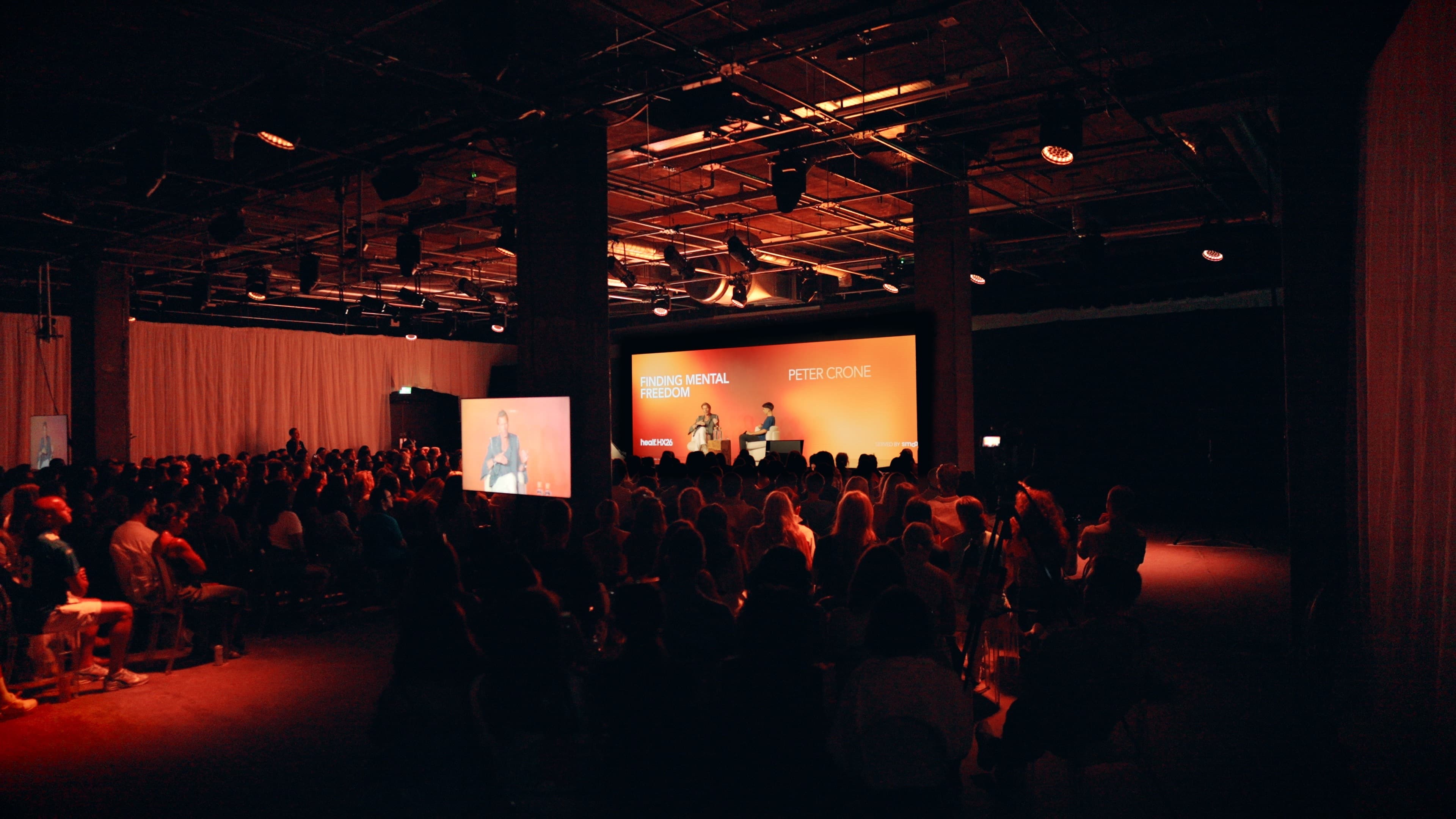
Over the course of two days at Healf Experience 2026 (HX26), the second-ever immersive wellbeing event in London, some of the world’s most inspiring thought-leaders, authors, scientists and longevity experts came together to discuss the most exciting innovations in wellbeing and what the future holds. Across the weekend, HX26 played host to 4,024 like-minded attendees looking to move the needle on their health and absorb as much wellbeing knowledge as possible. From workshops, fireside conversations, keynote talks, live demonstrations, and holistic activities, they explored it from all angles.
Whether it was neuroscientist Andrew Huberman sharing his take on the biggest questions in brain research, Dr. Rhonda Patrick unpacking the latest breakthroughs in the science of ageing, or a deep dive into genetic inheritance and targeted supplementation with Gary Brecka, each event proved that the concept of wellbeing — across physical, mental, and emotional states — is constantly evolving. And we’re all about to enter its most exciting stage yet.
As new research and technologies continue to emerge, it’s clear that the future of wellness is unfolding in front of our eyes. Those at HX26 just witnessed it first. Here were some of the biggest takeaways from the event — the ideas that supercharged the weekend and shed light on what's still coming.
The mind comes first
If there was a single thread running through the weekend's talks, it was this: the real gains aren't coming from the next protocol. They're coming from learning to get your mind right and get out of your own way. While health and wellbeing can be a self-interested pursuit, finding something outside of yourself — community, spirituality, gratitude — may be the greatest biohack of all. In many ways, mental wellbeing as the foundation of physical health, not simply a supplement to it.
Whether it was Dr. Tara Swart talking about the burgeoning field of psychodermatology, Rose Ferguson, Healf's Resident Functional Medicine Practitioner, pointing out the ways your gut microbiome measurably impacts mental health, or human biologist and longevity expert Gary Brecka leading the audience through a round of breathwork, the connection between brain and body was clear.
At her talk, 'A Masterclass in Manifestation', Roxie Nafousi cited research showing that participants who practised gratitude three times a day for four days strengthened their immune system by 50%. “That for me was when wisdom met science,” she said. “The way we think is not just impacting how we feel, but the way that our cells are behaving.”
This simple concept of intentionally practising gratitude — Nafousi’s example was to write down every good thing that happened from the moment she woke up to the moment she went to bed — could have a huge knock-on effect throughout the day. “If people did nothing else, made no other change, but introduced a gratitude practice into their life, everything would transform for them,” she told the audience at HX26. “The most magnetic state you can be in is having something to move towards but not emotionally attaching to the outcome.”
Anti-optimisation and going back to basics
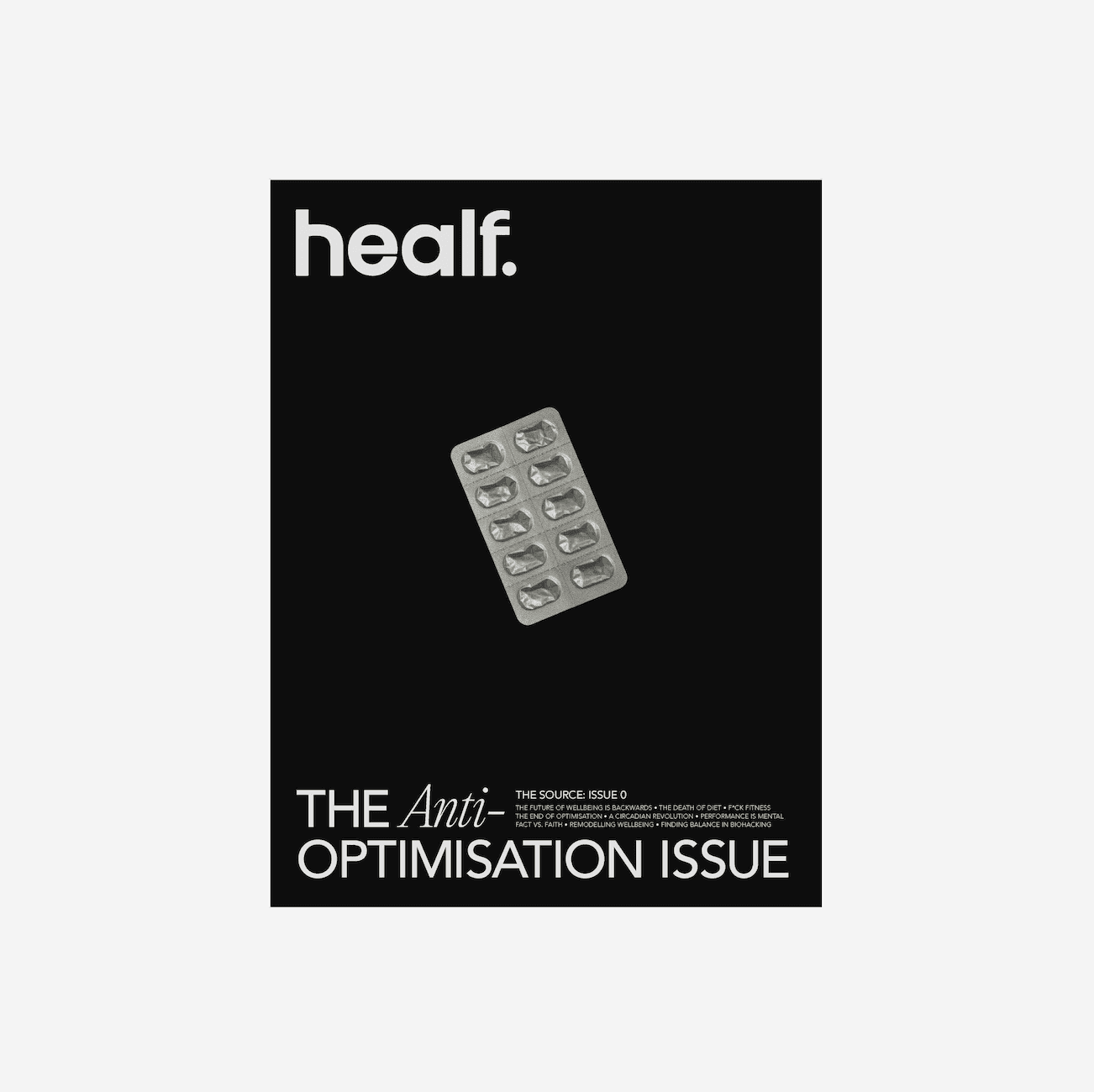
Anti-optimisation wasn't just on the cover of Healf's new print magazine, The Source. It was also a theme that threaded through countless interactions, conversations, and interviews throughout HX26. Perhaps most prominent was the idea that wearables and data should be used as tools, not gospel. Even the world's biggest biohackers are starting to reclaim intuition over algorithms.
Opening the weekend on the HX26 main stage, podcaster and neuroscientist Andrew Huberman spoke to the growing trend of moving away from wearable technology and toward a more intuitive sense of living. “There are a near-infinite number of tools, protocols, machines, things you take, things you avoid; and the techniques are many, but the principles are few,” he said on the main stage. But instead of stressing about various data points, like your sleep score or overall daily activity, focusing on basic elements of biology and physiology can deliver even more benefits.
He used breathwork as an example. “Deliberately emphasising your exhales shifts you towards a calmer parasympathetic state,” he explained, referring to the part of your autonomic nervous system that controls involuntary, daily bodily functions when you are safe and at rest. “Deliberately emphasising your inhales puts you in the other direction.”
Huberman also unpacked how he influences his levels of dopamine, norepinephrine, epinephrine — neurotransmitters and hormones that influence the brain and nervous system. “You want those four molecules spiked big in the first hours of your day, ideally the first hour,” he said, “but dropping through the afternoon, and to get them low at night.” This, he continued, “bookends” the day, and can be achieved by making sure you get adequate hydration, movement first thing, and exposure to natural light as soon as possible after waking: all incredibly basic, simple things that people have been doing since the dawn of time. “That's what's going to set you up for elevated daytime focus, alertness and better sleep.”
Brecka agreed, touching on a similar point during his talk focused on ‘Unlocking Your Ultimate Human’. "There's just no replacement for sunlight, for grounding, for a whole food diet, for community and for connection,” he said. “Community is medicine, connection is medicine — the leading science in longevity is going back into the human body and empowering what we already have.”
Tapping into the theme of anti-optimisation in her panel on 'The Female Blueprint', Dr. Shabana Daya explained: “We've overcomplicated things. Getting outside in the morning, sleep hygiene, strength training, removing stimulation and whole foods. You can change your gene expression with a really simple basic lifestyle and we've just lost sight of that."
It was a line that could have closed any of the weekend's talks, and in a way, it did.
The power of intuition
While it's all well and good to talk about anti-optimising your life, it helps to have something to turn to and lean on instead: your own intuition.
During his talk, 'The Mind Architect', Peter Crone — a writer and spiritualist who works with a swathe of high-performing elite athletes and CEOs, touched on the subtle signals the body can provide to lead us in the right direction. It's a sense that no watch, ring or band can pick up on. “Every pattern in the mind is there to protect you, and it’s telling you clues,” he said at HX26. “Not about your character, not about your personality, but about a pattern that was formed to protect you once.”
This concept, similar to a gut feeling or a knee-jerk reaction, was also touched upon by Huberman, who noted that our behaviours can be distilled down. “The nervous system has three choices: you can move towards something, you can move away from it, or you can stay right where you are,” he said. “There's no other option in terms of behaviour — intuition, ultimately, is about accessing the information coming from the body as one piece of the information.” Building on top of this reaction, he said, can help you get closer to your own base feeling.
Ask yourself questions, Huberman suggested, such as “why do I feel that way? What did I eat? Am I jet-lagged? Do I like this person? Does this feel right?”. For Huberman, this introspection isn’t just a biohack, it’s a vital tool in the locker. “The times in my life when I set aside intuition… it put me at the threshold of self-destruction.”
Women's health is just getting started
The conversation around women’s health is no longer just about education. It’s about taking action. And that was on full display all weekend. 'The Female Blueprint' panel, which included Dr. Alicia Robbins, Dr. Shabana Daya and Dr. Barbara Sturm, was, in many ways, one of the most informative sessions across the HX26 weekend. Instead of just posing questions, the experts at the forefront of women's health were pursuing solutions.
“We've been really failing women,” said Dr. Robbins, an OB-GYN who specialises in perimenopause. “I was one of those doctors who was honestly failing women, not giving them all the options they had, because I hadn't been trained in it — statistically, women have to go to eight doctors before they're even offered this conversation.”
The panel touched on everything from the impact of specific hormones during perimenopause to the importance of building bone density, which peaks in your late 20s, and rapidly decreases in your late 40s. “Gone are the days of focusing on being skinny,” said Dr. Daya. “Every plate should be protein-first. We want to build the muscle we are inevitably going to lose.” Dr. Robbins agreed: “I wish I'd known this in my 20s. I wish I'd focused more on being strong rather than skinny.”
Your genes are not your destiny.
Many of the speakers reminded people that your biological destiny is not fixed. And getting back to basics — eating well, moving often, calming your mind, and getting restorative sleep — can help redefine what’s possible. "Your genetics load the gun, but your lifestyle pulls the trigger," said Eleanor Hoath, a moderator on the 'Science, Supplements and Cells' panel.
In her talk, Dr. Robbins made a point that applies to any life stage you're in. “We are not doomed to what our genes are. Even if you have genes for diabetes or PCOS — what you do on a day-to-day basis is actually going to be more powerful than those genes.”
Kayla Barnes-Lentz, in her 'Anti-Inflammatory Living' talk with Dr. Sturm, pointed out that the way we think about disease can make it sound wholly out of our control and random, but we have high-tech tools, like wearables, that can help us catch the signs early so that we can do something about it.
"You don’t have a heart attack the day that you have a heart attack, that’s developing years and years and years before. I love the ability to see where I’m trending and then make interventions," the world's most measured woman noted on stage. "I think this gives us the radical ability to change our health now.”
Supplements, like wellbeing, are personal
Trends change, but data doesn’t. And your supplement stack shouldn’t look like anyone else’s. Just because your favourite biohacker follows a particular protocol, doesn’t mean you have to.
Across the weekend, different speakers shared what they do (and don’t) take — and none of it was the same. Because supplements, like wellbeing, are deeply personal. They’re filling gaps which are unique to each person’s biology, diet, and lifestyle. While a $3,000 monthly supplement routine might work for Dave Asprey, it might not fit the bill for you. And that’s the whole point. "If you would stop supplementing for the sake of supplementing, and you would start supplementing for deficiency, you would see human beings truly thrive. That's when your supplements will make an impact," said Brecka.
To do this properly, you just have to get curious about your own biology and find what works for you. Where are the gaps in your diet? In your lifestyle?
"I think that we need more people being scientists of themselves," said Huberman.
The breath is the protocol
It was striking how many experts mentioned, or even stopped their presentations, to talk about breathwork. Whether it was the physiological sigh, box breathing, or even simple diaphragmatic breathing, everyone was doing it, from Huberman to Poppy Delbridge to Gary Brecka. “The definition of death is not enough oxygen to maintain brain function, which we call hypoxia. A lot of us are slowly suffocating to death, and it's very easy to shift that," Brecka told the audience as he walked them through a quick breathwork exercise to show them the importance of down-regulating your system. You could hear an audible, deep exhale from 250+ people as he moved on to his next talking point.
Huberman noted that this thing — our breath — is one of the most important, free tools we have for our wellbeing, and that we should teach our kids, parents, and loved ones how to harness it. “If I’d known that there was a tool that was ‘pre-installed’ in me, works the first time, works every time, to just emphasise an exhale, just dumping air as a way to bring my level of physiological arousal down," he said. "If I had learned that when I was 11 or 12, that would have saved me in so many domains of life.”
This article is for informational purposes only, even if and regardless of whether it features the advice of physicians and medical practitioners. This article is not, nor is it intended to be, a substitute for professional medical advice, diagnosis, or treatment and should never be relied upon for specific medical advice. The views expressed in this article are the views of the expert and do not necessarily represent the views of Healf
Ed is a freelance journalist and former Men’s Health digital editor, with bylines in Red Bull, BBC StoryWorks, Guardian Labs, Third Space, Natural Fitness Food and Form Nutrition, among others. Having run marathons, conducted sleep experiments on himself and worked with some of the world’s most in-demand experts — from sleep scientists and strength athletes to high-performance trainers and elite-level nutritionists — one thing remains clear for The Healf Source contributor: fitness trends come and go, but as long as you keep turning up for yourself, consistency will win every time.