























_2026-10-13_14-11-48.png)


When Should You Take Psyllium Husk? (And When To Skip It)
What most people get wrong, and how to actually use it for digestion, blood sugar and cholesterol.

Written by: Samantha Nice
Written on: 8 May 2026
Fibre has moved higher up the priority list. After years of focusing on protein, we’re now paying more attention to digestion, gut health, and blood sugar, and actively trying to increase our fibre intake. Psyllium husk has become one of the simplest ways to do that.
It’s being added to water, taken before meals, and built into daily routines. But despite how widely it’s used, there’s still a lot of confusion around when to take psyllium husk, who it actually works for, and when it’s unlikely to make much difference. Used properly, it can be effective. Without that context, it often falls short.
What psyllium husk actually does
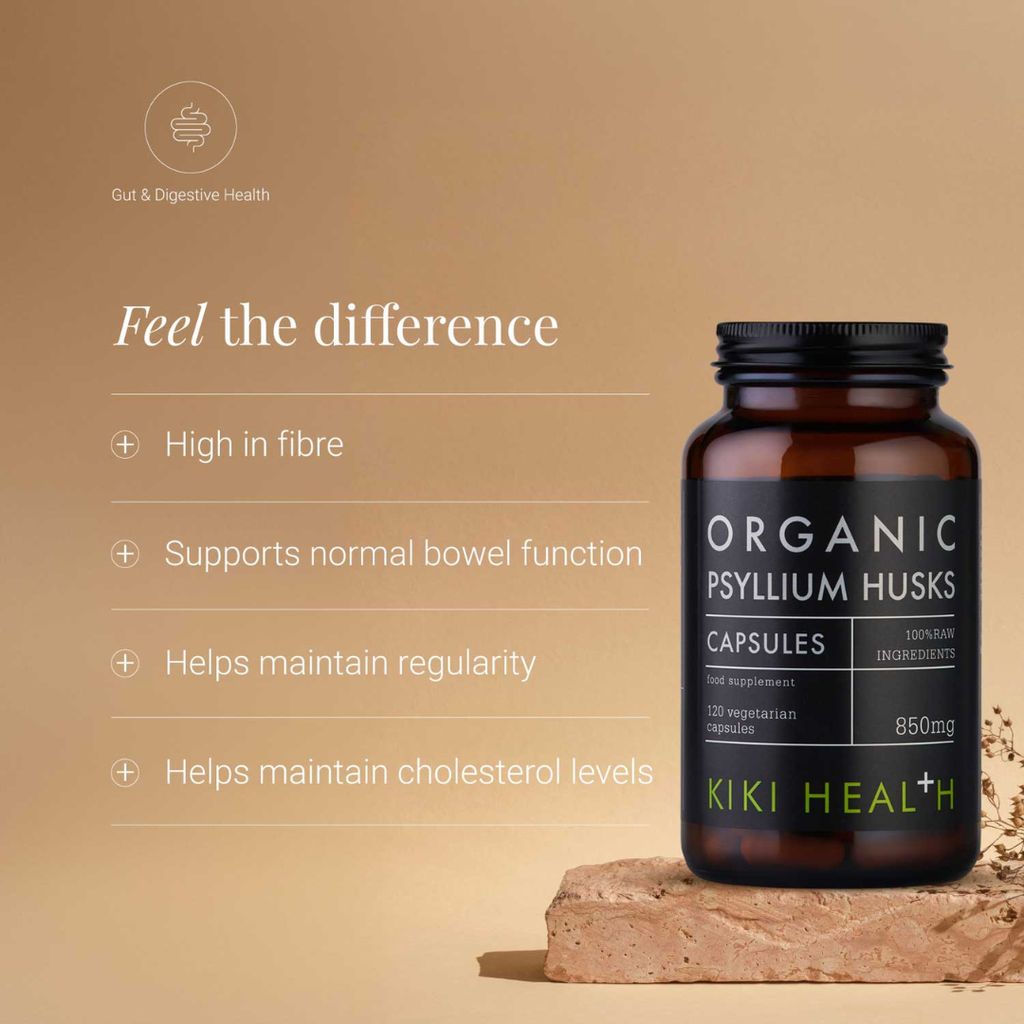
At a basic level, psyllium husk is a soluble fibre derived from the seeds of Plantago ovata. That means it dissolves in water and forms a gel-like substance, rather than passing straight through the body. What matters most, though, is how that gel behaves once it’s in your digestive system.
“That gel behaves differently depending on where it is in the body,” explains nutritionist April Morgan, mBant., CNHC. “In the colon, it absorbs water and increases stool bulk, helping to soften stools and promote more regular bowel movements. In the small intestine, it slows digestion and nutrient absorption, which can blunt spikes in blood sugar after meals.”
It also has a direct impact on cholesterol regulation. “It binds to bile acids, encouraging the body to use circulating cholesterol to replace them, which contributes to its cholesterol-lowering effects,” adds Morgan.
This is why psyllium is often linked to multiple outcomes. It’s not targeting just one system, but influencing several at once.
When should you take psyllium husk?
Timing can make a difference, but not as much as you might think. “When you take it has a modest effect, but consistency is far more important,” says Morgan. “Establishing a regular daily routine is more impactful than focusing on the exact timing.” That said, there are a few situations where aligning it with your goal can make it more effective.
For blood sugar control
Taking psyllium just before or alongside meals can help slow carbohydrate absorption and reduce post-meal glucose spikes. This is especially useful if you notice energy dips or cravings after eating, as it helps create a more gradual rise and fall in blood sugar.
For cholesterol reduction
Timing matters less here, as psyllium works by gradually lowering cholesterol over time rather than having an immediate effect. What actually drives results is regular use, allowing it to steadily support lower cholesterol levels.
For digestion and regularity
It can be taken at any time of day, as long as it’s used consistently. Morgan notes that taking it first thing on an empty stomach can help establish a routine and support regular bowel movements. In this case, timing is more about habit than biology. Choosing a set time each day helps keep your digestion more predictable.





Who should be taking psyllium husk
There are a few evidence-backed situations where psyllium husk can be genuinely useful. It works best when you’re clear on what you’re trying to support.
If your digestion is off
If things aren’t moving consistently, this is where psyllium tends to work best. “It functions as a bulk-forming fibre, improving stool frequency and consistency,” says Morgan. That tends to be most helpful in situations like:
- Constipation or irregular bowel movements
- Alternating constipation and diarrhoea
- Mild diarrhoea where you need more stool structure
- Haemorrhoids (where reducing straining matters)
- Mild IBS with inconsistent digestion
It essentially helps bring more structure and predictability to your digestion, rather than pushing things in one direction.
If you’re trying to improve cholesterol or blood sugar
This is where the research is strongest. “Large meta-analyses of randomised controlled trials show significant reductions in LDL and total cholesterol,” she explains. “There is also good evidence that it improves markers of blood sugar control, including fasting glucose and HbA1c.” This is most relevant if you’re dealing with:
- Elevated LDL cholesterol
- Prediabetes or frequent blood sugar spikes
- Type 2 diabetes (with medical guidance)
- Insulin resistance or PCOS
Here, psyllium works more gradually, supporting metabolic health over time rather than delivering an immediate effect.
If your diet is low in fibre (which most are)
Most people fall short of the recommended 30g of fibre per day, which is where issues with digestion, fullness, and blood sugar can start to show up. In the UK, average intake sits closer to 18g per day, well below that target. You may notice:
- You’re not eating enough fibre day to day
- Meals aren’t keeping you full
- Digestion feels inconsistent or unpredictable
“For those who do not consume enough dietary fibre, which is the majority of the population, psyllium can be a practical way to increase intake,” says Morgan. It’s not a replacement for a balanced diet, but it can help close the gap when intake is consistently low.
When to avoid psyllium husk
Psyllium is often seen as an easy add-on, but it’s not always the right move. In some cases, it’s best avoided entirely. Here’s when it’s worth skipping or rethinking:
If there’s an underlying medical issue
Sometimes adding bulk-forming fibre can do more harm than good, especially if something more serious is going on. This tends to apply if you’re dealing with:
- Difficulty swallowing or a risk of choking
- Bowel obstruction or intestinal narrowing (strictures)
- Recent bowel surgery without medical clearance
- Severe, unexplained abdominal pain
- Known allergy to psyllium
If the basics aren’t in place
Psyllium only works properly when the fundamentals are there to support it. Without those in place, it’s more likely to cause issues like:
- Not drinking enough water throughout the day
- Being significantly dehydrated
- Very low daily movement or long periods of sitting
“Taking it without sufficient water can worsen constipation,” Morgan says. “It can also interfere with the absorption of certain medications if taken at the same time.”
If it clashes with medication or timing
It’s not just what you take, but when you take it. Since psyllium slows absorption, it can disrupt how certain medications are absorbed, so spacing it out matters. This becomes relevant if:
- You take medications like levothyroxine too close to psyllium
- You’re not leaving enough time between doses
If you’re expecting it to fix everything
Psyllium can support digestion, but it’s not a shortcut for bigger lifestyle gaps. It works best as part of a wider routine, not as a stand-alone fix. It probably won’t do much if:
- Your diet is mostly ultra-processed and low in whole foods
- You have chronic stress that is high and unaddressed
- You’re using it instead of improving overall nutrition
Why it works for some (and not others)
Psyllium doesn’t work the same way for everyone, and that usually comes down to what’s already going on in your diet and digestion. If fibre intake is already high and digestion is stable, the effect will be minimal. If there’s a clear gap, the results are likely to be more noticeable. There’s also an adjustment phase. “Some may experience increased bloating or abdominal discomfort, especially when starting or increasing the dose too quickly,” says Morgan.
Research supports this. Psyllium can initially increase gas and bloating, but symptoms often improve over time as digestion becomes more regular. Compared to more fermentable fibres, it may actually produce less gas and can reduce bloating in certain groups.
How much psyllium husk should you take?
Most research points to around 5 to 15 grams per day, depending on what you’re using it for. Lower doses are usually enough for digestion, while higher amounts are more often used for cholesterol and blood sugar. “Psyllium can be taken daily, and many of its benefits build gradually over several weeks,” says Morgan.
Top tips for getting it right
- Start low. Around 3–5 grams per day if you’re new to it.
- Build gradually. Increase over time to avoid bloating or discomfort.
- Stay consistent. Daily use is what will bring results.
- Hydrate properly. Psyllium needs water to work. Without it, it’s far less effective and can cause discomfort.
What people often get wrong
Most issues with psyllium come down to how it’s used. Some of the most common mistakes include:
- Not drinking enough water
- Starting with too high a dose
- Using it inconsistently
- Expecting immediate results
“There is often an expectation of rapid or dramatic results, whereas psyllium tends to produce gradual, moderate improvements,” Morgan explains.
So, Healf or hype?
Psyllium husk sits somewhere in the middle. It’s not a quick fix, and it’s not going to override a poor diet or lifestyle, but it is one of the few supplements that has consistent evidence behind it for its health benefits, particularly for digestion, cholesterol, and blood sugar.
However, its effects can fall short if you only take it occasionally, don’t drink enough water, or take it without a clear reason. Used with a specific goal, and built into a routine, it becomes far more effective.
Your most asked psyllium husk, answered
When should you take psyllium husk, morning or night?
This actually matters less than you’d think. Taking psyllium husk in the morning, evening, or around meals all work well, it really comes down to what you’ll stick to. Consistency is what makes the difference here.
What does psyllium husk actually do?
In simple terms, it forms a gel in your gut that helps regulate digestion, slows how quickly nutrients are absorbed, and supports things like cholesterol balance.
Can you take psyllium husk every day?
Yes, and that’s how it tends to work best. Most of the benefits come from using it regularly, rather than every so often.
Does psyllium husk help with bloating?
It can, particularly if bloating is linked to constipation or irregular digestion. By helping things move more consistently, it can reduce that “backed up” feeling over time. That said, some people notice a bit more bloating when they first start, but this usually settles as your system adjusts.
Can psyllium husk help cholesterol?
It can. There’s consistent research showing reductions in LDL and total cholesterol when it’s used regularly over time.
Does psyllium husk help blood sugar?
Yes. By slowing carbohydrate absorption, it helps reduce those sharper spikes after meals and keeps things more steady.


This article is for informational purposes only, even if and regardless of whether it features the advice of physicians and medical practitioners. This article is not, nor is it intended to be, a substitute for professional medical advice, diagnosis, or treatment and should never be relied upon for specific medical advice. The views expressed in this article are the views of the expert and do not necessarily represent the views of Healf
Samantha Nice is a seasoned wellness writer with over a decade of experience crafting content for a diverse range of global brands. A passionate advocate for holistic wellbeing, she brings a particular focus to supplements, women’s health, strength training, and running. Samantha is a proud member of the Healf editorial team, where she merges her love for storytelling with industry insights and science-backed evidence.
An avid WHOOP wearer, keen runner (with a sub 1:30 half marathon) hot yoga enthusiast and regular gym goer, Samantha lives and breathes the wellness lifestyle she writes about. With a solid black book of trusted contacts (including some of the industry’s leading experts) she’s committed to creating accessible, well-informed content that empowers and inspires Healf readers.