Loading...
The Healf Source
Is The Sauna The Best Way To Sweat Out Microplastics?
Biohacker Bryan Johnson claims a daily sauna habit slashed his microplastic levels, but experts say the science may not stack up. We asked two experts to separate biohacking hype from hard evidence.
Written by: Ed Cooper
Written on: March 2, 2026
by Ed Cooper
Towards the end of 2025, biohacker Bryan Johnson’s semen health was making headlines across the world. The entrepreneur, known for spending millions each year in pursuit of reversing his biological age, claimed that a daily 20-minute dry sauna session at 200°F had measurably reduced the levels of microplastics in his blood and semen. It was the kind of bold, optimistic claim that travels fast on social media and search platforms, but does the science actually back it up? And is this Healf or hype?
Before dismissing or embracing Johnson's routine, it's worth understanding why microplastics are a concern in the first place and what we currently know about the body's ability to deal with them. We talked to experts to understand what's happening at a biological level and how microplastics interact with our bodies.
Why are microplastics harmful for health?
Searches for ‘microplastics’ hit a five-year high in 2025, according to Google Trends. But even before this point, the term has felt increasingly inescapable. That's partly because scientific papers, published studies, and media reports have started talking about how microplastics have been found in everything from human blood and lung tissue, to breast milk and even the placenta. We ingest them through the food we eat, the water we drink, and we even inhale them from the air around us. As microplastics themselves are a fairly new phenomenon (that we are aware of), the question about what that means for our long-term health is still quite murky. Early findings, however, seem far from reassuring.
"Microplastics can provoke an immune response when they enter the body, where the immune system may recognise these particles as foreign matter and trigger inflammation," explains Atul K. Tandon, MD, a cancer and immunology physician with over 40 years of biomedical research experience and founder of NeoBiotechnologies. "Chronic exposure can lead to low-level immune activation, which has been linked in studies to metabolic stress, oxidative damage and potential interference with normal immune function."
There's another layer of concern, too. "Ingested microplastics may also carry pathogens or chemicals absorbed from the environment," Dr. Tandon adds, "compounding their effect on immunity." Former NHS consultant physician Ioannis Liakas, MD, also points to another dimension that is often overlooked: your skin. "Microplastics can interact with sweat and sebum, causing mild irritation or sensitisation, especially for those with sensitive or compromised skin."
Is it possible to get rid of microplastics in your body?
Here's where things get sobering. Unlike, say, alcohol or certain medications, microplastics don't simply clear your system with time and hydration. Once embedded in tissue, they become difficult for the body to get rid of. Part of that is because they're man-made materials that our bodies, up until recently, haven't had to deal with.
"The body has no active mechanism for clearing microplastics from tissues once they're embedded," says Dr. Tandon. "Most excretion occurs via the gastrointestinal tract if particles pass through, but some accumulate in the liver, spleen and lymphatic system. Immune cells can engulf very small particles, but clearance is slow and incomplete."
Preventing exposure, he says, “remains the primary strategy; there are no scientifically validated therapies to remove microplastics once they have entered the body."
Waqqas Jalil, MD, FRCSC, a board-trained plastic surgeon and founder of Aspect, echoes this, noting that the body's primary filtration systems are the liver and kidneys, which process and eliminate waste via urine and bowel movements rather than sweat. "The best solution for microplastics, from a medical point of view," he says, "is to try to limit our contact with them, such as avoiding heating food in plastics."
So, can saunas or sweating help rid your body of microplastics?
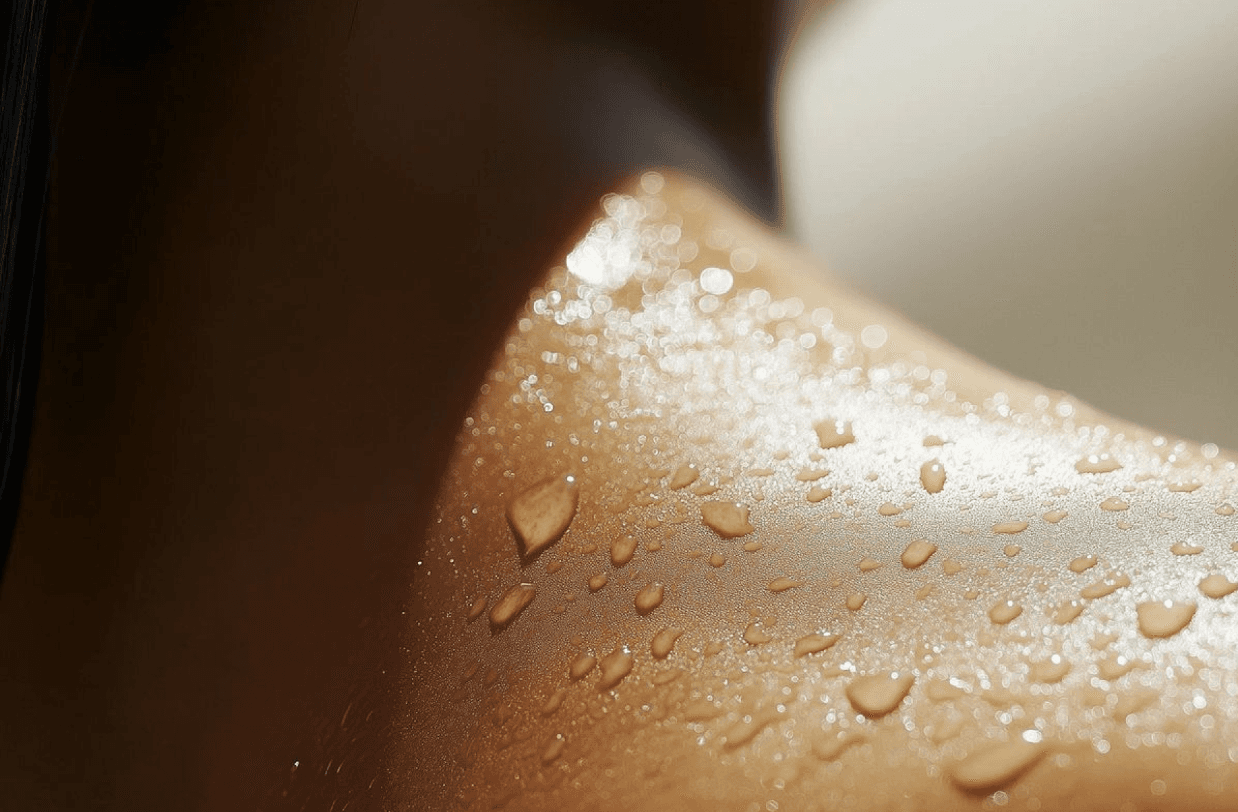
This is where the science gets particularly important to parse carefully. Sweating does play a role in eliminating certain waste products — some water-soluble molecules and trace metals, for instance, can be excreted through the skin. Microplastics, however, are a fundamentally different kind of substance.
"Microplastics are largely insoluble and particulate," Dr. Tandon explains. "Their size and tendency to lodge in tissue make them unlikely to be mobilised through sweat. Experimental evidence in humans is lacking."
Dr. Jalil is similarly unconvinced that a daily sauna session is really going to move the needle. "The idea that we can 'sweat out' microplastics is a very alluring one, but it is also one that fails to take into account how our bodies actually function," he says. "Sweating is a function of sweat glands in our skin, intended to help keep our body cool. The composition of sweat is mostly water, salts and trace amounts of metabolic waste products."
Both experts are quick to acknowledge that saunas do offer genuine health benefits — cardiovascular support, improved thermoregulation, relaxation and immune regulation among them. However, the leap from those benefits to microplastic elimination is, as Dr. Jalil puts it, "a bit of a stretch."
Johnson's claims are compelling precisely because they're personal and measurable. As he says, he has the bloodwork to prove it. Yet, self-reported biometric data from a single individual, without controlled conditions or peer review, isn't the same as clinical evidence. "Claims suggesting that sauna use eliminates microplastics are misleading and not grounded in current immunological science," Dr. Tandon says plainly.
That doesn't mean that saunas can't provide some great health benefits. In fact, regular sauna use has a growing body of evidence behind it for heart health and recovery. But if your goal is specifically to reduce microplastic burden, experts agree the most effective strategy remains reducing exposure in the first place: filtering your drinking water, ditching plastic food containers and avoiding single-use plastics where possible. Less exciting than a daily sweat session, perhaps, but who said you can’t have both?
How to get rid of microplastics:
Based on what the experts have explained above, there are a few ways (that don't involve the sauna, necessarily) that doctors and scientists say seem to be one way to potentially get rid of some of the microplastics that you've inevitably come into contact with in your daily life.
And they are actually pretty simple:
Eat a high-fibre diet
Get adequate hydration
Promote your gut health to increase excretion via stool
Of course, as previously mentioned, the best defense is a good offense. So, doing your best to lower your exposure to microplastics each day is likely your best way to lower that number too.
This article is for informational purposes only, even if and regardless of whether it features the advice of physicians and medical practitioners. This article is not, nor is it intended to be, a substitute for professional medical advice, diagnosis, or treatment and should never be relied upon for specific medical advice. The views expressed in this article are the views of the expert and do not necessarily represent the views of Healf
Ed is a freelance journalist and former Men’s Health digital editor, with bylines in Red Bull, BBC StoryWorks, Guardian Labs, Third Space, Natural Fitness Food and Form Nutrition, among others. Having run marathons, conducted sleep experiments on himself and worked with some of the world’s most in-demand experts — from sleep scientists and strength athletes to high-performance trainers and elite-level nutritionists — one thing remains clear for The Healf Source contributor: fitness trends come and go, but as long as you keep turning up for yourself, consistency will win every time.