









































The Blood Sugar Hack No One Is Talking About: How Light Affects Your Levels
From morning sunlight to artificial indoor light, here’s how your light environment could be shaping your energy, glucose control and metabolic health.

Written by: Samantha Nice
Written on: 23 March 2026
When we think about blood sugar, food is usually the first thing that comes to mind: carbs, protein, fibre, and meal timing. Add in exercise, sleep, and some stress management, and your metabolic checklist seems complete. But there’s another factor that can have a surprisingly powerful influence on blood sugar: light.
We're not just talking about sunlight or red light, but the full pattern of brightness and darkness we experience from morning to night that changes the way our bodies and blood sugar work together. In biological terms, light is one of the primary signals that sets our internal body clock, helping regulate processes such as insulin sensitivity, hormone release, and how efficiently the body uses fuel.
As physician Jack Kreindler, MB, BS, BSc (Phys), DipMM), founder of WellFounded, explains: “Light is one of the master timing cues for human metabolism. When light hits the retina in the back of the eye, it sets the brain’s central 'circadian’ clock, which then coordinates peripheral clocks in liver, pancreas, muscle and fat — tissues that directly govern hepatic glucose output, insulin secretion and insulin sensitivity.”
Nutritionist Rose Ferguson, MSc, says this internal timing system can shape metabolic responses throughout the day. “Light is one of the biggest regulators of our circadian rhythm, and that rhythm controls a huge amount of our metabolic function including things like insulin sensitivity, appetite hormones and how efficiently we burn fuel," she says.
To understand how much light matters, it helps to look at the body's metabolism differently: not as a single process, but as a pattern that unfolds across the day.
Morning: the signal that starts your metabolism
The first light exposure of the day plays an important role in setting the body’s metabolic schedule. Early daylight helps establish the timing signals that influence energy levels, appetite, and hormone activity in the hours that follow. “Getting natural light into the eyes within the first hour of waking helps anchor the central circadian rhythm in the brain, which then sets the timing for a whole cascade of metabolic processes,” Ferguson explains.
One of the key hormonal shifts that results from that morning exposure is the body’s natural morning surge in cortisol — the stress hormone that helps move the body from sleep into an active, alert state. “The morning rise in cortisol is pretty essential,” Ferguson says. “It’s what wakes us up, mobilises energy and helps regulate glucose availability so the brain and body are ready to start the day.”
At a biological level, the process begins in the eye, where certain cells respond directly to light and send signals to the brain’s internal clock.
“The most metabolically relevant light signal is visible blue-cyan light, around 480 nanometres,” says Dr. Kreindler. “It strongly activates melanopsin-containing retinal cells that don’t help you see but uniquely drive circadian and hormonal timing, including melatonin suppression.”
While those are big, scientific terms, what he's referring to is simply the blue-turquoise tones found in natural daylight. Light at this wavelength is particularly effective at activating specialised cells in the eye that act less as part of the visual system and more as timing sensors. Their job is to detect daylight and signal to the brain that it’s daytime, helping the body shift into its active mode — supporting alertness, hormone balance and the metabolic processes that power the day ahead.




Dash - Pistachio White


Mid-morning: when your body handles glucose best
Since morning light sets the body clock, mid-morning is generally the time when your metabolism works most smoothly. During these hours, the body is generally better at managing incoming energy from food.
“Research shows that insulin sensitivity and glucose tolerance are often at their strongest earlier in the day, frequently peaking around mid-morning,” Ferguson says. “The body tends to handle carbohydrates and energy intake better during that window.”
Part of this comes down to the body’s internal timing. While the brain keeps the main clock, other organs involved in metabolism also follow their own daily schedules. “Many of our organs — like the liver, pancreas, muscle and even fat tissue — have their own local clocks,” Ferguson explains. “These peripheral clocks regulate processes like insulin release, glucose uptake and fat metabolism, and they rely heavily on signals such as light exposure and the timing of food.”
When daily habits drift away from that natural timing thanks to irregular sleep, late nights, or late meals, the system can becomes less aligned. “In tightly controlled human experiments, circadian misalignment — when sleep or behaviour occur at the wrong biological time — causally worsens glucose tolerance and insulin sensitivity,” Dr. Kreindler says.
Getting enough natural light during the day helps keep this system steady. “Indoor light is commonly too dim at the eye to strongly anchor circadian rhythms, whereas daylight is much brighter and therefore a stronger circadian cue,” he says.
Afternoon: why energy crashes can happen
For many people, the mid-afternoon energy dip feels almost unavoidable. While food and sleep often take the blame, our daily environment can also play a role.
“People who spend more time outdoors tend to have more stable circadian rhythms, and that has a knock-on effect on metabolic health,” Ferguson says. That's partly a result of the amount of natural daylight we experience. Many modern routines involve long hours spent indoors under artificial lighting, followed by bright evenings filled with screens and overhead lights. “Artificial light on its own isn’t necessarily the problem; it’s the lack of natural light and the disruption of normal light and dark cycles,” Ferguson explains.
Spending time outside often means we're engaging in habits that positively affect blood sugar as well. “Being outside often means people are moving more, walking, standing and generally being less sedentary, and muscle activity helps clear glucose from the blood far more efficiently," she says. And of course, it's also typically more calming for our nervous systems to be out in nature. “Chronic stress can have a big impact on blood sugar because elevated cortisol pushes glucose into the bloodstream."
Over time, these small shifts can make a noticeable difference to how steady energy feels during the day. “When someone simply starts getting outside more, their energy becomes steadier, cravings reduce, and those mid-afternoon crashes start to disappear,” Ferguson adds.
Evening: the light pattern that can disrupt metabolism
We already know that the pattern of light we experience in the evening can really shift the body’s internal clocks, but what's less often discussed is the fact that it can also impact the body's blood sugar regulation, too. “A common modern-day pattern is dim days and bright nights,” Dr. Kreindler says. “This weakens circadian signalling and disrupts melatonin timing.”
In practice, this often means spending much of the day indoors under relatively low light, then moving into brightly lit environments in the evening — from overhead lighting to phones, laptops and televisions. “Evening or night light, especially blue-enriched light, suppresses melatonin and can delay circadian phase, increasing the chance of later sleep and later eating,” he explains. “Ordinary room light before bedtime markedly suppresses melatonin in humans.”
Melatonin helps signal to the body that night has begun. When that signal arrives later than it should, sleep can shift later too, and that change in timing can affect how the body regulates energy the following day.
Ferguson says the evening environment should ideally begin to mirror the opposite of the morning. “In the evening, the aim is to do the reverse of the morning,” she says. “Reduce bright light, particularly from screens, and allow your nervous system to slow down.”






Night: what happens to your metabolism while you sleep
If daylight helps set the body clock, darkness helps protect it. During sleep, the body carries out a number of processes that support hormonal balance and metabolic regulation. Consistent darkness helps these overnight rhythms run as they should.
Research suggests that even small amounts of light during sleep can influence these processes. “Even one night of moderate light exposure during sleep increased next-morning insulin resistance and altered autonomic measures in a lab study,” Dr. Kreindler says.
Scientists have also looked at what happens over longer periods. “In a large study using wearable light sensors, brighter night-light exposure patterns predicted a higher incidence of type 2 diabetes, independent of genetic risk and other factors,” he adds.
Taken together, the findings suggest that the daily cycle of bright days, dim evenings and dark nights may be more important for metabolic health than many people realise.
Five light habits for better metabolic health
While circadian science can be complex, the habits that support it are simple. Dr. Kreindler explains: “The simplest, most evidence-aligned approach we know today is to recreate a natural light–dark pattern with bright days, dim evenings and dark sleep.” Here’s how to actually do that:
1. Step outside soon after waking
Try to get outside within the first hour of the day, even if it's brief. A short walk, drinking your coffee outdoors, or simply standing by an open window can expose your eyes to natural daylight and help set the body’s internal clock.
2. Seek natural light during the day
Daylight is far brighter than typical indoor lighting, even on cloudy days. If possible, take a walk at lunchtime, work near a window or spend a few minutes outside between tasks.
3. Move a little after meals
Light movement after eating helps muscles use glucose more effectively. Even a short walk can support steadier energy through the afternoon.
4. Start softening the light in the evening
Two to three hours before bed, start lowering the brightness around you. Swap harsh overhead lighting for softer lamps and try to limit time spent on bright screens.
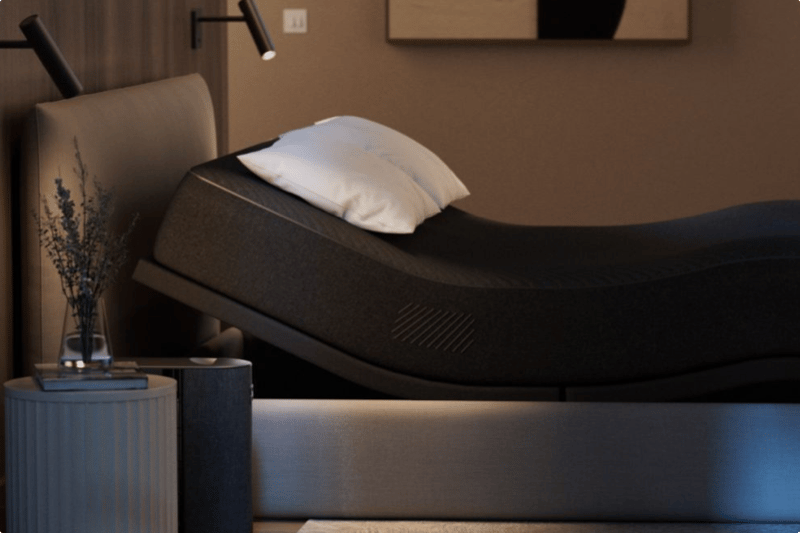
5. Keep your sleep environment dark
Once it’s time to sleep, darkness helps protect the body’s overnight rhythms. Using blackout curtains, reducing light from electronics, or using an eye mask can all help.
Ferguson suggests approaching these habits as a natural progression throughout the day. “I like to think of it as synchronising the body with the day,” she says. “Start with light in the morning, layer in balanced meals and movement during the day, and then allow things to become calmer and darker in the evening.”
The key takeaway? Think beyond just food
If there’s one place to start, Ferguson says the morning matters most. “If I had to pick one simple change,” she says, “getting outside early in the day and seeing natural daylight would be up there.”
It’s a reminder that metabolic health isn’t just shaped by what we eat. The body responds to a wider set of daily signals like when we wake, how much daylight we see, how much we move and how we wind down at night. “The environment we live in is crucial to energy and stable blood glucose levels,” Ferguson says. “Light, sleep and movement are just as important.”
While nutrition will always play a role, bright days, softer evenings and truly dark nights may be one of the simplest ways to support steady energy and long-term metabolic health.

This article is for informational purposes only, even if and regardless of whether it features the advice of physicians and medical practitioners. This article is not, nor is it intended to be, a substitute for professional medical advice, diagnosis, or treatment and should never be relied upon for specific medical advice. The views expressed in this article are the views of the expert and do not necessarily represent the views of Healf
Samantha Nice is a seasoned wellness writer with over a decade of experience crafting content for a diverse range of global brands. A passionate advocate for holistic wellbeing, she brings a particular focus to supplements, women’s health, strength training, and running. Samantha is a proud member of the Healf editorial team, where she merges her love for storytelling with industry insights and science-backed evidence.
An avid WHOOP wearer, keen runner (with a sub 1:30 half marathon) hot yoga enthusiast and regular gym goer, Samantha lives and breathes the wellness lifestyle she writes about. With a solid black book of trusted contacts (including some of the industry’s leading experts) she’s committed to creating accessible, well-informed content that empowers and inspires Healf readers.
_2026-10-13_14-11-48.png)