















_2026-10-13_14-11-48.png)


Is Diet Coke Bad For You? We Investigated The 'Fridge Cigarette'
From caffeine and aspartame to your gut, teeth, and appetite, we asked an expert what a daily can actually does to your body.
Written by: Samantha Nice
Written on: 4 September 2026
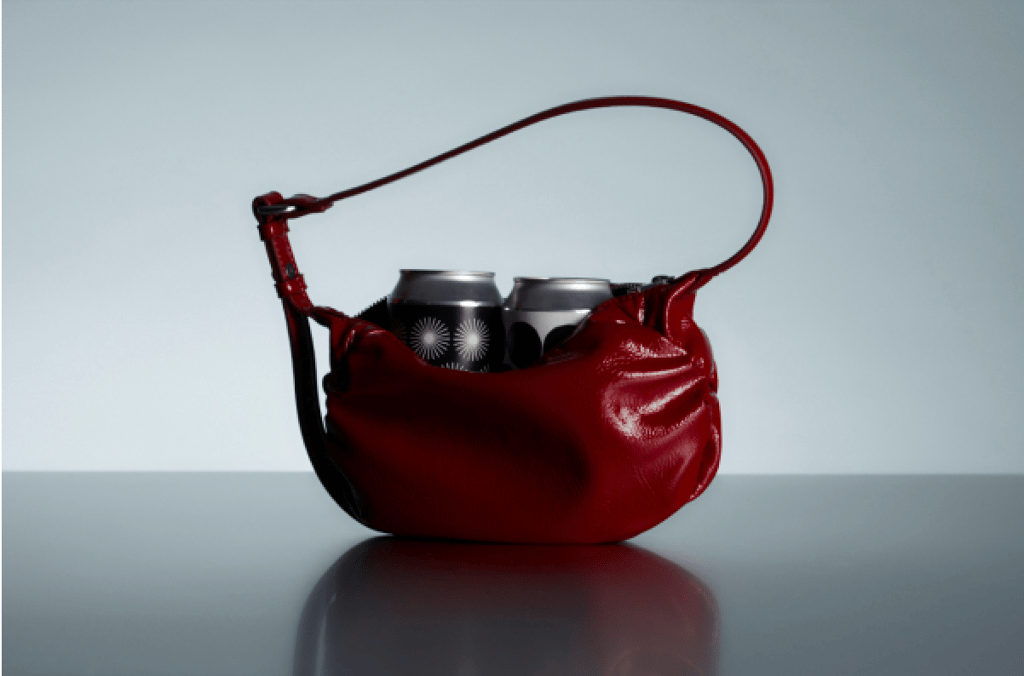
The “fridge cigarette” has become one of the internet’s favourite afternoon rituals. Cold, fizzy, caffeinated, preferably straight from the fridge, Diet Coke has acquired a cultural status far beyond the average soft drink. But what does that actually mean for your caffeine intake, gut, teeth, appetite, and long-term health?
First, what is a fridge cigarette?
It's a TikTok-coined nickname for the ice-cold can itself, not something you actually smoke. The comparison to a cigarette break caught on because the behaviour lines up: an afternoon coke provides a five-minute break, a small hit of stimulation, and an excuse to indulge in something that isn’t exactly the pinnacle of health.
So, is Diet Coke actually bad for you?
Drinking a can once in a while is very different from guzzling three or four each day. While Diet Coke removes the sugar load from regular Coke, it introduces artificial sweeteners, which have their own set of considerations.
Registered nutritionist and host of No Forking Nonsense Podcast, Paul Evans, RNutr, MSc, is direct when asked whether one Diet Coke a day would concern him. "If someone's afternoon Diet Coke was the worst thing in their diet, I'd tell them they were doing brilliantly." His bigger concern is the caffeine content, particularly if Diet Coke starts stacking on top of coffee and is being consumed later in the day.
What's in Diet Coke that affects your body?
Three parts of that can are most relevant here: caffeine, sweeteners, and acidity. Each behaves differently in the body.
The caffeine
"A can of Diet Coke has more caffeine in it than a can of regular Coke. Most people have no idea,” says Evans. Drinking a can at 3pm is often still in your system at 9pm, since caffeine hangs around longer than most people assume.
In a 2013 trial, caffeine taken six hours before bed still measurably disrupted sleep, even though participants rated their own sleep as fine. Poor sleep leads to a flat afternoon, which leads to reaching for another can, and the loop becomes the actual issue rather than the drink itself, Evans points out. So, for a regular Diet Coke drinker, caffeine timing may be far more relevant than the ingredients attracting most of the headlines.
The sweeteners
Diet Coke's sweetness comes from aspartame rather than sugar, giving it a very different effect on blood glucose from regular Coke. Some of the most headline-grabbing findings around artificial sweeteners and their link to health and potential cancer risk have come from animal research, where the doses and results don't always translate neatly to typical human consumption.
The fizz and acidity
Sugar-free doesn't mean acid-free. Diet Coke is still carbonated and acidic, which Evans singles out as one major consideration worth being aware of.
Does Diet Coke spike your blood sugar?
Aspartame doesn't deliver the same carbohydrate load you'd get from sugar, so Diet Coke doesn't produce the same rise in blood glucose as regular Coke.
However, a widely cited 2014 study found that saccharin, a sugar alternative, altered glucose tolerance in mice through changes to the gut microbiome. Another 2022 human trial found that saccharin and sucralose affected glycaemic responses, while aspartame produced a different result, with no significant impairment in glucose tolerance.
Is Diet Coke bad for your gut?
The evidence here is thinner than you might think. Much of the concern around sweeteners and the gut comes from animal research, where findings don't always translate neatly to the amounts humans consume. That same 2022 trial did find measurable changes in gut bacteria after two weeks of consuming aspartame, but the effects varied considerably between individuals, and what those microbiome changes mean for long-term health remains unclear.
Evans is direct about where the priority actually sits. "If your gut is unhappy, I'd be looking at your fibre, your alcohol, your sleep, and your stress a long way before I'd blame a can of Diet Coke."
Can Diet Coke make you hungrier?
This is where observational research gets tricky to interpret. People carrying extra weight, or already managing a metabolic condition, are more likely to choose diet drinks in the first place. Evans calls this reverse causality. “The diet drink didn't cause the risk. The risk caused the diet drink.” That can make diet-drink consumers appear less healthy in observational studies before the drink itself enters the equation.
An older BMJ analysis explores this problem. After researchers accounted for factors including body weight, the apparent link between artificially sweetened drinks and type 2 diabetes became a lot weaker. The World Health Organisation's 2023 guidance advising against sweeteners for weight control also drew heavily on observational evidence, which it rated as low certainty. “It was reported as a warning. It was really a shrug with a press release,” says Evans.
Randomised trials also tell a different story more in line with Evans’ thinking. In a 2012 New England Journal of Medicine trial of 641 children, replacing one daily sugar-sweetened drink with an artificially sweetened version resulted in lower weight gain over 18 months. A 2016 review found that low-energy sweeteners reduced calorie intake compared with sugar across 129 short-term comparisons. In longer randomised trials, replacing sugar with sweeteners was also associated with modestly lower body weight.
Is Diet Coke bad for your teeth?
Repeated exposure to Diet Coke's acidity can gradually wear away enamel. "Sipping one [can] slowly over an hour at your desk is considerably worse than drinking it in ten minutes, because you're bathing your teeth in acid the entire time,” Evans says.
His advice? Have it with food, drink it reasonably quickly rather than nursing it, rinse with water afterwards, and skip brushing your teeth immediately after.
Is aspartame bad for you?
This is the part most coverage gets wrong in one direction or the other. In 2023, the International Agency for Research on Cancer (IARC), the WHO's cancer research agency, classified aspartame as “possibly carcinogenic to humans”, based on limited evidence for cancer in humans. That classification is about how strong the evidence is that something could cause cancer at all, in any circumstance. It says nothing about your actual risk based on the typical amounts people drink or eat.
The WHO and FAO's food-additive expert committee, JECFA, have said that a safe daily intake should be at or below 40mg per kilogram of bodyweight. For a 70kg adult, that equates to 2,800mg of aspartame a day.
A 2006 study following roughly half a million people also found no association between aspartame consumption and the blood or brain cancers it investigated. Taken together, the evidence gives a much more measured view of aspartame than the headlines around its IARC classification might suggest.
Diet Coke vs Coke, which is actually better?
The comparison depends on what it's replacing. A 330ml can of regular Coke contains around 140 calories and 35g of sugar, already above the UK's recommended maximum of 30g of “free sugars” a day for adults. Across a year, one 35g-sugar can a day adds up to almost 13kg of sugar.
Evans has seen firsthand what the impact of choosing a Diet Coke over a Coke has been. “I've had clients whose only change in week one was that swap, and it changed everything for them.”
Swapped for water, Diet Coke offers no particular nutritional advantage. The issue Evans sees more frequently is people drinking very little water and relying heavily on caffeinated fizzy drinks instead.
How many “fridge cigarettes” is too many?
There's no magic can limit, but a few things are worth tracking. Look at your total daily caffeine, including whether you’re also drinking coffee, and how late in the day you're drinking it, given caffeine's long half-life. How you drink it counts too, as sipping a can for an hour can have a different impact than drinking it in 10 minutes.
For Evans, the pattern around the drink tells you more than a can count alone. Several cans can quickly add up in caffeine, particularly alongside coffee, while sipping them across the day repeatedly exposes teeth to acid.
Do you need to give up Diet Coke?
If it's one cold can as an afternoon ritual, the bigger considerations are likely to be when you're drinking it and how long you're sipping it for. If your intake has crept up over time, caffeine timing, dental exposure, and the habit loop Evans describes come further into focus. The break itself can stay either way. The drink inside it is the flexible part.
Your Diet Coke questions answered
Does Diet Coke count towards hydration?
Yes. The fluid in Diet Coke contributes to your daily hydration, and the amount of caffeine in a can isn't enough to cancel that out. Water is still the easier everyday choice because it hydrates without adding caffeine or exposing your teeth to acid.
Does Diet Coke spike insulin?
Aspartame produces a very different glucose response from sugar. Human studies using typical sweetener doses haven't consistently found an insulin spike.
Is Diet Coke bad for your gut?
Human research has found that artificial sweeteners can alter the gut microbiome, with considerable variation between individuals. What those changes mean for long-term gut health remains unclear. Fibre intake, alcohol, sleep, and stress are useful places to look when investigating gut symptoms.
Does Diet Coke make you gain weight?
When artificially sweetened drinks replace sugar-sweetened drinks, randomised trials generally find lower calorie intake and modestly better weight outcomes.
Is one Diet Coke a day OK?
For most healthy adults, one can a day is unlikely to be where the biggest dietary concerns sit. Caffeine timing and repeated acid exposure to your teeth are the more practical things to watch.
Is Diet Coke worse than regular Coke?
They come with different trade-offs. Regular Coke delivers around 35g of sugar and 140 calories per 330ml can. Diet Coke removes that sugar load while retaining caffeine and acidity. Water remains the stronger everyday option for hydration.
Can Diet Coke affect sleep?
Yes, if drunk in the afternoon or evening. Caffeine can still be active in your system six or more hours later, even if you don't notice it.
How many Diet Cokes is too many?
There isn't a universal limit. Add up caffeine from Diet Coke, coffee, tea, and other sources, consider how late you're drinking it, and consider how frequently your teeth are exposed to acid across the day.


This article is for informational purposes only, even if and regardless of whether it features the advice of physicians and medical practitioners. This article is not, nor is it intended to be, a substitute for professional medical advice, diagnosis, or treatment and should never be relied upon for specific medical advice. The views expressed in this article are the views of the expert and do not necessarily represent the views of Healf
Samantha Nice is a seasoned wellness writer with over a decade of experience crafting content for a diverse range of global brands. A passionate advocate for holistic wellbeing, she brings a particular focus to supplements, women’s health, strength training, and running. Samantha is a proud member of the Healf editorial team, where she merges her love for storytelling with industry insights and science-backed evidence.
An avid WHOOP wearer, keen runner (with a sub 1:30 half marathon) hot yoga enthusiast and regular gym goer, Samantha lives and breathes the wellness lifestyle she writes about. With a solid black book of trusted contacts (including some of the industry’s leading experts) she’s committed to creating accessible, well-informed content that empowers and inspires Healf readers.