










_2026-10-13_14-11-48.png)


This Is What The Future Of Testing Looks Like
With the launch of companies like Early, at-home testing is taking centre stage, and preventative care is trending like never before.

Written by: Rachel Hosie
Written on: 4 August 2026
Decades ago, science fiction movies like Star Trek and futuristic shows like The Jetsons predicted it: a world where strange machines and intelligent pills could peek inside your body to tell you what was really going on. Just over a half-century later, countless biotech startups have made those sci-fi gadgets a reality, spending endless amounts of money and resources to create "smart" tools that could read the language of our internal worlds.
Essentially, they all seek to answer the same question: What if there was a way to catch some of the biggest health issues in the world before they develop into something more serious?
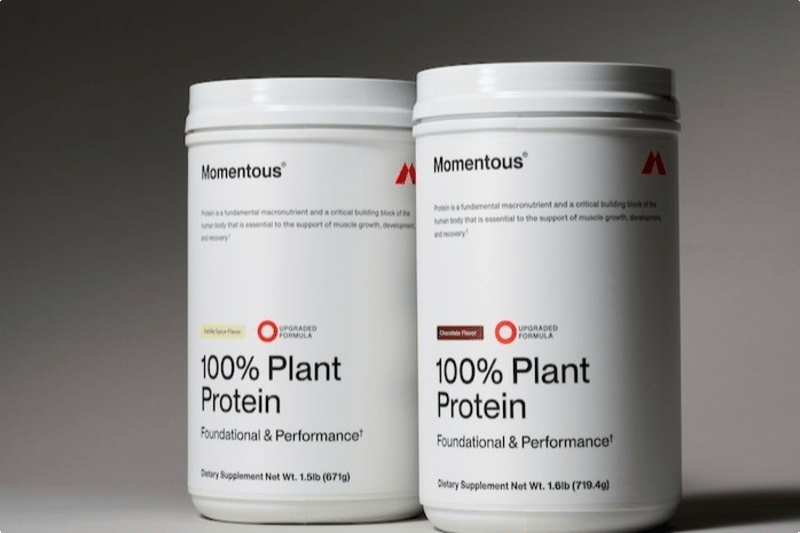
It's something humans have found themselves truly obsessed with. After all, isn’t preventative health at the heart of all this tracking and hacking and stacking in the first place? Sure, you track sleep phases so you can feel better at work — but also to protect your brain from ageing and degenerative disease. You track protein so you can make sure your bones and muscles have enough fuel to grow and last into old age. You swallow an array of different vitamins each morning to help you address deficiencies that could lead to bigger health problems down the road. We don't just want to live longer, we want to live well, in bodies that feel good and brains that function well.
The problem is that most of us don't truly know what our body needs to get there. Most of us are just going off what we think it wants, or what the latest wellness influencer tells us to try. So, at-home tests that can tell you exactly what you need to protect or target? Sign us up.
Dr. Frankie Jackson-Spence, a medical doctor working in cancer research and host of the “Vision of Health” podcast, is a big advocate of the ways testing can help people get more personalised solutions to their health issues, instead of generic advice that doesn’t actually help. “Personalised care allows us to be much more intentional with our choices and behaviours,” she says. “If you do a blood panel, it may reveal specific deficiencies which you can intentionally supplement, rather than blindly taking every supplement on the shelf and hoping for the best.”
For Dr. Jackson-Spence, an at-home blood test in her early 30s showed her she had slightly high cholesterol levels and a vitamin B12 deficiency, despite having no symptoms and feeling perfectly healthy. “Chronic disease can develop very early in your 20s, 30s or 40s — often in people who have no reason to go to the GP,” she says. “I altered my diet slightly and began supplementing with vitamin B12, and a year later I repeated my bloods and things were normal.”
Thanks to innovative new companies, there's no shortage of new, personalised tech that doesn't only test basic blood biomarkers like cholesterol and B vitamins, but everything from hormones, to bowel cancer risk, STIs, sperm concentration, and more. If you're looking to test your gut microbiome? Alba Health has you covered. Hormones and fertility? You can choose Hertility or Mira. York Test now helps people find out what food intolerances or allergies they might have.
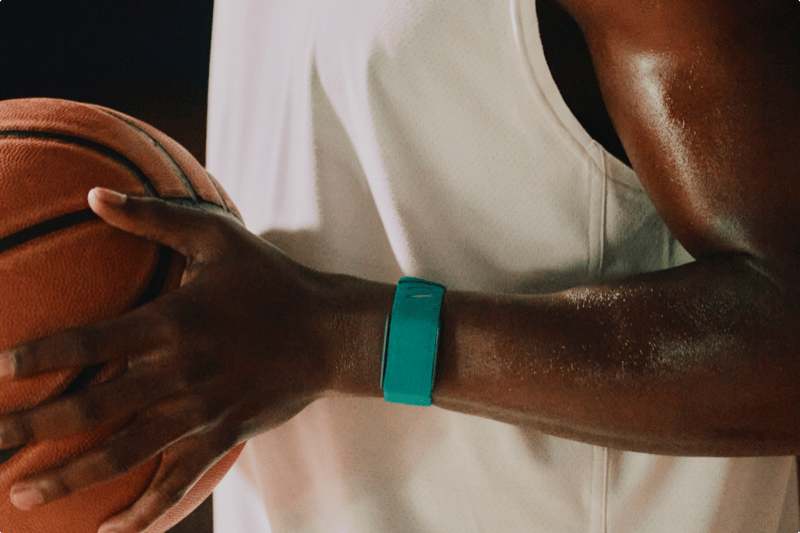
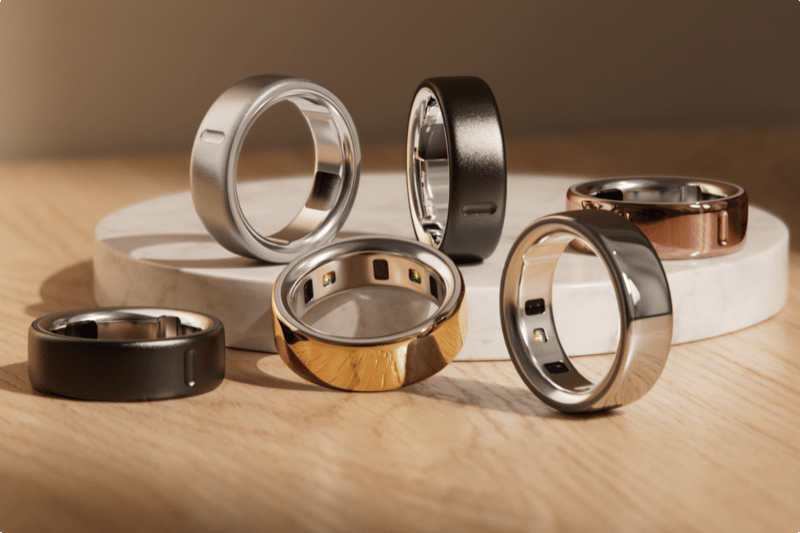
In 2025, the global self-testing market was valued at $21.9 million and is expected to reach $46.1 billion by 2035, according to a report by Global Market Insights Inc. Recent years have also seen a rise in private high street clinics where people can self-refer for a full-body MRI, such as Goodbody Clinic and Scan.com, both of which launched in 2017. Meanwhile, our wearables have provided us our own mini laboratory for health monitoring.
Clearly, our appetite for personalised health shows no sign of diminishing. And new companies like Early are rising to answer the call, finding new ways to revolutionise the way we think about and approach our future health and wellbeing.
Knowing Early
For Early co-founder D-J Collins, early detection is personal. After his father experienced kidney failure and another close family member died in his 40s from cancer after a late diagnosis, he decided to help found an at-home urine test with the functionality and sensitivity of a hospital-grade urinalysis machine that could screen for markers of cancer, diabetes, heart and kidney disease in urine. The aptly-named company already has a waitlist, and is set to launch in spring 2027. “I guess it’s the closest thing I can do to building a time machine so I could go back and make sure he got tested early and then treated,” Collins says. “At least this way we can help other families.”
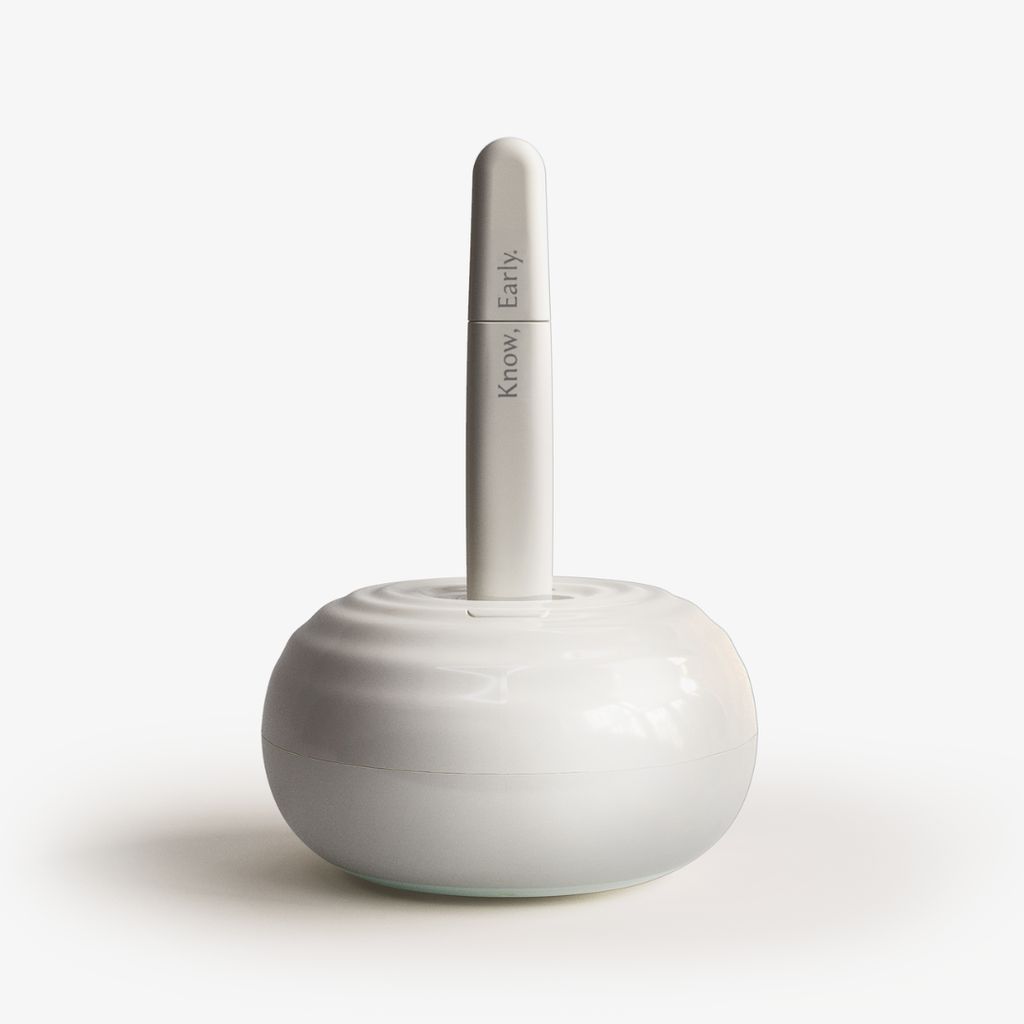
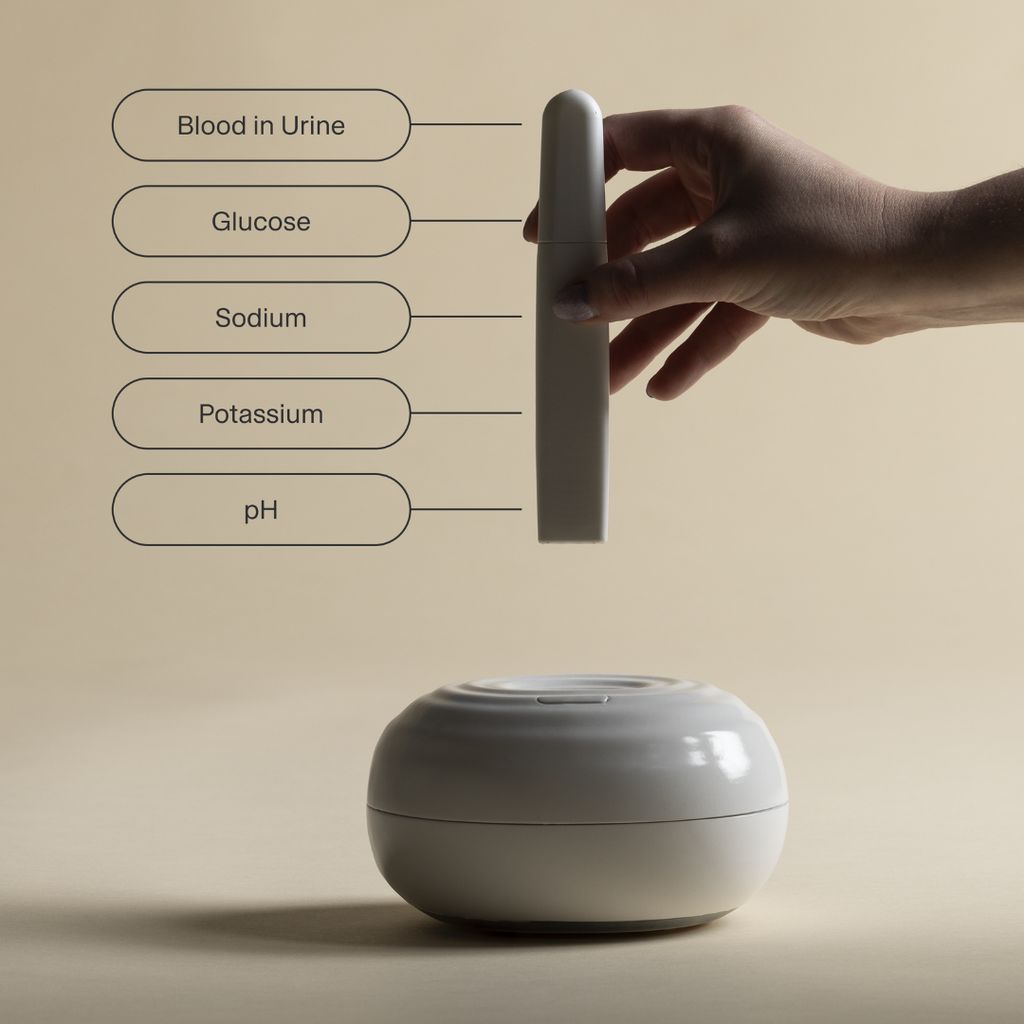
With Early, you just wee on a (very clever) stick, pop it into a small device called a "Lab", wait for an electrode inside the stick to flag specific biomarkers (think: glucose, haemoglobin, potassium, sodium and pH), and then your results and insights load directly onto an app five minutes later. “For us, it's about getting people into the system long before they have a symptom,” says Collins, who points out that 70% of chronic diseases trace back to late detection, yet only 1% of global healthcare spend seeks to remedy this.
Early’s vision here is that people would test monthly (or even weekly), monitoring biomarker changes, rather than just going off a singular snapshot taken once a year at the doctor’s office. And in this age of anti-optimisation and a pushback against data for data’s sake, Early offers options for how intensive your results are. “My co-founder, Thomas Heatherwick, he just wants to know: Is there a problem? So there's one layer of the app which just tells you: you're fine,” says Collins. “Other people want to know all the trend data. I'm one of those people.”
How much will this tech set you back? The exact price is still to be confirmed, but it will be “about the price of a smartwatch” (which can typically run you around £250 to 350), plus a roughly £15 subscription for monthly sticks.
Collins is convinced that urine testing is the future. “What people don't understand is that urine is filtered blood, with many similar molecules present, making it an incredibly rich source of information about what's happening in the body,” he says. “I think urine will become the default way in which we detect signs of chronic disease.”
Early
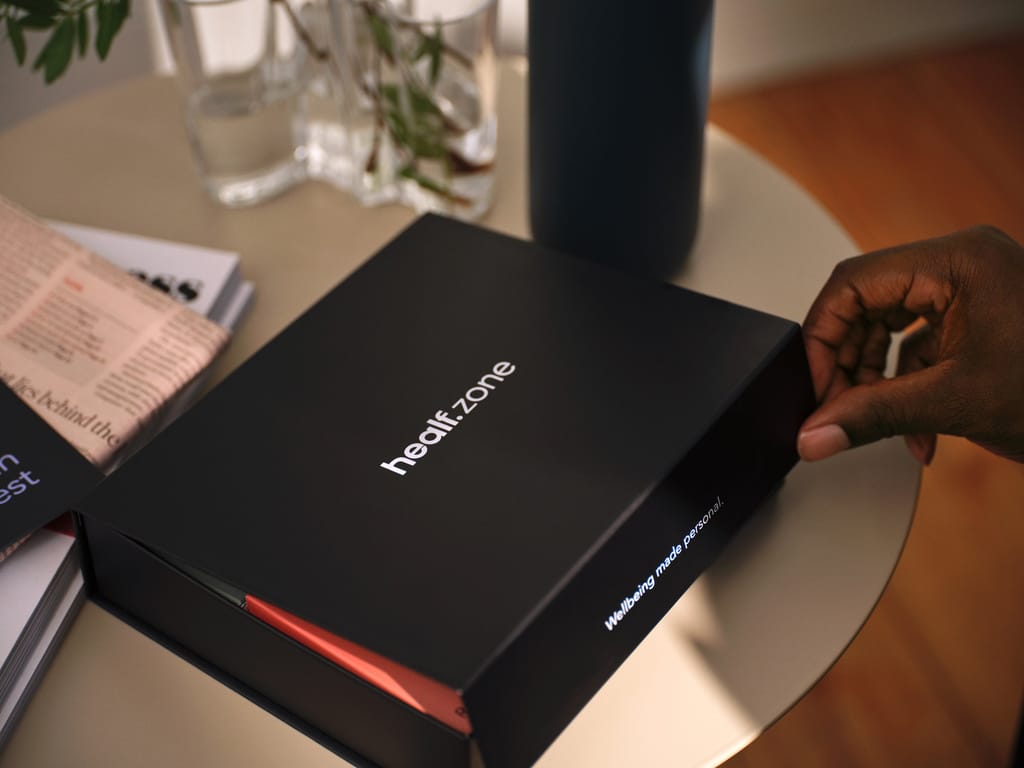
Early is certainly not alone in this at-home testing landscape. For the past two years, Healf has offered Healf Bloods through Healf Zone, an at-home blood test that measures up to 37 biomarkers, including cholesterol, iron, and vitamin D — and even a sex hormone-specific panel. All you have to do is fill out a questionnaire, then receive and complete a simple, needle-free blood test at home. After your sample is analysed in a lab, you'll receive results within 72 hours, and personalised recommendations that are scored against your unique biology. Expert nutritionists will also meet with you 1:1, walking through the results, answering questions, and helping you build a tailored wellbeing plan.
The beauty of at-home testing is that it also allows groups who routinely struggle to get the care and attention they need, either due to limited access or stigma, to wrest more control over their health and future. Nothing exemplifies this more than the recent boom in women’s health tech, and specifically at-home gynaecological testing. Daye, launched by founder Valentina Milanova in 2017, has introduced revolutionary diagnostic tampons that can be used to test vaginal microbiome health, HPV and STIs. After struggling with painful periods, Milanova decided to rewrite the narrative on menstruation and the power within women's bodies. “We're focused on bridging the gender care gap and the gender health gap,” Milanova told Healf in an earlier interview. “Women were not allowed to take part in clinical trials up until 1993 in the US, 1995 in the UK and Europe,” she added. “Our whole medical system is centred around what we know about the male physiology.”


Finding a path forward
As diagnostic technologies get more sleek, compact, and smart, testing is increasingly likely to move out of the clinic and into the home. In fact, 65% of experts in the EU expect 10 to 25% of diagnostic testing to be carried out at home by 2035, with chronic disease monitoring predicted to be the biggest growth area, according to a 2025 study by Simon Kucher consultancy. With slick app connectivity and less invasive methods, regularly testing your health and getting immediate results before you have any symptoms might soon be the norm. And for some, that could literally be a life-saving decision. Just be wary of delaying crucial medical intervention or waiting on an at-home test when you really need a GP visit, says Dr. Jackson-Spence.
As with all new tech, understanding its limitations — where it can and can't help you — will be essential as more and more groundbreaking tests and tools enter the market. For one thing, experts want you to remember that all these tests should be a starting point, not an ending point. The real changes and impact of preventative measures come from what you do with that information and data. “Just because a test exists, it doesn’t mean it will actually help you,” says Dr. Jackson-Spence. “Often the most effective lifestyle interventions to improve long-term health are the simple, inexpensive ones." And, of course, it helps to have a clear understanding of what you're hoping to learn or better understand about yourself before hitting "add to cart."
If you're someone who struggles with health anxiety, the plethora of tools now at your disposal might simply provide endless opportunities to find problems that aren't there. Professor Victoria Tzortziou Brown, President of the Royal College of GPs, says there isn’t yet enough convincing evidence that certain tests, like routine, private full-body scans for asymptomatic people, improve health outcomes, and may just make them more anxious or lead to false positives and overdiagnosis. If you're trying a new test, check to see if the company or service connects you with a professional to help you interpret at-home test results, as Early, Daye, and Healf Bloods do, so you don't end up panicking, asking Dr Google, or calling your GP for a rushed appointment.
Done right, accurate at-home testing paired with expert support could actually help decrease the burden on an already overstretched NHS, especially as the technology continues to improve. "I think within 10 years, we'll be living in a world where anyone will be able to test for early signs of any chronic disease, all serious disease, in their urine, at home,” says Collins.
Of course, urine isn’t the only bodily fluid that has the potential to offer valuable insights. Functional dentist Dr. Victoria Sampson believes saliva is also the future of testing. “It’s not just bacteria you can see through saliva, you can see inflammatory markers, stress hormones such as cortisol and testosterone, we’re even seeing things like blood sugar levels,” she said during her talk at HX26. “I truly believe that in the future, saliva testing will potentially outplay blood testing, and at least, you will go to your dentist and saliva testing will be a normal thing to do.”
Whether you're testing blood, saliva, urine, or vaginal fluid, it's clear that the future of testing is bright... and it's only just beginning.



This article is for informational purposes only, even if and regardless of whether it features the advice of physicians and medical practitioners. This article is not, nor is it intended to be, a substitute for professional medical advice, diagnosis, or treatment and should never be relied upon for specific medical advice. The views expressed in this article are the views of the expert and do not necessarily represent the views of Healf
Rachel Hosie is a British lifestyle journalist based in the south of France. She spent a decade working as a lifestyle and health reporter for The Telegraph, The Independent and Business Insider, where she was a Health Correspondent.