































_2026-10-13_14-11-48.png)


How To Naturally Boost Neuroplasticity
Your brain's ability to adapt and recover from stress depends on specific inputs, not one magic fix. Healf maps the evidence so you can prioritise what actually works.

Written by: Ed Cooper
Written on: 27 August 2026
At HX26, Healf’s flagship immersive wellbeing and longevity event, one of the most popular talks was a keynote address given by neuroscientist and Stanford professor Andrew Huberman on the mainstage. With thousands attending the event in central London, the popular podcaster spent over an hour dissecting modern neuroscience, from peptides to psilocybin, SSRIs, and sleep — including a few simple steps we can take to get more of it. At multiple points during the headline talk, however, Huberman kept nodding to neuroplasticity, an increasingly buzzy term in the word of wellbeing, and one that can affect almost every part of our daily lives, including how (and what) we eat, the ways we move, our thought processes and, crucially, how we sleep.
During the talk, Huberman noted that we’re shifting from a “what’s the ultimate hack?” culture—endlessly hunting for the perfect breath ratio or miracle supplement—to a more mature approach that cares about the underlying principles those tools all share. “We’re now living in the time of principles in the same way that in the context of neuroscience, we can talk about principles of neuroplasticity,” he said. By breaking it down one step further, however, into Healf’s Four Pillars — Eat, Move, Mind and Sleep — we can adopt an even deeper understanding. Below, Natalie Mackenzie, a cognitive strategist for business owners and professionals with over 25 years across cognitive psychology and neuropsychology, explains how to do just that.
What neuroplasticity actually means — and why it matters at every age
Broadly speaking, neuroplasticity is more popular than ever (Google data confirms a five-year high for search terms on the topic at the start of 2026, an 80% jump in interest against the preceding timeframe), but for those wanting to separate neuroplasticity fact from fiction, what does the term actually mean on a practical level, and how does it change as we age? “Your brain is not fixed; it doesn’t peak at 25 and slowly decline from there,” says Mackenzie. “It’s constantly reorganising itself, forming new connections, strengthening the ones it uses, pruning the ones it doesn’t and adapting in response to what you do, what you learn and how you live.”
As we’ll explore below, various lifestyle choices, such as how you eat, move, sleep, and what you do with your mind, can shape the brain you’ll have decades from now, Mackenzie explains. “These Four Pillars are deeply interdependent — exercise improves sleep quality; good sleep supports better dietary choices and stress regulation and lower stress enhances learning”. The brain doesn’t experience them as separate inputs, she says, “but responds to the cumulative environment you build for it.”
The nutrients and foods that support a more adaptable brain
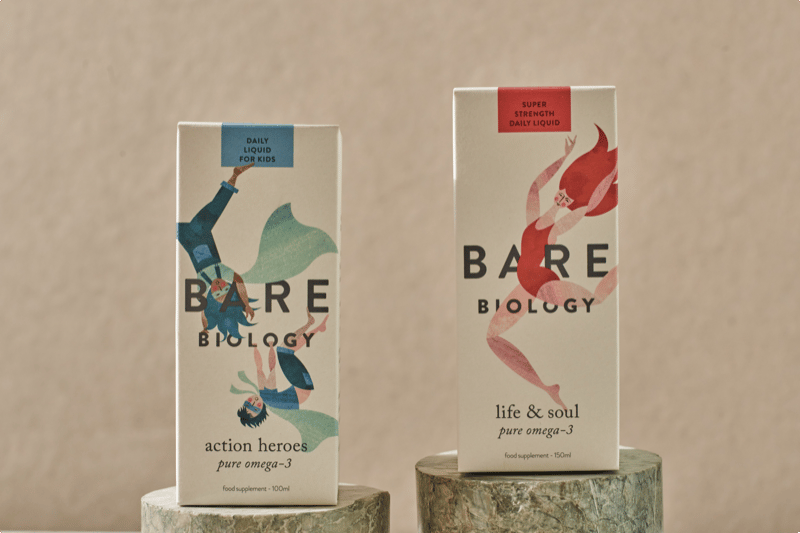
Did you know that your brain consumes around 20% of your total energy, despite being only approximately 2% of its weight? While the average adult human brain weighs about 1.3 to 1.4 kg (3lbs), “what you feed it matters considerably more than most people realise,” says Mackenzie, who describes one of the most effective ways to boost your grey matter at a cellular level. “Omega-3 fatty acids are the most well-evidenced dietary factor for neuroplasticity,” due to their docosahexaenoic acid (DHA) content. “The brain can’t synthesise adequate DHA on its own, so oily fish, walnuts, flaxseed or a good [Omega-3] supplement are really important.” DHA, Mackenzie describes, plays a key role in the quality of the connection “between brain cells that underpin learning and memory.”
Similarly, polyphenols — natural plant compounds loaded with antioxidants — can be found in berries, dark chocolate, green tea, and olive oil. These, Mackenzie says, “support the growth of new neurons and reduce neuroinflammation, the low-grade inflammatory process that degrades brain function over time.”
Why exercise is the most powerful neuroplasticity tool we have
We now know there’s more to exercise than that buzzy, ethereal feeling that washes over you after a great workout. At a neurological level, exercise produces “positive, replicable changes in brain structure and function,” says Mackenzie, and it’s in brain-derived neurotrophic factor (BDNF) that some of the most interesting research is emerging. “Aerobic activity promotes BDNF, essentially a growth factor for the brain that supports the survival, growth and connectivity of neurons,” by increasing blood flow and oxygen delivery to brain tissue. Handily, aerobic activity — think brisk walking, running, swimming, cycling, and rowing, for example — has been proven to also “support neurogenesis in the hippocampus, the region most central to memory and learning.”
Should you prefer to hit the weights, there’s another interesting area of research toward neuroplasticity. “Strength training contributes through different but complementary mechanisms, including improving insulin sensitivity, reducing neuroinflammation and supporting executive function,” says Mackenzie. “The evidence increasingly supports combining both rather than choosing between them. Exercise is the most powerful neuroplasticity tool available to you.”
How stress, meditation and learning shape your neural architecture
Chronic stress, the consistent, long-term feeling of being pressured and overwhelmed, occurs when your body stays in a constant state of tension and high alert for weeks, months, or even years because of ongoing external pressures. Perhaps inevitably, “it’s one of the most powerful inhibitors of neuroplasticity that we know,” says Mackenzie. “Sustained elevated cortisol reduces synaptic density in the prefrontal cortex,” the front part of your brain's frontal lobe, located behind your forehead. The prefrontal cortex handles high-level mental skills called executive functions, including planning, decision-making, self-control, and managing emotions. “Chronic stress impairs neurogenesis in the hippocampus and weakens the connections between brain regions responsible for learning and memory.”
All of which means the combination of mindfulness — “meditation has one of the most robust evidence bases of any mental practice for neuroplasticity,” says Mackenzie — and creative learning becomes a crucial part of maintaining healthy grey matter as we age. “Neuroimaging studies show measurable increases in grey matter in prefrontal and hippocampal regions after as little as eight weeks of consistent daily practice,” says Mackenzie, noting that it’s less about the odd 10-minute session when you have time, and more about consistent daily practice. “It’s one of those things that sounds too simple to work until you look at what it’s actually doing to the brain.” As for cognitive challenges — “learning a language, an instrument or a complex physical skill” — you can build your brain’s buffer against age-related decline. “These engage multiple neural systems simultaneously and build cognitive reserve,” she says.
The stage where the brain actually does its rewiring
Fundamentally, it all comes back to sleep — how to get more of it, get better at it, and stay in a deeper state of rest for longer periods of time. Without adequate rest, Mackenzie explains, each point above has little else to fall back on. “It’s the foundation everything else depends on,” she says, “as, during deep slow-wave sleep, the brain undergoes synaptic homeostasis, the active reorganisation of neural connections based on the day’s experiences.” It’s here the brain does its bookkeeping, which requires “adequate, uninterrupted deep sleep to complete properly,” with rapid-eye movement (REM) sleep playing a key role in how you process your memories and onboard new information from the day.
Elsewhere, “the glymphatic system, the brain’s waste clearance mechanism, is primarily active during deep sleep, clearing metabolic waste.” If you sleep poorly, a lack of rest will “impair the synaptic consolidation that makes neuroplastic change durable,” making sleep one of the “highest-leverage starting points” alongside exercise.
Simple things, done well — it’s all the proof we need that little changes often have the biggest impact.

This article is for informational purposes only, even if and regardless of whether it features the advice of physicians and medical practitioners. This article is not, nor is it intended to be, a substitute for professional medical advice, diagnosis, or treatment and should never be relied upon for specific medical advice. The views expressed in this article are the views of the expert and do not necessarily represent the views of Healf
Ed is a freelance journalist and former Men’s Health digital editor, with bylines in Red Bull, BBC StoryWorks, Guardian Labs, Third Space, Natural Fitness Food and Form Nutrition, among others. Having run marathons, conducted sleep experiments on himself and worked with some of the world’s most in-demand experts — from sleep scientists and strength athletes to high-performance trainers and elite-level nutritionists — one thing remains clear for The Healf Source contributor: fitness trends come and go, but as long as you keep turning up for yourself, consistency will win every time.