



The End Of Optimisation
In an era of endless tech and wearables, have we finally arrived at the era of anti-optimisation?

Written by: Ed Cooper
Written on: 14 September 2026
This piece originally appeared in The Source: The Anti-Optimisation Issue, Healf's print magazine.
In April, I had my first nervous breakdown. I was in the midst of trying to navigate the purchase of my first home, while also dealing with a family member's terminal illness and worrying about future job prospects in a volatile market. My anxiety reached a type of fever pitch that I had never — in my 33 years — experienced before. My mental health was at an all-time low, I was constantly sweating, I struggled to sleep for days on end, and I had a permanent sense of insurmountable dread for almost three weeks straight.
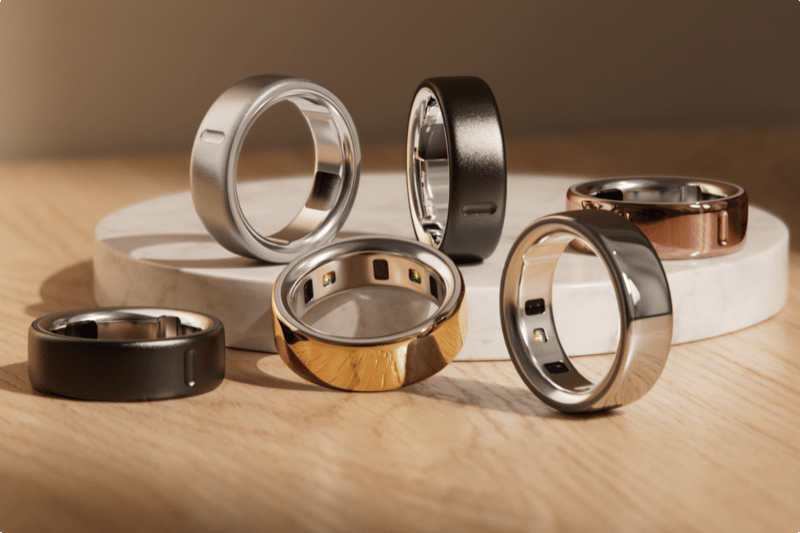
I could feel the toll all this was taking on my body — my muscles weakening, skin losing its colour, new signs of age appearing on my face. And through it all, my Oura Ring kept telling me I was getting poor sleep while the Apple Watch I'd worn religiously for the past seven years reminded me I should try to squeeze in a bleary-eyed workout.
One morning, after less than an hour of sleep, I locked both devices away and tuned in to something far less glamorous and basic — my body. At that moment, what I needed most was not an ultra-optimised health regimen, but a gentler approach to wellbeing — one that put a spotlight on recovery, helping me rebuild what relentless optimisation had eroded and allowing me the space to simply be human — without all the high-tech bells and whistles.
I didn't know it at the time, but my anti-optimisation impulse is reflective of a broader movement. In fact, "anti-optimisation" was dubbed one of the major trends driving wellbeing in 2026, according to the Global Wellness Institute. This "growing backlash against peak wellness culture", it turns out, is making wellbeing "feel less intuitive and more psychologically taxing", the report noted. I certainly felt that way.
This growing realisation that chasing positive health scores, monitoring 150+ biomarkers, and hitting fixed macro goals might not be the most intuitive way to look after ourselves began to feel like proof that optimisation can, at times, work against our health rather than with it.
Which raises a question worth considering: what if the most effective wellbeing ritual is simply ignoring the metrics? Instead of a perfect sleep score, should we prioritise the connection that comes with staying out late to share a pint with friends? Or in place of hitting a 10K step count, is there value in an evening at home, enjoying a takeaway with your partner?
Optimisation is premised on the idea that anyone can achieve the pinnacle of health if we just follow one strict routine or take four specific supplements at various intervals. But we don't need a special diet, wearable, or app to help us prioritise what our body already fundamentally knows and needs. And those things are beautifully simple: nourishing foods, regular movement, mindfulness, connection, and good sleep.
Mind games
Though smart devices have revolutionised the way we measure our physical health — these days, we can run our own electrocardiograms (ECG/EKG), see how efficiently our bodies use oxygen, and even predict sickness and pregnancy — they also play a significant role in our psychology. And not always for the better. "Self-monitoring can encourage perfectionism, cyberchondria, and lead to fatigue," says Phil Reed, a professor and lecturer in psychology at Swansea University.
Rings, watches, and apps promise to decode our days and nights into scores and coloured bars — but that pursuit can, ironically, sometimes make things worse. In recent years, Dr. Sophie Bostock, PhD, MSc, a sleep scientist, has seen a rise in orthosomnia, a disorder characterised by an obsession with getting the perfect night's sleep. She believes this is driven by our collective fixation on sleep data and constant feedback. "I don't think orthosomnia existed before we had sleep trackers," she says. "It is about trying to optimise your scores in a way that just never used to happen, because we didn't have a metric other than how we felt."
These numbers, it turns out, are addictive. We love data — and we want more of it. Dr. Bostock points to recent polling of US adults, where nearly half now use a sleep tracker, and in the UK, that number is not far behind, with an estimated 41% doing the same. Experts are seeing a similar effect in nutrition, an industry where habitual calorie- and macro-tracking could be worth up to roughly £2.62 billion by 2033.
But that doesn't mean the data is always helpful and beneficial to our wellbeing goals. Those same polling results showed that about three in four people actually "lost sleep due to worries about sleep problems."
The data can also warp how we feel about our health metrics. Dr. Oliver Rabie, a GP and private health clinic founder, points to studies showing that when people are given a false "poor sleep" score, they report feeling more fatigued the following day — even when their sleep was objectively normal. The reverse also holds true. When told they slept well, people report feeling more energised.
Can it really be that a single number on your phone screen has the power to override your body's honest account of how it feels? Data suggests it can. The sheer amount of steps, goals, and data can also be overwhelming, especially when it arrives as near-constant feedback. Apps and wearables are literally designed to keep you hooked — nearly two thirds of popular health apps use gamification techniques such as streaks, badges, and leaderboards that trigger dopamine responses to compel us to keep using them. "This can lead to repeated checking, over-analysis, and a sense that you always need to be improving or 'optimising' — a pressure that can actually interfere with rest and recovery," says Dr. Rabie.
Self-monitoring, then, "becomes the thing to focus on faster than the behaviour it is meant to alter, and so [that self-monitoring] takes over as the behaviour of choice," Reed says. And Dr. Rabie agrees — it's something he sees a lot. "Some people begin to let the data dictate how they feel, rather than the other way around."
Tools that are meant to help us better understand our bodies can also quickly turn into a rigid scorekeeping system, transforming intimate health statistics into a social media-ready competition. We're encouraged to gamify and share everything from gritty PBs to near-perfect sleep scores, but that often just leads to a metric battle against others — and ourselves. "People comparing their data to [someone else's] is problematic, because data is so personalised," says journalist Ben Hobson, multiplatform director at Runner's World. "Someone goes for a run and shares their pace and heart rate, while another person compares themselves against it and feels as if they're not as fit and [that they] need to be working harder."
Discovering what works for you
For Hobson, an avid cyclist and runner, the healthiest relationship with this tech is one of informed distance: use the numbers to guide, not govern. "If you start just using it as gospel, that's when the relationship shifts," he says.
The same is true of any punishing workout routine, diet, or regimen. Perhaps you've felt it yourself — your body is sore from days of consecutive exercise, but your device buzzes and whirrs, encouraging you to chip away at your daily movement target regardless. Or you're already full but still feel like you have to wolf down a chicken leg to hit your protein goals. Experts are seeing the pressure, stress, and anxiety this creates firsthand.
The truth is, the endless data your apps and wearables collect may not always reflect a complete, perfect picture of your sleep, nutrition, or workout. And the routines curated by influencers and your favourite biohacker may not always give your unique body what it actually needs. Yes, the tech and scientific principles guiding these optimisation tools are advanced, but they're not perfect. Tracker data and analytics tend to be based on algorithms trained on population averages, not your specific biometric information. In the case of sleep trackers, most are very good at tracking duration at around 90 to 95% accuracy, says Dr. Bostock, but only accurate in identifying specific sleep phases between 60 and 70% of the time. And someone else's curated supplement stack is probably going to overshoot or miss key nutrients you need.
It's the same for nutritional intake and calorie burn. A Stanford University study tested seven popular wrist devices — including Apple Watch and Samsung — and found that while six of seven measured heart rate within 5% accuracy, not one measured calorie burn accurately. Even the best-performing device was off by around 27%, well above the 10% error threshold researchers consider acceptable.
That's why experts say you should think of these optimisation tools and data as a rough sketch, not a clinical verdict.
Hobson thinks it's important to find technology that works for you and your goals. The simplest heuristic for anyone trying to recalibrate their optimisation relationship: be very clear on why you're using it. "What is its role and what are you going to do in response to the information?" asks Reed. Without a clear answer to both, he suggests, the wearable stops being a tool and starts becoming an accessory that isn't being used for its intended purpose. For example, Hobson tells me that he likes to tailor his training to heart rate zones, so he wears a chest strap to give him more accurate data during the workout.
The resounding sentiment is clear: wellbeing looks different for everyone. And in a world of scores, biomarkers, and percentiles, perhaps the best metric is knowing what works for you — and recognising when something doesn't. Even the scientific world is moving away from one-size-fits-all health targets and towards goals that are tailored to the individual.
Looking forward
So what's the alternative? Not abandoning the devices, goals, and routines entirely — but changing what you're fundamentally asking them to do. Dr. Rabie's advice is to try to focus on broader trends: a resting heart rate that creeps up over a fortnight, recovery that tanks when work gets heavy, sleep that reliably suffers when you eat late at night. These are the kinds of patterns that are hard to spot without a device. While a single bad sleep score can be down to multiple environmental factors, three weeks of them tells you something worth looking at.
Shifting from daily verdicts to longer-term signals appears to be where optimisation culture is heading. The Global Wellness Institute formally coined this "softcare" in 2024, describing a growing appetite for health that feels less like a performance. McKinsey found that while 84% of people say wellness is a top priority, only 13% feel they're actually achieving their goals.
"Health is not about perfection. We will all have poor nights of sleep, get ill from time to time, and make less healthy choices occasionally," says Dr. Rabie. "What matters is the overall pattern, not any single day."
After years of turning wellbeing into a competitive scoreboard, what comes next might not be the end of tracking, but finally knowing what it's actually for.

Four ways to use wearables for good
Take a quick look around you on the tube or during a work meeting, and chances are you'll spot at least two or three different wearables. In fact, from January 2025 to March 2026, Healf customers doubled their spending on personal health technology devices, with biometric tracker sales going up 249% year on year.
The market for wearables continues to explode, and even as we start to think more critically about whether optimisation is what we should be striving for, it doesn't look like our trackers are going anywhere any time soon.
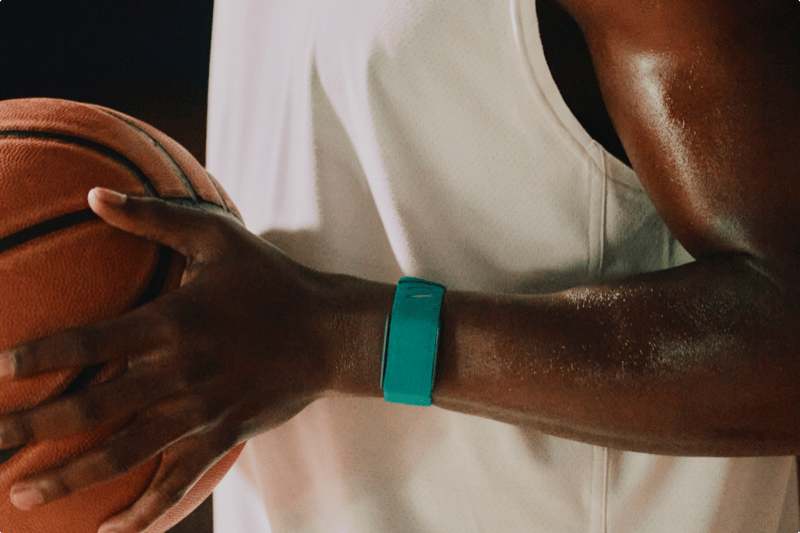
Most of us thoughtlessly slide on our data-tracking tech each day — it's thoroughly integrated into our rituals at this point. But we tend to lack a solid understanding of how to actually use these tools to live better. It makes sense: we've been given the gift of high-tech wearables without being taught what to do with this wealth of data. So, how can we harness the power in all those numbers to help us truly sleep a little better, recover more efficiently, and fill gaps you didn't know existed? The answer is actually pretty simple. As so many of our experts have pointed out: data is our guide, not the destination. Taking things at face value misses the whole point. So, here are four ways to harness the incredible power of wearable technology to personalise your wellbeing.
I. Establish your baseline
It'll help you spot when something is off — and whether any fluctuation is normal or something you might want to dig deeper into. At one end of the spectrum, there are countless stories of people discovering atrial fibrillation (a major risk factor for strokes) using their wearable. On the other, it can help you see how training blocks improve your strength and cardiovascular fitness over time.
II. Understand your cycle
This is especially helpful when it comes to things like hormone cycles and fertility. In the 24 to 48 hours of ovulation, your basal body temperature rises by 0.2–0.5°C, and remains elevated throughout your luteal phase, until conception occurs or your period starts. During this phase, your heart rate increases by a few beats, and your HRV drops. New research also suggests early signs of perimenopause can show up in wearable data months or years before it's diagnosed, based on cycle changes, sleep disruption, HRV decline, and even temperature pattern changes.
III. Predict when you're getting sick
Subtle increases in respiratory rate overnight, a gradual rise in resting heart rate, or a higher temperature over a few days are all signs your body may be starting to fight something off. When you get these signals from your wearables, you don't need to put everything on pause, but it might be worth taking a gentler approach to your workouts, topping up your vitamin C, and supporting your immune system with good sleep.
IV. Curate healthy sleep rituals
By now, we all know that a poor sleep score shouldn't be considered a death sentence. Everyone has a night of tossing and turning from time to time, and sometimes the best way forward is to push through. But if you see consistent patterns around daily habits that impact sleep — whether that's alcohol, regular late nights, or not enough movement during the day — data can help create a fuller picture of the routines and rituals that actually make a difference. While some might not find it helpful to check nightly sleep scores and recovery, looking back over time can help you evaluate which patterns might be affecting your sleep, and importantly, give you a starting point for finding the solutions to improve it.


This article is for informational purposes only, even if and regardless of whether it features the advice of physicians and medical practitioners. This article is not, nor is it intended to be, a substitute for professional medical advice, diagnosis, or treatment and should never be relied upon for specific medical advice. The views expressed in this article are the views of the expert and do not necessarily represent the views of Healf
Ed is a freelance journalist and former Men’s Health digital editor, with bylines in Red Bull, BBC StoryWorks, Guardian Labs, Third Space, Natural Fitness Food and Form Nutrition, among others. Having run marathons, conducted sleep experiments on himself and worked with some of the world’s most in-demand experts — from sleep scientists and strength athletes to high-performance trainers and elite-level nutritionists — one thing remains clear for The Healf Source contributor: fitness trends come and go, but as long as you keep turning up for yourself, consistency will win every time.