




































Why A 'Sleep Divorce' Might Be The Best Thing For Your Sleep
Could the person you love be the reason you're not sleeping? We asked sleep and relationship experts when separate beds can actually make things better.

Written by: Samantha Nice
Written on: 24 August 2026
We've become so obsessive about sleep data that there's now a term for taking it too far: orthosomnia, a term that describes the obsession with chasing a perfect score on your wearable to the point it starts causing anxiety and wakefulness. It's a strange loop, but it's also helped a lot of people confront, for the first time, how bad their sleep actually is, especially if you’re trying to sleep next to someone whose patterns and habits are incompatible with your own. "Objectively, people often sleep slightly worse when sharing a bed, but subjectively they frequently report sleeping better," says Dr. Sophie Bostock, PhD, MSc, a sleep scientist.
Sharing a bed can feel good while still disrupting your sleep, leaving couples trying to work out which one they're willing to compromise on. Perhaps that’s why “sleep divorce” is trending.
The decision to sleep apart, for a night or for good, is one that can have a real impact on your sleep. Here’s why, and what experts say about the trend.
What is a sleep divorce?
The name makes it sound more dramatic than it usually is. A sleep divorce can mean permanent separate rooms, but Dr. Bostock prefers the idea of a "sleep holiday". That might mean a few nights apart here and there during a brutal work week, when one partner is ill, through the newborn stretch, or across a run of menopause night sweats.
"Rather than thinking of it as a 'sleep divorce', I prefer the idea of a 'sleep holiday.' It doesn't have to be permanent," Dr. Bostock says. "Some couples sleep separately during busy work weeks or when one partner is ill, then share a bed at weekends." The aim isn't distance, she adds, "it's to make sure both partners are well-rested enough to enjoy being together."
Why are more couples trying it?
Modern sleep schedules don't always line up neatly. Shift work, mismatched chronotypes, a new baby, menopause, and two completely different ideas of the ideal room temperature can all turn a shared bed into another source of disrupted sleep.
Attachment-based accredited therapist Charisse Cooke, MNCPS, sees how that pressure builds long before couples act on it. "Snoring, sleep apnoea, different experiences of heat, restless leg syndrome, nightwaking, breastfeeding, and looking after children, are just some of the many things that can disturb sleep," she says. "After a period of time, if our sleep is continuously interrupted we lose patience and become desperate, so the decision is borne out of an extreme set of emotions, that afterwards we can feel quite guilty about."
The guilt can keep couples putting up with broken sleep long after they've identified what's causing it. Trying separate beds for a few nights gives you something useful to work with. If you both sleep better, you've learned something about what was keeping you awake.
How your partner might be affecting your sleep
Sharing a bed creates plenty of opportunities for sleep to be interrupted, including ones you may not consciously notice. You don't need to wake fully for sleep to be disturbed. Brief arousals can pull you out of deeper stages of sleep before you drift off again, leaving you feeling poorly rested the next morning without an obvious explanation.
The disruption itself can come from several places.
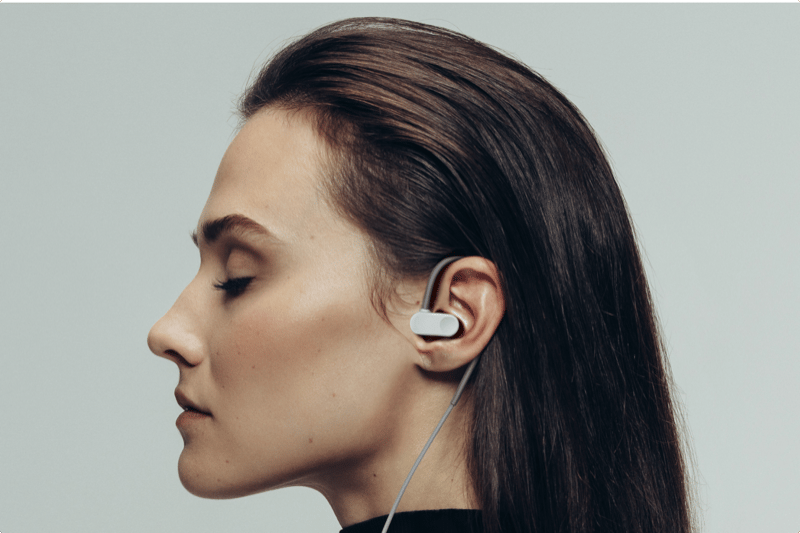
- Snoring: Beyond the noise itself, loud snoring paired with gasping, choking, or pauses in breathing can point to obstructive sleep apnoea. Dr. Bostock is clear that this needs a doctor’s insights, not a spare room. If snoring has been assessed and isn't linked to sleep apnoea, one fix could be Zeus, a non-invasive device that uses gentle TENS stimulation to activate the tongue and upper-airway muscles and has been clinically studied for reducing snoring frequency and intensity.


Zeus
- Different bedtimes and chronotypes: A night owl and an early bird sharing a bed means one person may be disturbed at lights-out or woken earlier than their natural schedule. "If one person is naturally a night owl and the other is an early bird, or one partner regularly scrolls on their phone or switches on lights after the other has fallen asleep, it can become difficult for both people to get enough high-quality sleep," says Dr. Bostock.
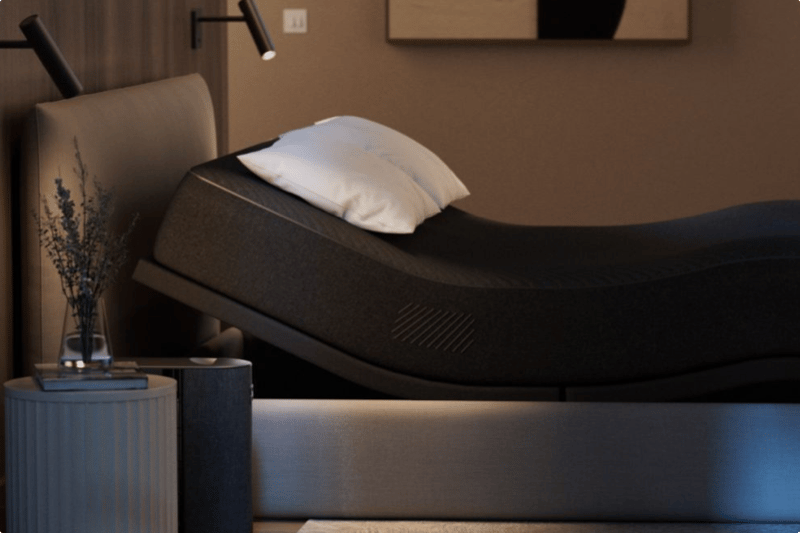
- Movement and temperature: Body heat, duvet theft and tossing and turning can fragment sleep without fully waking the other person, which helps explain why you can wake up exhausted with no memory of being disturbed. If temperature is the sticking point, one fix could be the Eight Sleep Pod, which lets each partner set a different temperature on their side of the same bed and adjusts it throughout the night.

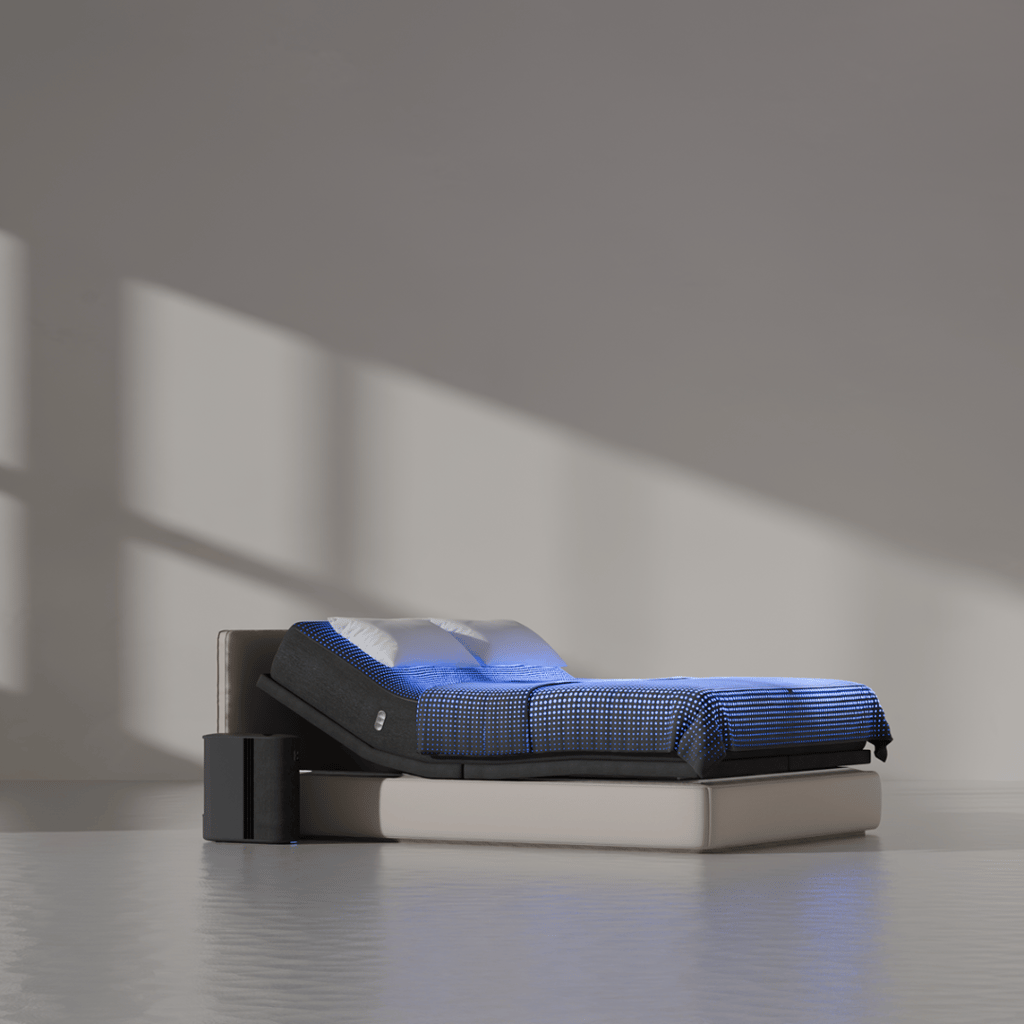
Eight Sleep Pod 5 Core
- Phones, even outside the bedroom: A 2026 study found that partner "phubbing", checking a phone over engaging with the person in front of you, can lower sleep quality indirectly by reducing relationship satisfaction and increasing stress. Sleep disruption, it seems, can begin before either person gets into bed.
What does the research actually say?
The data on sharing a bed is genuinely split, which is worth knowing before anyone feels judged either way. Some studies have found that people, particularly women, sleep objectively worse next to a partner. Others have found young, healthy couples sleep better together than apart.
Dr. Bostock describes an apparent paradox. Sleep can look worse when measured objectively while feeling better to the person experiencing it. She thinks some of the explanations may be chemical. Sleeping beside someone you trust can trigger the release of oxytocin, a hormone associated with bonding and feelings of safety that has also been linked with better sleep quality. For some couples, that sense of security may be enough to offset smaller physical disturbances during the night.
Where separate beds can make a clearer difference is repeated waking. "If sharing a bed means you're repeatedly being woken during the night, sleeping separately can improve sleep continuity, allowing you to spend more time in restorative deep sleep," says Dr. Bostock.
Deep sleep is when some of the body's most intensive overnight recovery takes place. Heart rate and blood pressure fall, tissue repair increases and the brain consolidates memories and learning. Being repeatedly pulled out of deeper sleep can leave you feeling under-recovered the next day, even after what looked like eight hours in bed.
"It's not sleeping separately that's beneficial, it's sleeping better," says Dr Bostock. If you share a bed and both wake up rested, there's nothing to fix. If snoring, movement or mismatched schedules repeatedly leave one of you exhausted, trying separate beds could tell you very quickly whether sharing a bed is costing you sleep.
Signs a sleep divorce could help
Separate bedrooms don't need to be the first response to a bad night's sleep. If several of these are happening regularly, though, changing the sleeping arrangement could be worth testing.
- You're both waking each other up multiple times a night without meaning to.
- One partner's snoring regularly wakes the other.
- You work opposite shifts or very different hours.
- A young child means one of you is up repeatedly while the other doesn't need to be.
- One partner sleeps with the TV on.
- Night sweats, from menopause or otherwise, are disrupting sleep for both people.
Could sleeping separately improve your relationship?
Chronic sleep deprivation makes people genuinely worse partners, and not for any mysterious reason. Poor sleep dulls empathy and emotional regulation and turns up irritability, which is a reliable way to manufacture an argument out of nothing.
Cooke sees this constantly. "When it is disrupted, inconsistent or insufficient, that will impact our ability to be patient, loving, gentle, communicative and emotionally available," she says. "Generally, getting better sleep allows us to bring more energy and intention into our relationships, and it also helps to reduce resentment due to our partner's sleeping behaviours."
Relationship coach Vicki Pavitt, BSc, NLP, EFT, sees the benefit in what couples can bring back to the relationship after a decent night's sleep. "Better sleep helps us regulate our emotions, communicate more effectively and show up as more patient and present partners, meaning we have more to bring to the relationship, not less."
It isn't automatic, though. Cooke is honest about the flip side. "For other couples, the additional space can create further distance in their relationship, often relationships that were not hugely connected before." Separate beds can't fix the disconnection that was already there. What they can do is remove repeated sleep disruption from the equation, giving couples more patience and energy to invest in each other when they're awake.
How to try a sleep divorce without hurting your relationship
Cooke suggests raising it while you're still calm, not after weeks of gritted teeth. "A person should approach this conversation in the most calm and collaborative way possible," she says. "Questions such as 'I'm really struggling with lack of sleep. How would you feel about sleeping separately for a period of time?' said kindly and gently is likely to evoke more of a discussion."
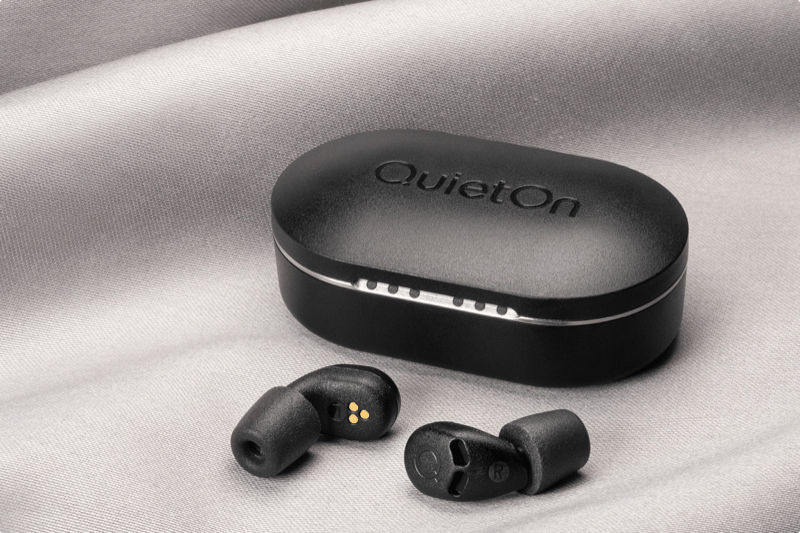
Dr. Bostock recommends trying the smaller fixes first. Separate duvets, earplugs and treating anything medical, such as snoring or suspected sleep apnoea, may be enough to improve sleep without anyone moving rooms.
If separate beds do become the arrangement, some of the physical contact that happens automatically at bedtime needs putting back elsewhere. Cooke encourages couples to create opportunities for that contact. "I do encourage couples to have sleepovers together occasionally, to stay in the same hotel room when travelling, or take naps together in the afternoon, so they still get physical closeness and proximity. I also encourage couples who sleep separately to take time every week to lie on a bed together and simply hold each other."
Pavitt brings it back to making the change together. "The most important thing is that both partners feel involved in the decision and are intentional about maintaining closeness in ways that matter most."
When a sleep divorce isn't the answer
Separate rooms can stop one person disturbing the other's sleep, but they can't treat whatever is causing that disruption. Persistent snoring, insomnia or anxiety still need addressing directly, even if moving bedrooms means both partners are sleeping better in the meantime.
The same applies to the relationship itself. If things were already strained before sleep became the flashpoint, extra distance at night can make those issues easier to avoid. In that situation, better sleep may give you more capacity to work through what's happening, but the spare room isn't going to do that work for you.
Your most asked sleep divorce questions, answered
Is sleeping separately healthy?
It can be, when it solves a real sleep problem such as snoring, mismatched schedules or repeated night waking. Any benefit comes from the improvement in sleep quality that follows.
Is it normal for couples to sleep separately?
Common enough that sleep scientists and therapists now treat it as a legitimate strategy rather than a red flag, as long as both partners are involved in the decision.
Does snoring justify separate bedrooms?
It can be a reason to try them if one person's snoring repeatedly disrupts the other's sleep. Very loud snoring accompanied by gasping, choking, pauses in breathing or excessive daytime sleepiness needs medical assessment for possible sleep apnoea too.
Can sleep divorce improve intimacy?
Potentially. Better sleep can leave both partners with greater patience and emotional capacity, but physical closeness may need to become more deliberate when bedtime is no longer shared. Cooke recommends creating other opportunities for contact, from occasional sleepovers and naps to spending time lying together before heading to separate beds.




This article is for informational purposes only, even if and regardless of whether it features the advice of physicians and medical practitioners. This article is not, nor is it intended to be, a substitute for professional medical advice, diagnosis, or treatment and should never be relied upon for specific medical advice. The views expressed in this article are the views of the expert and do not necessarily represent the views of Healf
Samantha Nice is a seasoned wellness writer with over a decade of experience crafting content for a diverse range of global brands. A passionate advocate for holistic wellbeing, she brings a particular focus to supplements, women’s health, strength training, and running. Samantha is a proud member of the Healf editorial team, where she merges her love for storytelling with industry insights and science-backed evidence.
An avid WHOOP wearer, keen runner (with a sub 1:30 half marathon) hot yoga enthusiast and regular gym goer, Samantha lives and breathes the wellness lifestyle she writes about. With a solid black book of trusted contacts (including some of the industry’s leading experts) she’s committed to creating accessible, well-informed content that empowers and inspires Healf readers.