






































7 Signs Your Nervous System Is Stuck In Fight-Or-Flight
Your body tells you more than you think it does. Here's how to listen properly.

Written by: the Healf Editors
Written on: 24 August 2026
Your stress response was built for emergencies: a threat appears, your sympathetic nervous system floods you with adrenaline and cortisol, your heart rate climbs, and your body gets ready to run or fight. Once the danger passes, the parasympathetic side — governed largely by the vagus nerve — is meant to bring you back down to rest and recover.
The problem with modern life is that the threat rarely "passes" for us. A full inbox, broken sleep, rolling news, a body still recovering from illness may not look like a lion on the hunt, but our nervous system can't always tell the difference. And staying in that heightened state long enough can have real negative effects on your brain, body, and overall health.
Fight-or-flight was designed as a short burst, not a default setting. Here are seven signs yours might be stuck in the "on" position, what's happening in your nervous system when that occurs, and how to address each.
1. You're exhausted but wired
It’s a feeling so many of us have experienced: The day leaves you absolutely exhausted, yet the moment your head hits the pillow, your mind begins to speed up. Or maybe you fall asleep only to wake at 3am with a racing heart and no obvious reason as to why.
This is the signature of a sympathetic system that won't stand down. Sleep depends on a hand-over to parasympathetic control, and if your body is still braced for action, deep, restorative sleep is hard to reach. Broken sleep then feeds the cycle: with less time to recover, you may feel more stressed and find it even harder to switch off the next night.
2. Rest doesn't feel restorative
You sit down to relax and feel restless within minutes. Days off leave you twitchy rather than restored, and "switching off" sounds like a luxury only other people manage to fit into their schedule.
When the nervous system sits in a state of high alert, downshifting feels unfamiliar. The body has learned to treat stillness as a moment to stay watchful rather than a chance to recover, so it keeps scanning for the next thing to manage. Rest is available to you; your system just hasn't had the signal that it's safe to take it.
3. Your fuse is far shorter than usual
Small frustrations — a slow queue, a change of plan, a message that rubs you the wrong way — land much harder than they should. You snap, then feel bad about snapping.
A nervous system in fight-or-flight is primed to read threats everywhere, because that's its job in an emergency. When that state becomes the baseline, the gap between a minor annoyance and a full stress reaction narrows. Months of being on guard means that the threshold has been dialled down, making it even harder for your brain to differentiate.
4. Your body is bracing when nothing's wrong
Tight jaw. Shoulders around your ears. Shallow, high breathing. A gut that's unsettled for no clear reason. These are the everyday costs of a system treating ordinary life as a run of emergencies.
The vagus nerve is the body's main line of communication between brain and organs, the gut included, which is why chronic stress so often shows up as digestive trouble. When vagal tone is low and the sympathetic system dominates, the body stays subtly clenched, ready for an impact that never comes.
Dr Elisabetta Burchi, Head of Research at Parasym, explains: "We tend to think of stress exclusively as a sensation, as an epiphenomenon of the brain, but actually it's a whole-body affair. And the vagus nerve, which is the principal channel of communication between the brain and the internal organs, mediates this intersystemic response. That is why a system held in chronic stress and sympathetic dominance so often expresses itself as a clenched jaw, shallow breathing or an unsettled gut. The various organs are not malfunctioning; they are doing what is expected under perceived threat."
5. Ordinary demands feel like too much
The to-do list that used to feel manageable now feels like a wall. You're more tearful, or flatter, than usual, motivation is thin, and low mood has started to shadow the edges of your days.
When the nervous system spends its resources holding you on alert, there's less left for everything else: patience, perspective, the sense that you can cope. Persistent low mood deserves proper support, so if this is where you are, it's worth speaking to a GP or a professional. For many people, though, a chronically overloaded stress response is part of the picture.
6. You never fully bounced back after being ill
Some people trace the change to a specific illness — a virus they recovered from on paper but never quite shook off. Maybe the fatigue lingered for a long time, tolerance for stress is lower, or the body feels stuck in a different gear.
Post-viral strain can leave the autonomic nervous system dysregulated, with reduced vagal tone and a sympathetic system stuck too high. It's one of the clearer examples of how a nervous system can get lodged in fight-or-flight and struggle to find its way back without support.
Dr Burchi explains: "Persistent autonomic dysfunction is among the most frequently reported features following viral illness, especially COVID infection, and the vagus nerve appears to occupy a central position, linking the inflammatory, cardiovascular and gastrointestinal manifestations of it. Several mechanisms have been proposed that offer a plausible substrate for the reduced vagal tone and relative sympathetic predominance seen clinically: direct viral involvement of vagal neurons, cytokine-mediated nerve injury, and low-grade inflammation of the small vessels supplying nerve fibres. The clinical corollary is important — a dysregulated autonomic state is not a fixed deficit; by definition, it retains the potential to shift, which is why interventions that support autonomic balance are a relevant area of investigation.
7. Your recovery metrics are telling you something
If you wear a tracker, you may have clocked the fact that your heart rate variability was trending down and resting heart rate creeping up before you consciously felt it.
Heart rate variability (HRV) is one of the best windows into your autonomic balance. A higher HRV generally reflects a flexible nervous system with healthy vagal tone, while a consistently low HRV can point to a system stuck in sympathetic overdrive, and a signal that it isn't getting the recovery it needs.
Dr Burchi explains: "Heart rate variability is widely regarded as the gold-standard non-invasive proxy for vagal tone and cardiovascular flexibility. A higher, more variable reading generally reflects healthy parasympathetic input, while a persistently low one can indicate a system weighted towards sympathetic activation and short on recovery. One caveat matters: HRV is an exquisitely sensitive measure, and consumer wearables are not clinical-grade instruments — so the value lies in the trend over time, not any single absolute figure.
Coming back down
The encouraging thing here is that your vagal tone is trainable. Slow breathing with a long exhale, cold exposure, humming or singing, time outdoors, and steady sleep can all nudge your system back towards parasympathetic balance, and they cost nothing.
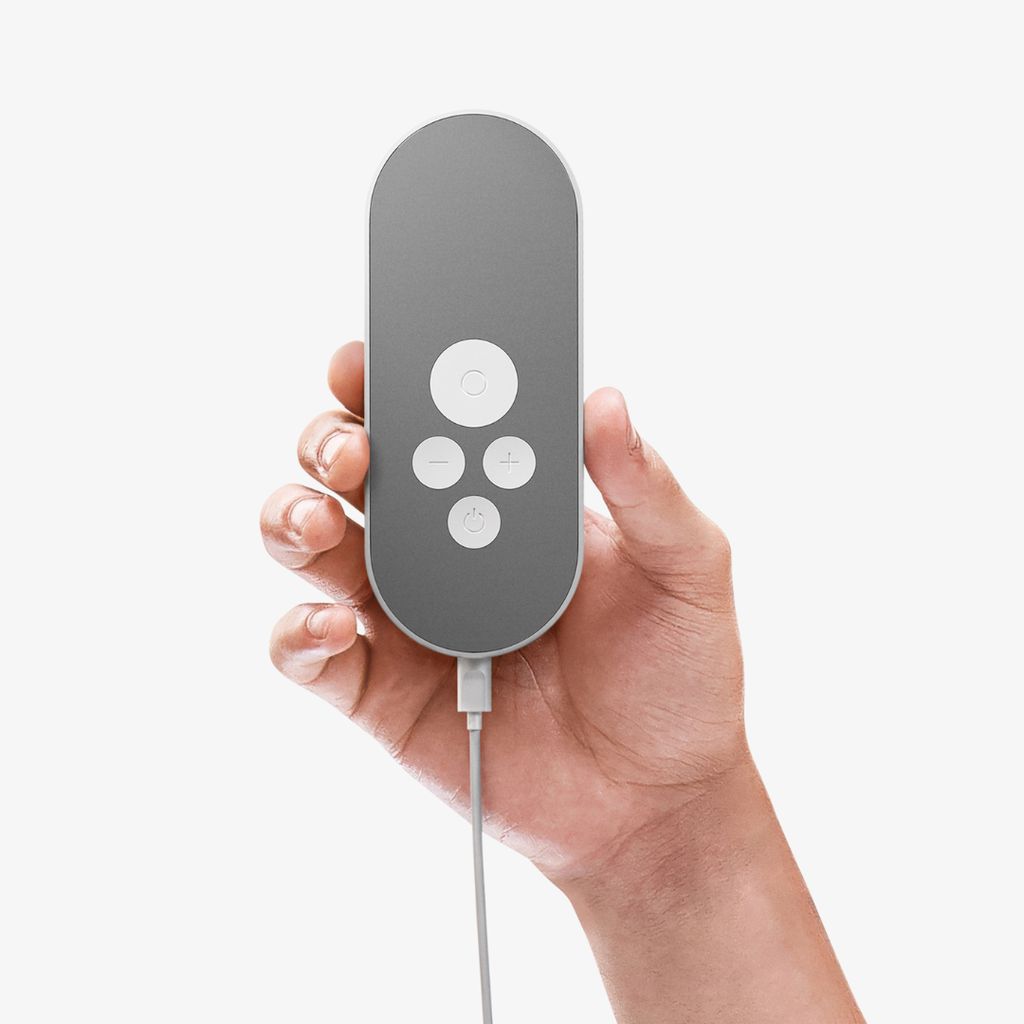
Alongside everyday habits that support rest and recovery, researchers are also exploring whether non-invasive devices can influence the same pathways. Nurosym is a CE-marked neuromodulation wearable that delivers gentle stimulation to the auricular branch of the vagus nerve at the ear — an approach known as transcutaneous auricular vagus nerve stimulation. It's backed by some of the larger clinical research programmes in the field, including double-blind, placebo-controlled studies measuring its effect on HRV and vagal tone. It isn't a quick fix or a replacement for the basics, and results vary from person to person. But for a nervous system that's forgotten how to downshift, a targeted nudge to the vagus nerve is a reasonable, evidence-aligned option to explore.

Dr Burchi explains: "We are not chasing calm for its own sake. The aim is flexibility — a nervous system that can mobilise when it genuinely needs to and stand down when it doesn't. The foundations are critical: sleep, movement, social connection. Non-invasive, targeted vagus nerve stimulation is a complementary tool within that picture, not a substitute for it. Its appeal is that it works with the body's own recovery machinery rather than overriding it, and that it can be used on demand, shaped by what the system needs at the time. In this field it is important to distinguish well-evidenced technology from generic devices — Nurosym is among the most rigorously studied, backed by more than 60 independent clinical trials.”


This article is for informational purposes only, even if and regardless of whether it features the advice of physicians and medical practitioners. This article is not, nor is it intended to be, a substitute for professional medical advice, diagnosis, or treatment and should never be relied upon for specific medical advice. The views expressed in this article are the views of the expert and do not necessarily represent the views of Healf
Healf's editorial team works hard to produce science-backed, expert-vetted stories to break down trends and cut through the noise in the wellbeing ecosystem. Our team of writers and editors specialise in everything from nutrition, to exercise science, women's health, skincare, sleep, and more.