

































5 Surprising Things Your Dentist Has Never Told You
Your mouth is one of the busiest ecosystems in your body. Here are a few things that rarely come up when you're sitting in the chair.

Written by: Ed Cooper
Written on: 14 September 2026
Your dentist checks for cavities, monitors your gum health and sends you off with a new toothbrush — or a new brushing plan — every few years. What they rarely mention is everything else going on in there. Your mouth is host to its own microbiome, a dense colony of bacteria that talks directly to your gut, your heart, and your immune system. Neglect it, however, and the effects show up far beyond your teeth, in inflammation markers, sleep quality, and even cardiovascular risk.
That said, most of this never comes up in a 10-minute check-up. Gum disease, for example, is treated as a local problem rather than a systemic one, despite mounting evidence linking it to heart disease, while enamel erosion gets pinned on sugar when the real culprits can be habitual. Speaking at Healf Experience 2026 (HX26), Healf’s second-ever immersive wellbeing event in London, Dr. Victoria Sampson and Dr. Seb Lomas shared what actually matters with your dental health and what tends to get left out of the standard dental conversation. Here's what your dentist has never quite got round to telling you…
The mouth-body connection your dentist (probably) hasn't explained
Speaking to The Healf Source at HX26, Dr. Sampson provided a deep dive into the unique connection between our oral health and our overall wellbeing. “Oral gum disease is linked to over 50 systemic conditions,” she says, noting that Alzheimer’s disease — a progressive brain disorder that slowly destroys memory, thinking skills, and the ability to carry out simple tasks — can hold a particularly strong connection with our oral microbiome.
“There are certain oral bacteria in the mouth, called Porphyromonas gingivalis, that can release virulence factors,” Dr. Sampson explains. “They're able to travel, cross the blood-brain barrier, find themselves in the cerebrospinal fluid and cause neurodegeneration.”
Porphyromonas gingivalis has been found in over 90% of Alzheimer's sufferers, Dr. Sampson highlights. “Yet, when a patient is diagnosed with early onset Alzheimer's, no one's asking about their oral health.”
Mouthwash and the 99.9% bacteria claims
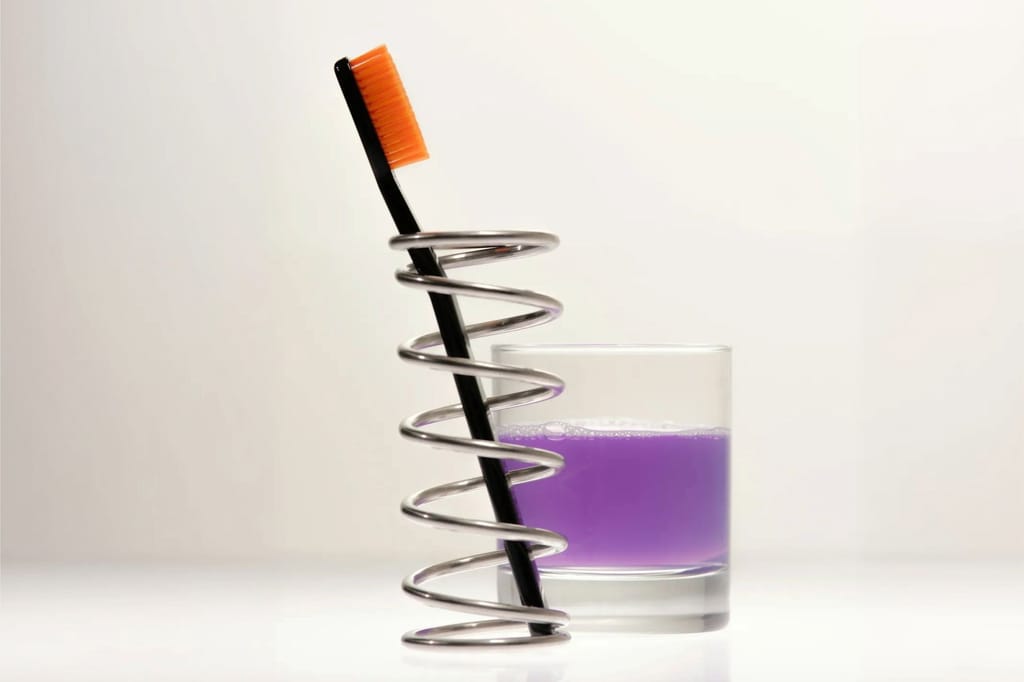
Whether you’re shopping online, in the supermarket or simply watching TV, it’s hard not to notice the advertising claims built to market antiseptic mouthwashes, claiming that they can kill up to 99.9% of bacteria. “Some of that is good bacteria,” says Dr. Sampson, “and it’s called nitrate-producing bacteria, which produce nitric oxide and will improve your vasodilatation and, therefore, your blood flow.”
Inevitably, the opposite is also true, Dr. Sampson says, with “research showing that if you're consistently using mouthwash, it will increase your blood pressure…and it’s actually having a systemic downstream effect as well.” With less nitric oxide, blood vessels can narrow slightly, raising systolic pressure, the primary method of measuring blood pressure, by a small margin.
Separate clinical trials have also identified how strong prescription or heavy antiseptic rinses, such as chlorhexidine, used twice a day, can increase blood pressure readings within just days. That said, “it is reversible, [but] it's hard to bring back the good bacteria,” Dr. Sampson reassures. “It’s not the end of the world if you are a chronic mouthwash user and you can still turn things around, but it might take a little bit of work.”
The gum disease and heart health link, explained
Your gums — referred to as gingiva in medical circles — have three primary roles. While their main job is to hold your teeth securely in place, they also act as a tight seal against harmful bacteria and can cushion your jawbone when you chew. By creating a tight seal around the base of each tooth, your gums keep bacteria away from fragile tooth roots, but should it become damaged or inflamed, gum disease — or gingivitis — can follow.
“Your system is then mounting an immune-inflammatory response to protect you, or your cardiovascular system,” Dr. Lomas explained during his Oral Health 101 talk at HX26’s Experience Stage, “and we now know that plaques are found in heart disease.”
Maintaining this “healthy barrier and this tight gum tissue,” he explains, isn’t just about the gums and the teeth themselves, “but also around other dental materials in the mouth, and how they allow bugs to get into the body.” These materials can range from inflammatory tissue — Dr. Lomas sees them as “pro‑inflammatory, low‑grade chronic inflammation markers” — root canals (“if you've got a dead tooth, that's like your gums being open…these can cause systemic inflammation to your system”) and metal and ceramic implants. “There's no tight gum, so it's another window the body is open,” he says. “Not all metal implants, but most of them. We're finding that the metal implants go further into the lymph nodes, cause more issues in the system and cause corrosion as well.”


The surprising role of saliva
Waking up with a dry mouth often feels more like a small inconvenience, rather than a sign that something might be amiss within your oral microbiome. That’s because your saliva — or a lack of it — is a fundamental signpost not only to your oral health, but to your wider biology.
“Forty percent of medications cause a dry mouth,” says Dr. Sampson. “Once you have a dry mouth, you're at a much higher risk of decay, gum disease and bad breath.” Much more than a marker of just how ravenous you are, a healthy saliva volume is more effective at neutralising acids and “actually moves the food from your mouth and allows you to digest your food properly,” says Dr. Sampson. “That's where we start to see a really marked shift in the microbiome and a shift towards dysbiosis [an imbalance in the microbe community in your body and gut].”
Conversely, with healthy saliva comes a more balanced biology. Though it’s comprised of 99% water, the small amounts of enzymes, proteins, and minerals within it tell a wider story. “It's not just bacteria you can see through saliva,” says Dr. Sampson. “You can see inflammatory markers, stress hormones, cortisol, testosterone and blood sugar levels. I truly believe that in the future, saliva testing will potentially outplay blood testing.”
What's actually destroying your enamel (and it's not just sugar)
Most people assume enamel damage is all about a one-two punch of sweet treats and sloppy brushing, but your teeth are feeling it in more subtle ways. As Dr, Sampson points out, your “enamel or your teeth are the only non-shedding surfaces in the whole body. If you're not actually actively brushing your teeth and mechanically removing that plaque and biofilm, it's just sitting there and it's going to keep on growing and can cause cavities or gum disease.”
Adding to that load, Dr. Lomas says, is that “most dental issues in the mouth are caused from clenching our teeth at night-time, even though we don't know we do it.” He sees “patients that come to me that are super healthy… and their normal dentist is saying, ‘you're not brushing, you're not cleaning, you must be eating sugar,’ but what they're doing, clenching, the dentist doesn't recognise.”
Dr Lomas doesn’t tell patients to simply wear a night guard, but treats clenching as a symptom of airway and nervous-system stress. “Most dental issues in the mouth are caused by clenching our teeth at night-time”, he says, suggesting the fix could lie with airway stabilisation and myofunctional therapy, two methods of “training your tongue to be in the right place, practising Buteyko breathing and increasing your deep sleep,” to stop the night-time ‘fight or flight’ response that drives clenching in the first place.
In other words, chronic clenching on a surface your body can’t naturally renew, plus unremoved biofilm, is often far more destructive than the odd spoonful of sugar.
This article is for informational purposes only, even if and regardless of whether it features the advice of physicians and medical practitioners. This article is not, nor is it intended to be, a substitute for professional medical advice, diagnosis, or treatment and should never be relied upon for specific medical advice. The views expressed in this article are the views of the expert and do not necessarily represent the views of Healf
Ed is a freelance journalist and former Men’s Health digital editor, with bylines in Red Bull, BBC StoryWorks, Guardian Labs, Third Space, Natural Fitness Food and Form Nutrition, among others. Having run marathons, conducted sleep experiments on himself and worked with some of the world’s most in-demand experts — from sleep scientists and strength athletes to high-performance trainers and elite-level nutritionists — one thing remains clear for The Healf Source contributor: fitness trends come and go, but as long as you keep turning up for yourself, consistency will win every time.